Three approaches show up in most addiction treatment plans: CBT, DBT, and motivational interviewing. Each one works on a different piece of the problem, and a clinician matches them to you after an assessment. Most people get a mix of individual, group, and family sessions rather than one approach alone. Here's what each does and where it fits.
If you or someone you love is in immediate danger or thinking about suicide, call or text 988 now.
Types of Therapy for Addiction and What Each One Does
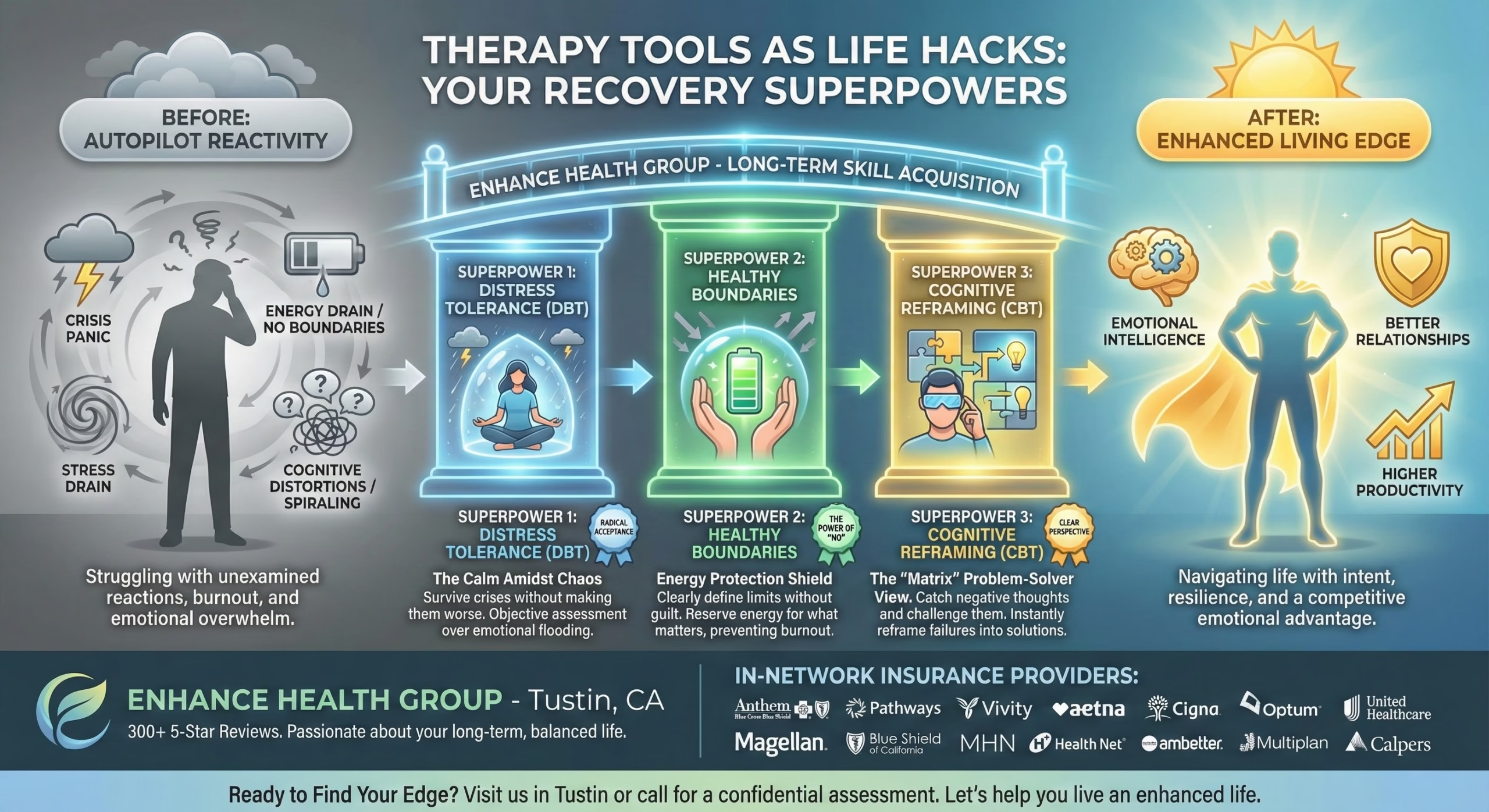
Cognitive behavioral therapy (CBT) starts with the link between a thought, a feeling, and a choice to use. In sessions you and your therapist trace a recent craving back to what set it off, such as an argument, a stressful commute, or a quiet Sunday night. Then you practice a different response before the next trigger shows up. Expect some homework, like jotting down when urges hit so the pattern becomes visible.
Dialectical behavior therapy (DBT) teaches skills for moments when emotions run too hot to think clearly. If you tend to drink or use right after a blowup, or when anxiety spikes, DBT gives you specific tools for sitting through the feeling without acting on it. Skills like distress tolerance and emotion regulation get taught in a group setting and then reinforced one to one. It's often a good match when addiction and intense mood swings or trauma show up together.
Motivational interviewing is the gentlest of the three. The therapist doesn't argue or lecture. They ask questions that help you say, in your own words, what you want to change and what's gotten in the way. It's especially useful early on, or when you're not sure you're ready, because it builds the reason to keep going before the harder skill work begins.
Beyond those three, you'll likely meet two other formats. Group therapy lets you hear from people who've been where you are, which takes some of the shame out of it. Family therapy brings a partner, parent, or sibling into the room so everyone learns how to talk about recovery without it turning into a fight.
At Enhance, these therapies are delivered in our Tustin partial hospitalization and intensive outpatient programs, and in virtual outpatient care. Your clinician decides how much of each to use after meeting you, and the mix usually shifts as you get steadier.
How Therapy Changes Across Levels of Care
The same therapies show up at every level of care, but the amount of time you spend in them and the setting around you change. Detox comes first for many people who are physically dependent. Therapy at that stage is brief and practical, because your body is the priority. Detox and addiction residential care take place at Embrace Treatment Center (embracetreatment.com), a sister facility of Enhance, and Enhance admissions is still your first call if you want help arranging it.
In a partial hospitalization program (PHP) at our Tustin center, therapy becomes the main work of your day. You'll spend more hours in group sessions, with individual and family sessions layered in, then go home. An intensive outpatient program (IOP) keeps the same mix but takes up less of your week, which makes room for a job, school, or kids. Both let you try new skills in real life and bring the results back to your therapist.
Virtual outpatient care sits at the lighter end. You meet with a therapist by video, usually for individual sessions, and the focus shifts to keeping what you've learned steady. It works well after a higher level of care, or when your symptoms are milder and your home life is stable.
If addiction and a mental health condition like depression or PTSD show up together, dual diagnosis care treats both in one plan, so the therapist working on your cravings also knows about your mood.
Where you start depends on what the assessment finds, including your safety at home, your withdrawal risk, and how much structure you need. Most people step down over time, with fewer hours as they stabilize. Ask admissions how the schedule would look for you, since session times are set by your care team.
Why Mental Health Treatment Belongs in the Same Plan
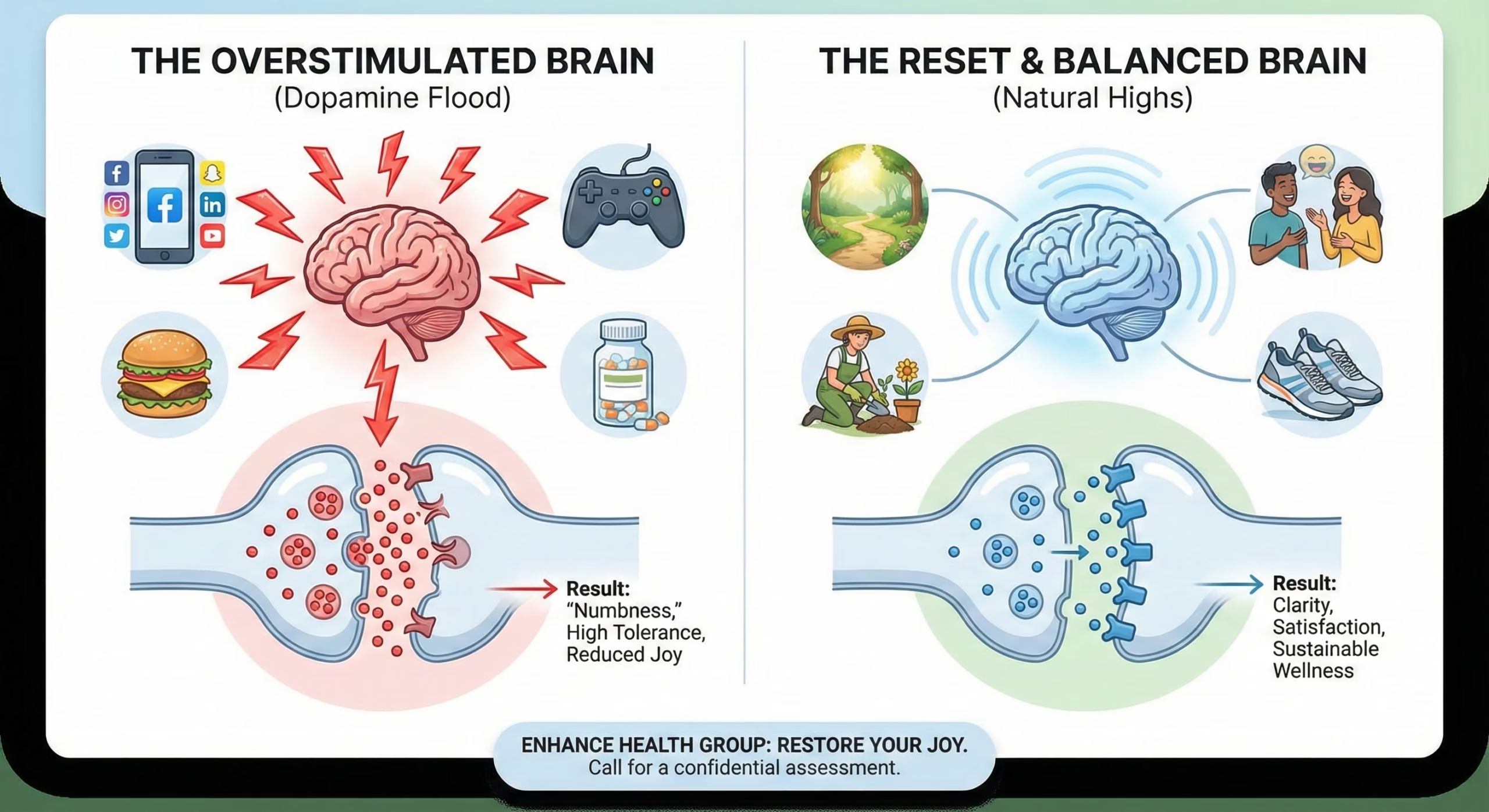
Anxiety, depression, and trauma often sit underneath substance use, and when only the drinking or drug use gets treated, the symptoms underneath tend to pull a person back toward it. Someone who drinks to fall asleep through nightmares, or uses to get through a panic attack, hasn't solved anything once the substance is gone. The nightmares and the panic are still there, and so is the reason they reached for it.
That's why we treat the two together. At Enhance, the clinicians who work on cravings also look at mood, sleep, and past trauma during your assessment. The conditions we treat include depression, anxiety, PTSD, bipolar disorder, and personality disorders, and you don't need to have a diagnosis before you call. Your plan can then pair the addiction work with therapy for what's driving it, so each side supports the other.
Medication can be part of that plan too. When a licensed psychiatrist thinks it would help, they can prescribe it and adjust it as you go. Because the same team sees both your mental health and your recovery, they can tell whether a rough week comes from a trigger, a mood dip, or a medication that needs a change.
Treating the two separately usually means two sets of appointments, two intake histories, and providers who may never talk to each other. You end up repeating your story and carrying the job of connecting the pieces yourself.
If you or your loved one needs round-the-clock mental health care, inpatient and residential care takes place at Eden by Enhance (edenbyenhance.com), a sister facility of ours. Admissions can explain how that fits with the rest of your plan.
Come to the first conversation ready to describe everything, not just the substance use. Mention panic, low mood, sleep problems, or anything from the past that still bothers you. Those details change which therapies your team puts first.
How to Bring Up Therapy With Someone You Love
Pick a calm, private moment, not the morning after a bad night or in the middle of an argument. People hear a suggestion far better when they aren't defensive, tired, or embarrassed in front of anyone else.
Start with what you've noticed and how it affects you, rather than with a label. "I've seen you pulling away since the spring, and I miss you" lands softer than "You have a problem." Then ask a question and let them answer it. Motivational interviewing works on the same principle, so you're already borrowing a technique a clinician would use.
Expect some pushback. Many people say they can handle it alone, or that therapy is for someone worse off. You don't need to win that argument in one talk. Saying "Would you be willing to just have an assessment?" is a smaller ask than "Will you go to treatment?" and it gives them a way to say yes without committing to everything.
It also helps to take the logistics off their plate. Offer to sit with them while they call, or to make the call yourself and hand over the phone. Our Tustin team verifies benefits and explains what your plan may cover, and we work with insurers including Aetna, Cigna, Anthem Blue Cross Blue Shield, and United Healthcare, so cost doesn't have to be the thing that stops them.
If the first talk goes badly, you haven't lost your chance. Wait a few days, say you're still there, and try again with a different opening. Many people need to hear it more than once before it sinks in.
You can also call admissions on your own before you speak with them. The team can talk through what you're seeing, explain the types of therapy that might fit, and help you plan what to say.
What Happens When You Call Enhance Admissions
A member of the Tustin admissions team picks up and starts with simple questions: who the care is for, what's been going on, and what substances or symptoms are involved. You don't need a diagnosis or a polished explanation. Plain description is enough, and you can say "I'm not sure" as often as you need to.
If the call is about a loved one, the team will ask what you've seen and whether they know you're calling. Expect questions about past treatment, any medications, and whether anything feels unsafe right now. Those answers help the clinicians decide which level of care and which therapies to look at first.
Have your insurance card nearby if you can. The team contacts your insurer, then explains your deductible, your copay, and which level of care your plan may cover. Benefits vary by plan, so what they find for you may differ from what a friend or relative was told. If you'd rather start with cost, you can use the verify insurance form on the admissions page and a team member will follow up.
If you decide to continue, admissions schedules your assessment. A clinician talks with you about substance use, mood, sleep, trauma, and what home looks like, and that conversation shapes the plan. Ask admissions about timing for your situation, since the care team sets that after they meet you.
Calling doesn't commit you to anything. You can ask questions, take a day to talk it over with family, and call back.
When you're ready, call admissions at (714) 862-1907, or check your insurance online and the team will walk you through the next step.
Common Questions
Does therapy for addiction work without medication?
Yes, many people do well with therapy alone, and others do better with medication added. Whether medication fits depends on your history, your symptoms, and what a licensed psychiatrist finds at your evaluation. You're free to ask questions and decline anything. Your team will explain the reasoning behind each recommendation so you can decide with real information.
How long does it take for therapy to start helping?
Most people notice small shifts before big ones, such as catching a craving earlier or getting through a bad night without using. Your therapist will check in on what's changing and adjust the plan as you go. Length of care varies from person to person, and your care team talks it through with you after the assessment.
Is what I say in therapy kept private?
Sessions are confidential, and your information is kept private. Clinicians share details with your treatment team so your care stays coordinated. If a family member joins a session, you'll agree on what gets discussed beforehand. Ask your therapist at the first appointment how privacy works for your situation, and they'll walk you through it.
What if I've tried therapy before and it didn't stick?
An earlier attempt doesn't rule out future progress. A different therapy, a different level of care, or treating an underlying condition like anxiety or trauma can change the result. Tell admissions what you tried, what felt unhelpful, and what you'd want changed. That history helps your clinician choose a better starting point this time.
Can I keep working while I'm in therapy?
Often, yes. Intensive outpatient and virtual outpatient care are built to fit around a job, school, or caring for kids, while a partial hospitalization program takes up more of your day. Your assessment shows which level matches your needs and responsibilities. Ask admissions how each option would fit your schedule, since your care team sets session times.