If you want to know how to do a dopamine reset, start by cutting back one high-stimulation habit, like scrolling, gaming, or late-night snacking, for a set stretch of days while you add back sleep, movement, and time with people. Most people feel flatter for the first few days, then notice small things start to land again. If the habit is a drug or alcohol, or the flatness has lasted for months, a reset on your own usually isn't enough, and that's okay.
How to Do a Dopamine Reset Without Overdoing It
Pick one habit, not five. People who try to quit their phone, sugar, caffeine, and gaming on the same Monday usually last about as long as it takes to get bored, and then they swing back harder. Choose the habit that most often pulls you off what you meant to do, and put a clear edge around it.
Here's a plan most adults can follow at home:
- 1Name the habit and the trigger. If you scroll in bed, the trigger is the bed, not the phone.
- 2Set a length you can finish, such as one or two weeks, and write down the start date.
- 3Change the setting. Charge the phone in another room, delete the app instead of promising to ignore it, or move the console out of sight.
- 4Replace the habit with something that takes effort and pays off slowly, like a walk, cooking, or calling a friend.
- 5Keep your sleep and meal times steady, since a tired brain craves quick rewards.
Expect the first few days to feel dull and a little restless. That flatness is the part people mistake for failure, but it's usually just the gap where the habit used to be. Boredom, irritability, and trouble focusing are common early on, and they tend to ease as your routine fills back in.
Skip the all-or-nothing rules. A slip on day six doesn't erase days one through five, so note what set it off and keep going.
If you're cutting back on alcohol or drugs, don't stop on your own. Stopping suddenly can cause withdrawal that needs medical care, and that's a different situation from a screen break.
What Dopamine Does and Why Joy Can Go Flat
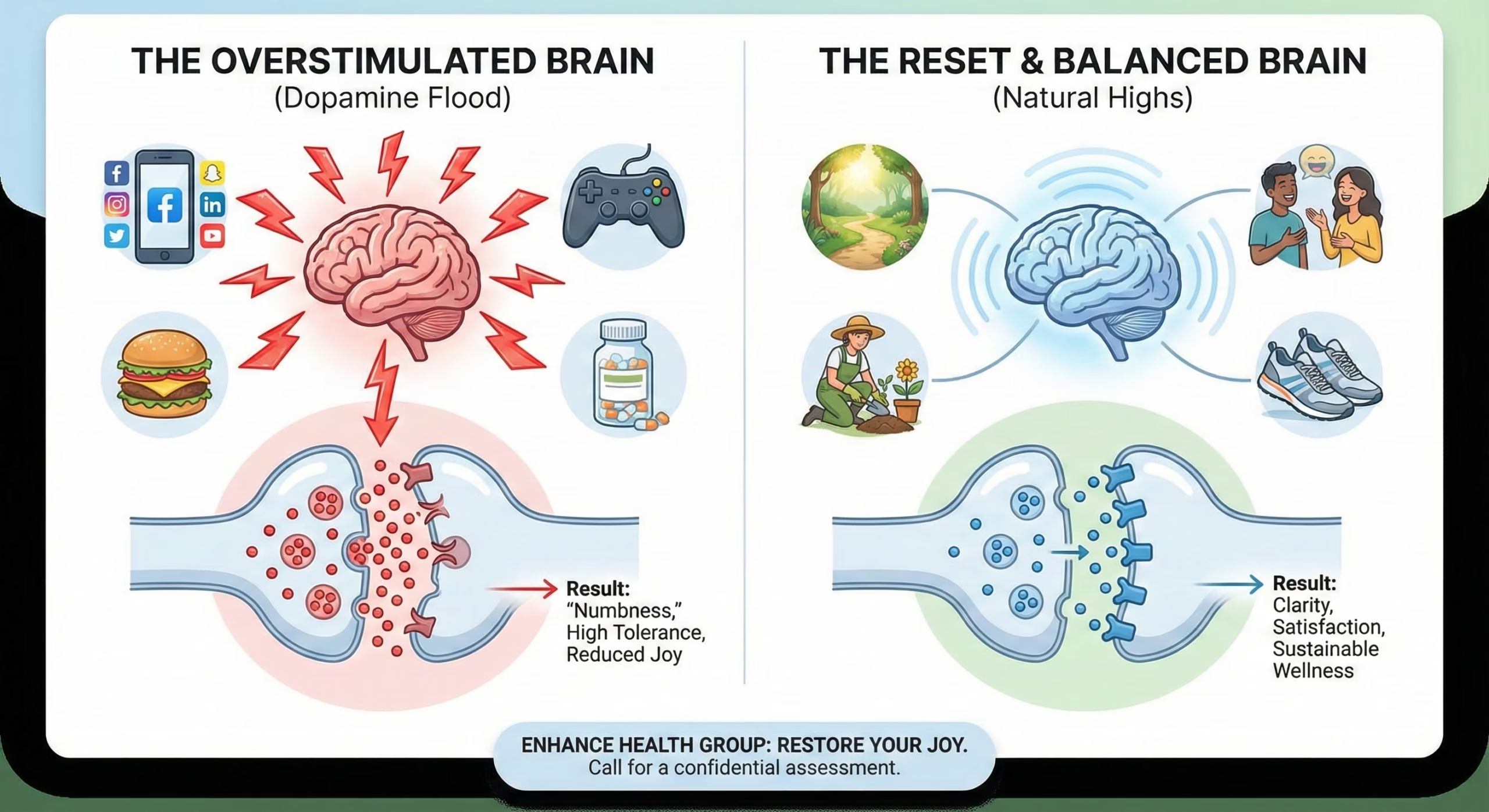
Dopamine is the brain's signal for "this is worth doing again, " and it fires more for anticipation than for the reward itself. That's why the pull to check your phone can feel stronger than the satisfaction of whatever you find there. The chemical isn't a pleasure dose. It's a motivation signal that tells you what to chase.
Problems start when one activity sets that signal off over and over, faster and harder than ordinary life can. Scrolling, gaming, sugar, alcohol, and other substances all do this. The brain adapts by turning down its response, so the same habit gives less, and the things that used to land, like a good meal or a conversation with a friend, start to feel muted. Many people describe it as going through the motions. Nothing is wrong with the food or the friend. Your baseline has shifted.
Calling this a "dopamine detox" can mislead, because you can't drain dopamine out of your brain, and you wouldn't want to. A break from the habit gives your response time to recalibrate. That's also why a reset works best when you add back sleep, movement, and time with people rather than only taking something away.
Flat mood has other causes too. Depression, anxiety, trauma, and some medications can all dull enjoyment, and a screen break won't touch them. A useful test is what happens when you do cut back. If your interest in things slowly returns over a couple of weeks, the habit was likely the main driver. If it doesn't, or if the flatness was there before the habit started, that points to something a clinician should look at.
Signs the Problem Is Bigger Than Screen Habits
A reset has stopped being a habit problem when you've tried it honestly and your life keeps shrinking around the behavior. Look for a few specific patterns. You've cut back more than once and can't stay cut back. You hide how much you use, or you lie about it. Work, school, or relationships are slipping, and you keep going anyway. You feel anxious, shaky, or sick when you try to stop, or you need more of it to get the same lift.
Mood signs count too. If you've lost interest in nearly everything for weeks, sleep far too much or far too little, or feel hopeless, that's more than a dopamine slump. The same goes for panic, flashbacks, or numbness that started after something painful. Those are symptoms a clinician can assess, and treating them often brings the enjoyment back in a way a phone break never will.
If you recognize several of these, tell a doctor or therapist what you've been experiencing, including how much you use and what happens when you stop. You don't need a diagnosis before you call. You can describe what's been happening, and the person on the other end will help sort out which level of care fits.
If you're thinking about hurting yourself, call or text 988 right away.
When alcohol or drugs are involved alongside low mood or anxiety, the two usually feed each other, and treating only one tends to leave the other running. Enhance offers dual diagnosis care for exactly that overlap, so one team looks at both.
What Treatment Looks Like When a Reset Isn't Enough
Treatment starts with an assessment, where a licensed clinician asks about what you use, how often, how you sleep, how your mood has been, and what happens when you stop. That conversation decides the level of care, so you don't have to pick one in advance.
At Enhance, the Tustin team runs a partial hospitalization program (PHP) and an intensive outpatient program (IOP). Both let you sleep at home while you attend treatment, and PHP is the more structured of the two. Outpatient therapy is also available by video through virtual outpatient care, which can work if your schedule or distance makes in-person visits hard. Your clinician can tell you how often you'd attend once they've met you.
Inside those programs, expect individual therapy with a licensed therapist, and skills work such as cognitive behavioral therapy (CBT) and dialectical behavior therapy (DBT) for cravings, anxious thoughts, and strong emotions. When medication is part of the plan, a licensed psychiatrist manages it. Family sessions can be added if a partner or parent would help.
Some situations need more than a few hours of treatment a day. If you need medical detox, or a home setting that keeps the substance close, addiction care at a higher level happens at Embrace Treatment Center, a sister facility of Enhance. If low mood or anxiety has reached the point where you need round-the-clock mental health care, that's offered at Eden by Enhance, another sister facility. In both cases you start with Enhance admissions, and they'll help you work out which setting fits.
You also don't have to wait until things are at their worst. Many people come in while they're still working and still showing up for their families, simply because the flatness hasn't lifted and they'd like help getting it to.
What Happens When You Call Enhance Admissions
A real person on the Tustin admissions team picks up and asks what's been going on, in your own words. You don't need a diagnosis, a referral, or a polished explanation. Saying "I've cut back on gaming three times and I still feel flat" is plenty to start with.
Expect questions about what you're using or doing, how long it's been happening, how you're sleeping, and how your mood has been. If you're calling for someone you love, you can describe what you've seen, though the person in treatment will eventually need to speak for themselves. It helps to have a few things nearby:
- 1A list of any medications you take, including doses if you know them.
- 2Your insurance card, so the team can check your plan.
- 3Notes on what happens when you try to stop, such as shakiness, poor sleep, or irritability.
Admissions contacts your insurance company, then explains your deductible, your copay, and which level of care your plan may cover. Benefits vary by plan, so you'll hear what applies to yours rather than a general answer. Enhance works with Anthem Blue Cross Blue Shield, Aetna, Cigna, Optum, United Healthcare, Blue Shield of California, MHN, Health Net, Ambetter, Multiplan, CalPERS, and Covered California, and the team can tell you whether your plan is one of them.
If you decide to continue, admissions walks you through the next steps toward an assessment with a clinician. Nothing about the call commits you to anything. You can ask questions, think it over, and call back.
You can also start online. Use the form at verify your insurance, or call (714) 862-1907 and ask admissions to check your benefits.
Common Questions
How long does a dopamine reset take to work?
Most people notice small changes within one to two weeks, though the first few days often feel flat. Interest in everyday things tends to return gradually rather than all at once. If you've kept the break steady for a couple of weeks and nothing has shifted, that's a good time to talk with a clinician about what else might be going on.
Can I do a dopamine reset while I'm on medication for depression or ADHD?
Yes, cutting back on a habit like scrolling or gaming doesn't conflict with most medications. Keep taking what you've been prescribed, and don't change a dose to speed up a reset. If you're curious whether your medication is affecting how much you enjoy things, bring it up with the prescriber, who can review it with you.
Is a dopamine reset safe for teenagers?
A short break from a screen habit is generally reasonable for a teen, with a parent helping set clear edges around it. If a teen seems withdrawn, irritable for weeks, or can't cut back despite trying, outpatient therapy is the better next step. Enhance has an adolescent page covering virtual and in-person outpatient therapy, including after-school programs.
Should I tell my family I'm doing a reset?
It usually helps. Tell one or two people what you're cutting back on and for how long, and ask them to spend time with you in place of the habit. A partner or friend can also notice if your mood drops or your use climbs. If the habit involves alcohol or drugs, bring family in early, since they can help you get medical support.