Most of the coping techniques clinicians teach take under a minute and don't need anyone else in the room, so you can use them on a stressful commute, during a tense phone call, or in a 2 a.m. spiral. They're practical habits you learn from someone who can show you how. People in recovery often pick them up faster than they expect, because they've already had to practice getting through hard moments.
Therapy Skills for Everyday Life You Can Use This Week
Pick one skill and try it in a moment that's only mildly stressful. A slow line at the grocery store works better than a fight with your boss, because you're building the habit before you need it under pressure.
Here are three that most people can learn in a single sitting:
- 1Name what you're feeling. Say it silently in one plain sentence, like "I'm anxious about this meeting." Labeling an emotion often takes some of the charge out of it, and it gives you something to work with instead of a vague dread.
- 2Slow your exhale. Breathe in for a count of four and out for a count of six. A longer exhale tells your body it can come down from alert mode, and nobody around you will notice you're doing it.
- 3Check the thought. When your mind says "this always goes wrong, " ask what you'd say to a friend who thought that. Then write down one piece of evidence for the thought and one against it.
Expect these to feel clumsy at first. Most people forget to use them in the moment and remember an hour later, which still counts as practice. Try the same skill at the same time each day, such as while the coffee brews or when you park the car, so it attaches to something you already do.
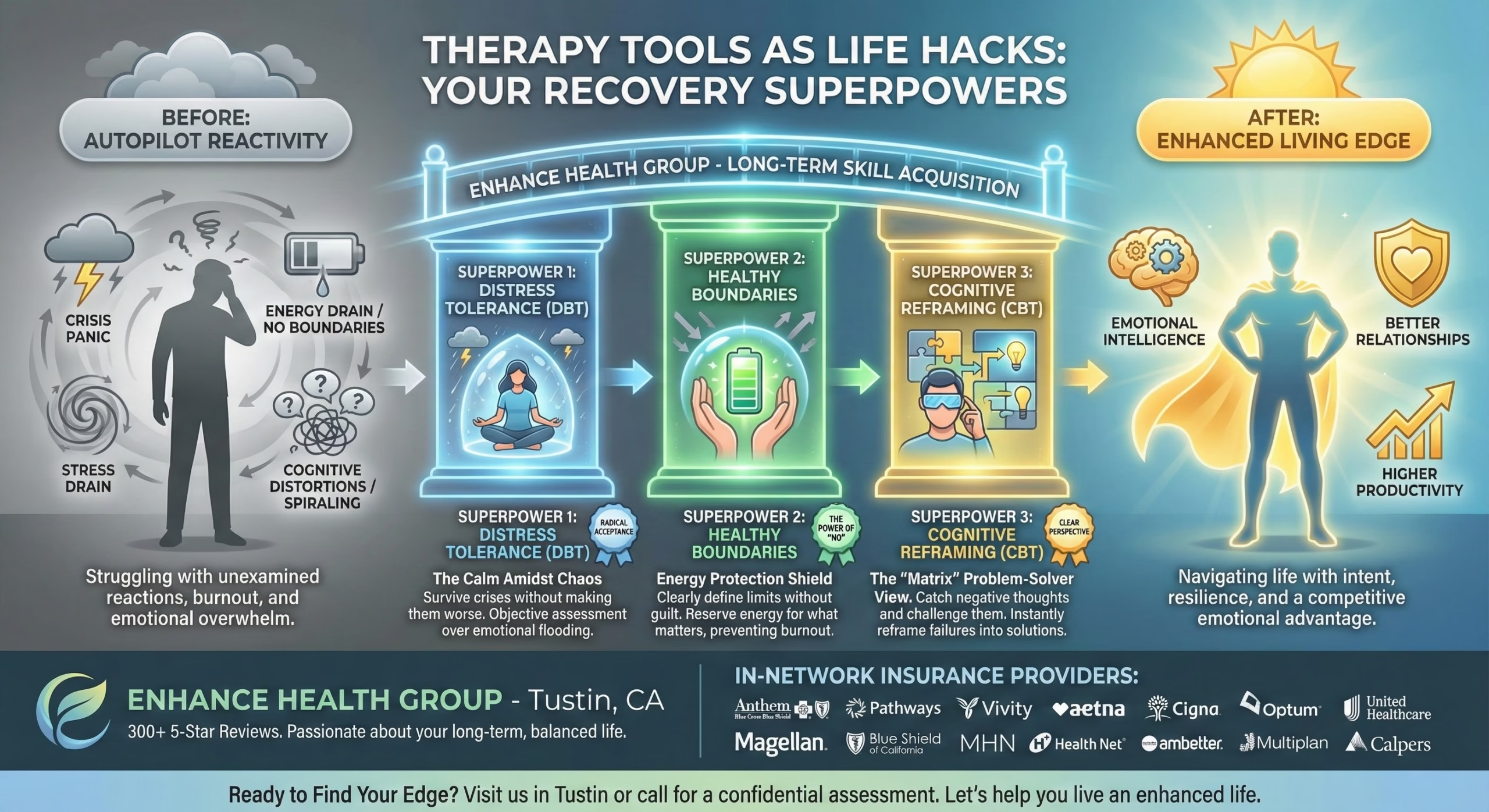
If you're working with a therapist, bring your attempts to the next session. Tell them which skill you tried, what the moment was, and where it fell apart, so they can adjust it to your actual week instead of teaching it in the abstract. Many of these skills come from cognitive behavioral therapy (CBT) and dialectical behavior therapy (DBT), which Enhance clinicians use with adults at our Tustin center on Newport Ave.
Grounding, Thought Checks and Distress Tolerance in Real Situations
Grounding works best when your body is already racing, like in a crowded store, a hard conversation, or a craving that shows up out of nowhere. Look around and find five things you can see, four you can touch, and three you can hear. Name them quietly in your head. It pulls your attention out of the spiral and back to the room you're actually standing in.
Distress tolerance is for moments when the feeling won't shrink no matter what you try. The goal there isn't to fix anything but to get through the next ten minutes without making the situation worse. Hold something cold, like a glass of ice water or a cold can against your wrist, or walk around the block until the peak passes. Urges and panic tend to crest and fall, and you're simply waiting out the crest.
Thought checks fit the slower moments, like lying awake replaying a conversation. Write the thought down exactly as your mind said it, then ask whether it's a fact or a prediction. Most 2 a.m. thoughts are predictions. Rewrite it as something you could defend in court, such as "That meeting went badly, and I don't know yet what it means."
A few things help in all three situations:
- 1Pick the skill before the hard moment, not during it.
- 2Keep a note on your phone listing the skill that worked last time.
- 3If the skill doesn't help, try a different one rather than concluding you did it wrong.
Some situations need more than a technique. If you're thinking about harming yourself, call or text 988 right away.
Why Skills Hold Up Better When a Clinician Teaches Them
A skill you read about online usually breaks the first time you're truly upset, because nobody has checked that you're doing it correctly or fitted it to the situations you actually face. A licensed therapist can watch you try a skill in session, see where it slips, and change it before you've built a bad habit around it.
That matters most with distress tolerance and thought checks, since both are easy to do halfway. People often use the ice-water trick to avoid a feeling rather than ride it out, or write down a thought and skip the "evidence against" step. A clinician catches that in the moment and shows you the difference.
Teaching also gets matched to your diagnosis. The breathing that calms one person's panic can make another person's trauma response worse, so a therapist who knows your history picks skills that fit. At Enhance, individual therapy is one to one with a licensed therapist, and our programs are Joint Commission accredited and certified by the California Department of Health Care Services (300410AP). The CBT and DBT skills you practice are chosen around what you're dealing with, whether that's anxiety, depression, trauma, or substance use.
Between sessions, the skill needs a place to live. Bring the note on your phone, the moments you tried it, and the moments you forgot. Your therapist can use those real examples to set your next round of practice, so each week builds on what happened in your actual life instead of starting from a worksheet.
If you're not sure what kind of help would fit, our admissions team can talk through it with you. They'll ask what you've been dealing with and explain which level of care might make sense.
What Practicing These Skills Looks Like in PHP, IOP and Outpatient Care
The main difference between these levels of care is how much of your week is built around practice, and how much of it you carry out on your own at home. Partial hospitalization (PHP) and intensive outpatient (IOP) both run at our Tustin center, so you sleep at home and bring the skills into real evenings and mornings.
In PHP, you spend the most structured time in treatment. That gives you the most chances to try a skill with a clinician nearby, report back on what happened, and adjust it. IOP asks for fewer hours, which leaves more room for work, school, or caring for a baby or a parent. The skills stay the same, but more of the testing happens in your own life, and group and individual sessions become the place where you review it.
Outpatient therapy, which we offer virtually, is the lightest schedule. You meet with a therapist, try one or two skills between visits, and bring back what worked. Video also means you can practice from the place you're actually struggling, whether that's your car or your kitchen table.
Ask admissions how many days and hours each level involves for your situation. The care team sets that after they meet you, and they'll explain how they decided.
Two things carry across all three levels:
Your therapist will ask which skill you tried, when, and what happened, so jot down a few words each time.
If your needs change, you can step up or down in level of care, and the skills you've built come with you.
Our clinicians work from your plan rather than a fixed script, so a person coming in with depression and a person coming in with trauma won't practice identical things. If you're unsure which level fits, a call to (714) 862-1907 gets you to the admissions team, who will ask about your symptoms and explain the options.
Bringing Skills Into Recovery From Addiction or Depression
Cravings and low moods both come with a script, and the skills work by interrupting it early. With a craving, that usually means noticing the first signal, such as a certain time of day, a text from a specific person, or a feeling of boredom, and using grounding or a cold-water reset before the urge builds. With depression, the early signal is often smaller. You skip a shower, cancel a plan, or stop answering messages. Those are the moments to try a thought check or one small action, like a five-minute walk, before the day sets.
Dual diagnosis care exists because the two problems tend to feed each other. If you're drinking to quiet anxiety or low mood, practicing skills for only one of them leaves the other one pulling you back. At Enhance, treatment for substance use and mental health can happen together, so your therapist can build your practice around both.
Detox and addiction residential care happen at our sister facility, Embrace Treatment Center, and mental health inpatient care happens at Eden by Enhance. Admissions at Enhance stays your first call, and they can tell you whether either one fits before you decide anything.
Because many people in recovery feel pressure to prove they're fine, it helps to treat a skipped skill as information. If you forgot to use one, or it didn't work during a craving or a low stretch, tell your therapist exactly what happened. That's the material they use to adjust your plan.
If you're ready to talk through what fits, call (714) 862-1907. The admissions team will ask what you've been dealing with, check your insurance benefits, and explain which level of care may make sense. You can also verify your insurance online.
Common Questions
How long does it take for therapy skills to start working?
Most people notice a small shift within a few weeks of daily practice, though it varies a lot from person to person. Skills like slow breathing can help the first time you try them. Thought checks and distress tolerance usually take longer to feel natural. Your therapist can tell you what progress looks like for your situation and adjust the pace with you.
Can my family learn these skills too?
Yes, and it often helps at home. Family therapy is part of care at Enhance, so a partner or relative can join sessions when your therapist thinks it would help. They can learn the same grounding and breathing steps, plus how to stay calm when you're having a hard moment. Ask your therapist whether a family session makes sense for you.
Do I need a diagnosis before I start learning these skills?
No. You don't need a formal diagnosis to benefit from skills like grounding or thought checks, and many people start therapy just because stress or low mood is wearing them down. An assessment with a licensed clinician helps sort out what you're dealing with and which skills fit. Admissions can explain how that first assessment works when you call.
What if I try a skill and it makes me feel worse?
Stop, and tell your therapist what happened. Some techniques, like focusing on your breath or sitting with a memory, can stir up difficult feelings, especially with trauma. That reaction is useful information, and it means a different skill or a slower approach would suit you better. You haven't done anything wrong, and a clinician can change the plan.
Does insurance cover therapy where I'd learn these skills?
It may, depending on your plan, since benefits vary. Enhance works with many major insurers, including Anthem Blue Cross Blue Shield, Aetna, Cigna, Optum and United Healthcare. The admissions team checks your benefits with your insurance company and explains your deductible, copay and which level of care your plan may cover before you decide on anything.