The self care tips for mental health that work best are small and repeatable: a steady sleep time, a real meal, ten minutes outside, and one person you check in with. You don't need a new routine or an hour to yourself. Pick one or two habits you can keep on your worst day, and they'll do more than a long list you drop by Friday.
If you're thinking about harming yourself or you feel unsafe, call or text 988 right now.
Self-Care Tips for Mental Health You Can Start This Week
Start by picking the habit that's easiest to keep, not the one that sounds most impressive. If you're up at 2 a.m. most nights, a fixed wake-up time will help more than a meditation app. If you skip meals when you're anxious, set a phone alarm for lunch and eat something with protein in it. The goal for week one is to repeat one small thing on five or six days.
Here's a simple way to set it up:
- 1Choose one habit and write down exactly when it happens, such as "walk around the block after I park at home."
- 2Attach it to something you already do every day, like coffee, brushing your teeth, or the drive home.
- 3Make it small enough that you'd still do it on a bad day. Five minutes counts.
- 4Tell one person what you picked, and ask if they'll text you on Wednesday to see how it's going.
- 5After seven days, keep it, shrink it, or swap it. Don't add a second habit until the first feels automatic.
Expect the first few days to feel almost too easy, and expect to miss one. A missed day isn't a failure. Just do the habit the next day, without trying to make up for it.
Notice how you feel, too. A short note each night, like "slept badly, felt edgy by 3 p.m., " gives you something concrete to look at after a week. It also gives a therapist or your doctor a clear picture if you decide to talk to one later.
Sleep, Food, and Movement Come First
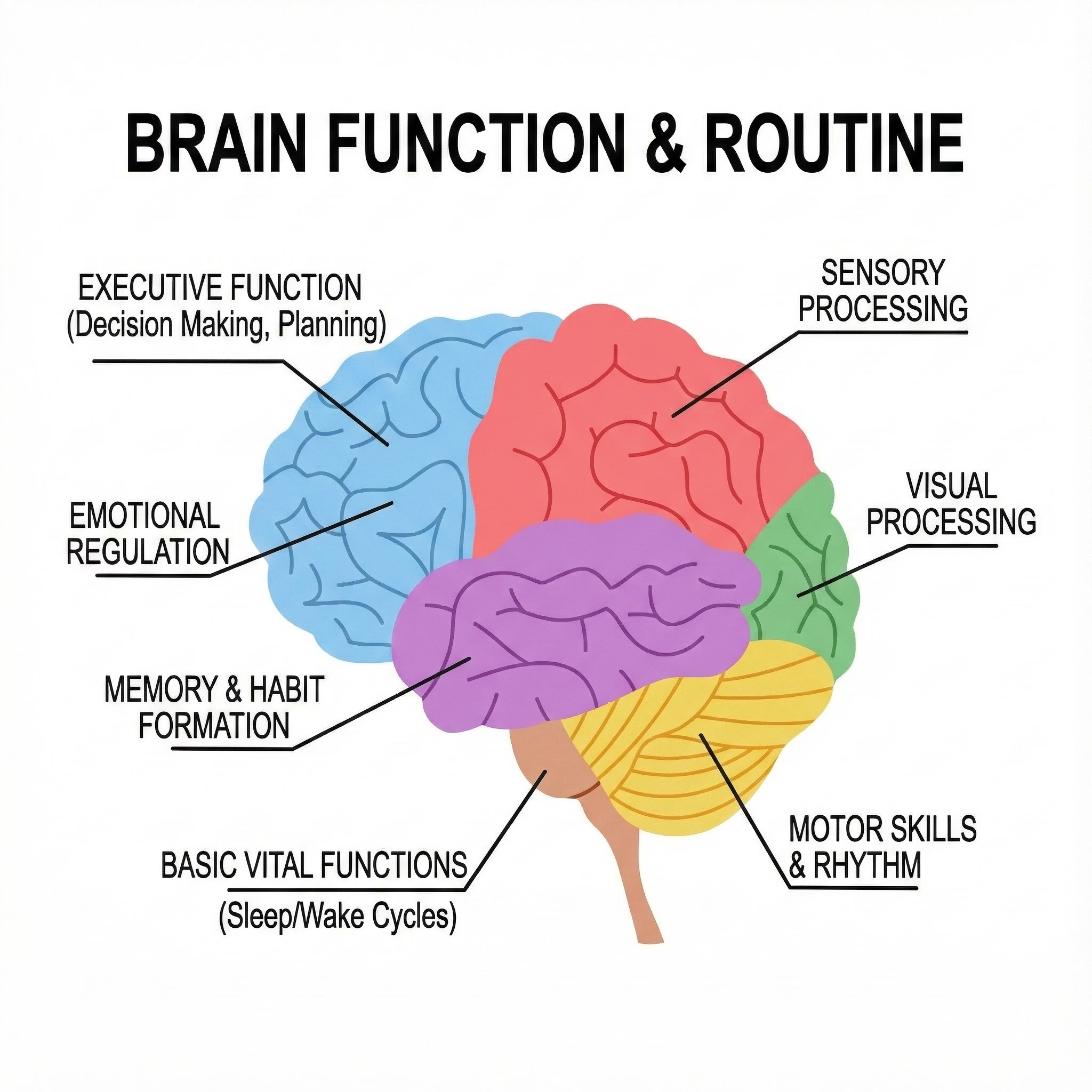
Your brain runs on the same basics as the rest of your body, and when sleep, food, and movement slip, mood and anxiety usually slip with them. That's why these three come before any journaling or mindfulness practice.
For sleep, the most useful change is a consistent wake-up time, including weekends. Going to bed at the same hour helps, but you can't force sleep, and a fixed wake time is the part you control. If you're still awake after about twenty minutes, get up and sit somewhere dim until you feel drowsy. Keep your phone out of reach, since scrolling in bed trains your brain to stay alert there.
For food, aim for regular meals rather than perfect ones. Long gaps tend to make anxiety feel sharper, and a shaky, jittery afternoon is often a skipped lunch plus a third coffee. Eat something within a couple of hours of waking, keep a few easy options at home, like eggs, yogurt, peanut butter, or fruit, and drink water through the day. If you're using alcohol to fall asleep or take the edge off, notice how much and how often, because it tends to break up sleep and worsen mood the next day.
For movement, a ten-minute walk counts. Morning light on your face helps set your body clock, so a short walk before work does double duty. Orange County's mild weather makes it easy to walk almost any day of the year, but a loop around your apartment building or a few stretches by your desk works too.
Pick the one of the three that feels most off right now and work on that first. If sleep, eating, or drinking keeps slipping no matter what you try, the Tustin team at Enhance Health Group can talk through what's behind it, and they treat substance use alongside anxiety and depression.
Daily Habits That Quiet a Busy Mind
Racing thoughts usually get louder when your hands and eyes are idle, so the habits that help most give your attention something specific to do. Try a "worry window": pick fifteen minutes in the late afternoon, write down everything you're stuck on, then close the notebook. When a worry pops up at 10 p.m., tell yourself it's already on the page and you'll look at it tomorrow at the same time. It feels forced for the first few days, and then it gets easier.
Slow breathing works well when your chest feels tight. Breathe in through your nose for four counts, then out through your mouth for six, and repeat for two minutes. The longer exhale is what settles your heart rate. You can do it in a parked car or at your desk, and nobody will notice.
Grounding helps when your thoughts spiral. Name five things you can see, four you can touch, and three you can hear. It pulls your attention back to the room you're actually in. If a thought keeps looping, write it as a sentence, such as "I'm worried I'll fail the meeting, " instead of letting it run as a feeling. Seeing it written down makes it easier to question.
Limiting input matters too. Pick one stretch of the day, like the first thirty minutes after waking, when you don't check news or social media. Many people find their mood in the morning sets the tone for the day, and a quieter start gives it a better chance.
Connection counts as a habit. A five-minute call with a friend or a text to a family member keeps worry from becoming something you carry alone. You don't need to explain everything. "Rough day, can I vent for a minute?" is enough.
If you try these for two or three weeks and your mind still won't settle, that's useful information, and the next section covers what to do with it.
Signs Self-Care Isn't Enough on Its Own
If you've kept a habit going for two or three weeks and nothing has shifted, or things are getting worse, you're dealing with more than a routine can fix. Habits support treatment. They don't replace it when symptoms are running the show.
Watch for these signs:
- You're sleeping far too little or far too much for more than a couple of weeks, even with a fixed wake-up time.
- You've pulled back from work, friends, or things you used to like, and you can't make yourself return.
- Panic attacks, constant dread, or racing thoughts interrupt your day several times a week.
- You're drinking or using drugs more often to cope, or you can't cut back when you try.
- A past trauma keeps surfacing as flashbacks, nightmares, or feeling on edge around reminders.
- Eating, or avoiding food, has become a way of controlling how you feel.
Family members usually notice these changes first. If you're worried about someone, describe what you've seen in plain terms, such as "You haven't been sleeping, and you've stopped going to the gym." That lands better than a diagnosis or a list of demands.
Talking to a professional doesn't mean you've failed at self-care. A licensed therapist can sort out what's going on, and a psychiatrist can tell you whether medication belongs in the plan. Enhance Health Group works with depression, anxiety, trauma, bipolar disorder, eating disorders, and substance use, including when more than one is happening at once. That's called dual diagnosis, and it's treated together rather than one problem at a time. Enhance is Joint Commission accredited, and the Tustin office is at 14742 Newport Ave STE 208.
You don't have to wait for a crisis, and you don't have to be sure what to call what you're feeling. An assessment is how you find out.
Levels of Care When You Need More Support
Treatment comes in steps, and the right one depends on how much support you need to stay well while you keep living your life. A clinician makes that call after an assessment, and you're not expected to pick it yourself.
The lighter end is outpatient care, which Enhance offers virtually through virtualtreatmentcenter.com. You meet with a therapist from home and fit sessions around work or family. A step up is an intensive outpatient program (IOP), and above that is a partial hospitalization program (PHP). Both run at our Tustin center, and you go home afterward. PHP gives the most structure of the three, so it suits someone whose symptoms are disrupting daily life but who can stay safe at home.
Some people need a setting where they stay overnight. Mental health inpatient and residential care takes place at our sister facility, Eden by Enhance (edenbyenhance.com). Detox and addiction residential care take place at Embrace Treatment Center (embracetreatment.com). Both are owned and run by the same people as Enhance, and you'd start with our admissions team either way.
If drinking or drug use is tangled up with anxiety, depression, or trauma, ask about dual diagnosis care. It treats both at once, so one problem doesn't get ignored while the other gets attention.
Here's how the assessment usually helps you decide:
A clinician asks about your symptoms, sleep, substance use, and safety.
They recommend a level of care and explain why.
You can move up or down as your needs change, so the first choice isn't permanent.
Benefits vary by plan, and admissions can check yours before you commit to anything.
What Happens When You Call Enhance Admissions
A real person on the Tustin admissions team picks up and asks what's going on, in your own words. You don't need a diagnosis, a referral, or a prepared speech. Most callers start with something like "I'm not sleeping and I can't stop worrying, " and that's enough to begin.
Expect questions about what you've been feeling, how long it's been happening, and whether alcohol or drugs are part of the picture. They'll also ask if you've seen a therapist or doctor before and if you're taking any medication. If you're calling for a family member, say what you've noticed and how they feel about getting help. It's fine if they don't know you're calling yet.
It helps to have your insurance card nearby. Admissions contacts your insurance company, then explains your deductible, your copay, and which level of care your plan may cover. You hear those numbers before you decide anything, and if you want to continue, the next step is an assessment with a clinician, who recommends the level of care that fits.
If you'd rather not talk first, you can send a request through the insurance form on the admissions page. The team will reach out to you. Either way, calling doesn't commit you to treatment, and you can ask every question you have, including the awkward ones about privacy. Your information stays confidential.
If you're not sure whether what you're feeling "counts, " that's a normal reason to call. Admissions can talk through what you're noticing and tell you what the options look like.
Call admissions at (714) 862-1907, or verify your insurance online and the Tustin team will take it from there.