If you're worried a program will push religion on you, you can ask about spirituality addiction treatment before you commit and choose how much of it, if any, you want. At Enhance Health Group, faith and spiritual practice are yours to bring in or leave out. Treatment works the same way either way, and no one should ask you to believe anything to get care.
Spirituality in Addiction Treatment Is a Choice, Not a Requirement
Most people who hesitate over this question have a specific worry. Maybe a past program made them pray before meals, or a relative told them recovery means "turning it over to a higher power." Those experiences are real, and they're a big reason some adults put off calling at all.
Here's how it works in practice. Enhance is Joint Commission accredited and holds California Department of Health Care Services certification 300410AP, and the clinical care at our Tustin office is built on therapy and, where it fits the plan, medication management by a licensed psychiatrist. Those parts don't depend on any belief. You can do individual therapy, work on cravings and triggers, and build a relapse prevention plan without ever mentioning faith.
If spirituality matters to you, it can be part of the conversation. Some people want a therapist who understands what their faith community means to them. Others find meaning in meditation, time outdoors, or reconnecting with family traditions. A therapist can work with any of that if you bring it up, and you can drop it at any point without explaining why.
If it doesn't matter to you, nothing changes. Your treatment plan isn't graded on belief, and your care team shouldn't treat a lack of faith as resistance.
You can check this before you enroll. When you talk with admissions, ask directly whether any part of the program expects you to take part in prayer or religious activity. A clear program answers that plainly. Also ask who you'd talk to if something felt pushy once you started, because you should know that person's name before you need them.
Your beliefs, or the lack of them, are also private. Sessions are confidential, so what you share about faith stays between you and your care team.
What Spiritual Support Can Look Like in Recovery
Spiritual support in recovery rarely looks like a ritual. For most people it's a conversation with a therapist about what gives their life direction, and that can start from almost anywhere: a grandparent's church, a sunrise walk, a belief that doesn't fit any religion, or a loss that made them question everything.
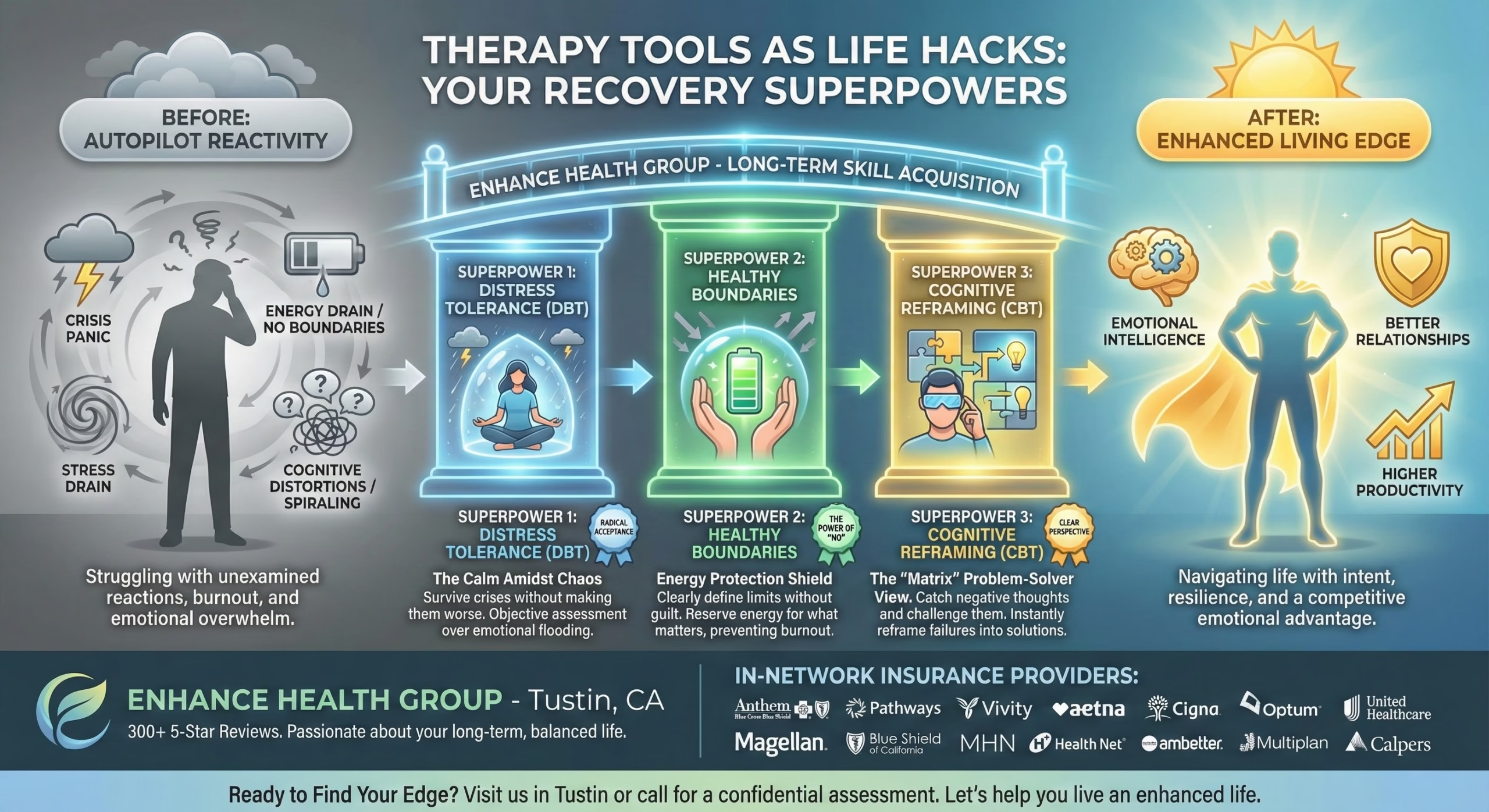
In individual therapy at our Tustin PHP and IOP, a licensed therapist can ask what you lean on when cravings hit, who you feel accountable to, and what you'd want your life to be about once you're sober. Those are values questions, and cognitive behavioral and dialectical behavior therapy skills can be built around your answers. Someone who prays daily might practice a pause before a trigger. Someone who doesn't believe in anything higher might anchor on their kids, their work, or a promise to themselves.
Family sessions are another place faith can come up. If your relatives share a tradition and you want them to understand how it's part of your recovery, a therapist can help that conversation go well. If your family's religion is a source of conflict, a therapist can help you talk about that instead.
Some people also use community outside the program. Our team can talk through whether a faith community, a meditation group, or a peer recovery meeting fits your schedule and your comfort level. Whatever you pick, you set the pace, and you can change your mind after a week or after a year.
What you won't need is a particular vocabulary. You don't have to say "higher power, " and you don't have to explain your beliefs to anyone's satisfaction. If you'd rather keep treatment strictly clinical, tell your therapist at the first session and they'll plan around that. The same goes for the virtual outpatient option and dual diagnosis care Enhance offers alongside PHP and IOP.
How to Tell a Program Respects Your Beliefs
Watch what a program does when you say "I'm not religious, " because the first reaction tells you more than any brochure. A respectful program says "that's fine" and moves on to the next question. A pushy one tries to talk you out of it or suggests you'll "come around."
You can test this before you ever enroll. Here are the signs worth checking:
- 1The answer is plain. When you ask whether prayer or religious activity is part of the program, you get a yes or no and a description, not a pause or a change of subject.
- 2Nothing is tied to your plan. Ask whether skipping a spiritual activity affects your treatment plan, your progress notes, or your standing in the program. The answer should be no.
- 3You can name a contact. You should be told who to go to if something feels pushy, before you start.
- 4Clinicians are licensed. Therapy should come from licensed professionals who work from clinical methods like CBT and DBT, not from a belief system.
It also helps to read how a program describes itself. Language about "surrender, " "faith-based healing, " or a single required path suggests belief is built into the structure. Language about your values, your goals, and your plan suggests you'll be treated as an individual.
You can ask these same questions when you call Enhance admissions at our Tustin office at 14742 Newport Ave, and the team will answer them before you decide anything. Since benefits vary by plan, they can also check your coverage during that conversation, including Aetna, Cigna, Anthem Blue Cross Blue Shield, and other accepted plans, so you're not weighing belief and cost in separate calls.
If an answer feels vague, trust that feeling and keep asking. A program that respects your beliefs won't mind being questioned about them.
Raising the Subject With a Loved One in Treatment
Ask a question about their week before you say anything about faith. "What's been helping lately?" lets your loved one bring up spirituality on their own terms, and if it's not on their mind, you've lost nothing.
If you're the one who finds comfort in prayer or a faith community, keep that separate from what you expect of them. Saying "I pray for you" is a gift. Saying "you should pray about this" turns it into a requirement, and a person in early recovery often hears pressure even when you mean support.
Listen more than you suggest. If they tell you the program's therapist asked about their values, or that they'd rather keep treatment strictly clinical, take it at face value. They've likely thought about it more than you realize, and they're allowed to change their answer later.
Family sessions are one place this can come up safely. If your loved one is in a program that offers them, you can ask whether they'd like to raise faith with a therapist in the room. A therapist can slow the conversation down if it gets tense, which is hard to do at the kitchen table.
A few things tend to go badly, so steer clear of them:
- 1Quoting scripture or recovery slogans at them when they haven't asked.
- 2Treating doubt about faith as a sign they aren't taking recovery seriously.
- 3Asking staff to report back on whether they've been "getting spiritual."
Confidentiality applies here too. Your loved one decides what the Enhance care team shares with you, so if you want to know how they're doing, ask them directly. If you have questions about how Enhance handles this, the Tustin admissions team can walk you through it by phone.
If they say the topic is closed, let it be closed. You can offer once, plainly, that you're open to talking whenever they want, and then leave the door unlocked.
What Happens When You Call Enhance Admissions
A person from the Tustin admissions team answers, asks what's going on, and listens before anything else. You don't need a diagnosis, a referral, or a decision about treatment to make the call. Many people start with a single question, and "will I be pushed toward religion?" is one the team hears and answers directly.
They'll usually ask about the substances involved, any mental health symptoms, and whether you've been in treatment before. If you have an insurance card handy, they can use it to check your benefits with your plan. They'll explain your deductible, your copay, and which level of care may be covered. Benefits vary by plan, and checking them doesn't commit you to anything.
Bring up spirituality whenever it feels natural. You can say you want faith included, you want it left out, or you aren't sure yet. Admissions notes that so the care team knows from the start, and you can change your answer later.
Based on what you share, the team talks through which level of care fits. Enhance offers PHP and IOP in Tustin, along with virtual outpatient and dual diagnosis care. If you need detox or addiction residential care, those take place at our sister facility, Embrace Treatment Center, and admissions arranges that with you so you only make one call.
If you're in crisis or thinking about harming yourself, call or text 988 right away instead of waiting for a callback.
When you're ready, call (714) 862-1907, or use the button below to start with your insurance.
Common Questions
Can I switch therapists if my therapist keeps bringing up faith?
Yes, you can ask admissions or your care team to match you with a different therapist. You don't need to prove anything went wrong or explain your reasons at length. Tell them you'd like a different approach to the topic, and they'll work from there. Changing your mind about how much spirituality you want is a normal request.
Does Enhance treat people of every religion, or none?
Yes, Enhance works with adults of any faith and with adults who have no faith at all. Your therapist's job is to understand what matters to you, not to steer you toward a tradition. If your beliefs are unusual or hard to put into words, you don't have to label them. Describe what gives your life meaning in your own terms.
Are 12-step meetings required, or can I use other kinds of peer support?
Enhance doesn't make any outside meeting a condition of your care. Some people find 12-step groups useful, and others prefer secular peer groups or no group at all. Your therapist can talk through the options with you, including how each one handles faith. SAMHSA's treatment locator can also point you toward other community resources.
Can I ask for spirituality to be part of my treatment if I'm in an early or intensive program?
Yes, you can raise it in any level of care, including PHP and IOP. Tell your therapist what you'd like to explore, whether that's a faith tradition, meditation, or questions about meaning after a loss. They can fold it into your sessions where it fits your plan. If you're still choosing a program, our admissions page is a good place to start.
What if my beliefs changed because of my addiction or because of what I've been through?
That's common, and a therapist can help you sort through it at your pace. Some people feel angry at a faith they grew up in, and others feel pulled toward one for the first time. You don't have to settle the question to do the work of recovery. You can leave it open and return to it later, or never.