Mindfulness and spirituality in recovery work best as a support alongside treatment, not a replacement for it. Meditation, prayer, time outdoors, and quiet reflection can steady cravings and strong emotions between therapy sessions, and you don't need a particular belief to use them. Here's how they fit with clinical care, and when you'll want more than practice alone.
If you or someone you love is thinking about suicide or in immediate danger, call or text 988 right now.
How Mindfulness and Spirituality in Recovery Fit With Treatment
In a treatment plan, these practices sit next to the clinical work and don't stand in for it. A therapist handles the parts that need training, like trauma, depression, anxiety, and the thinking patterns that drive use. Mindfulness and spirituality give you something to do in the hours between sessions, when a craving hits at 9 p.m. or a hard memory surfaces in the shower.
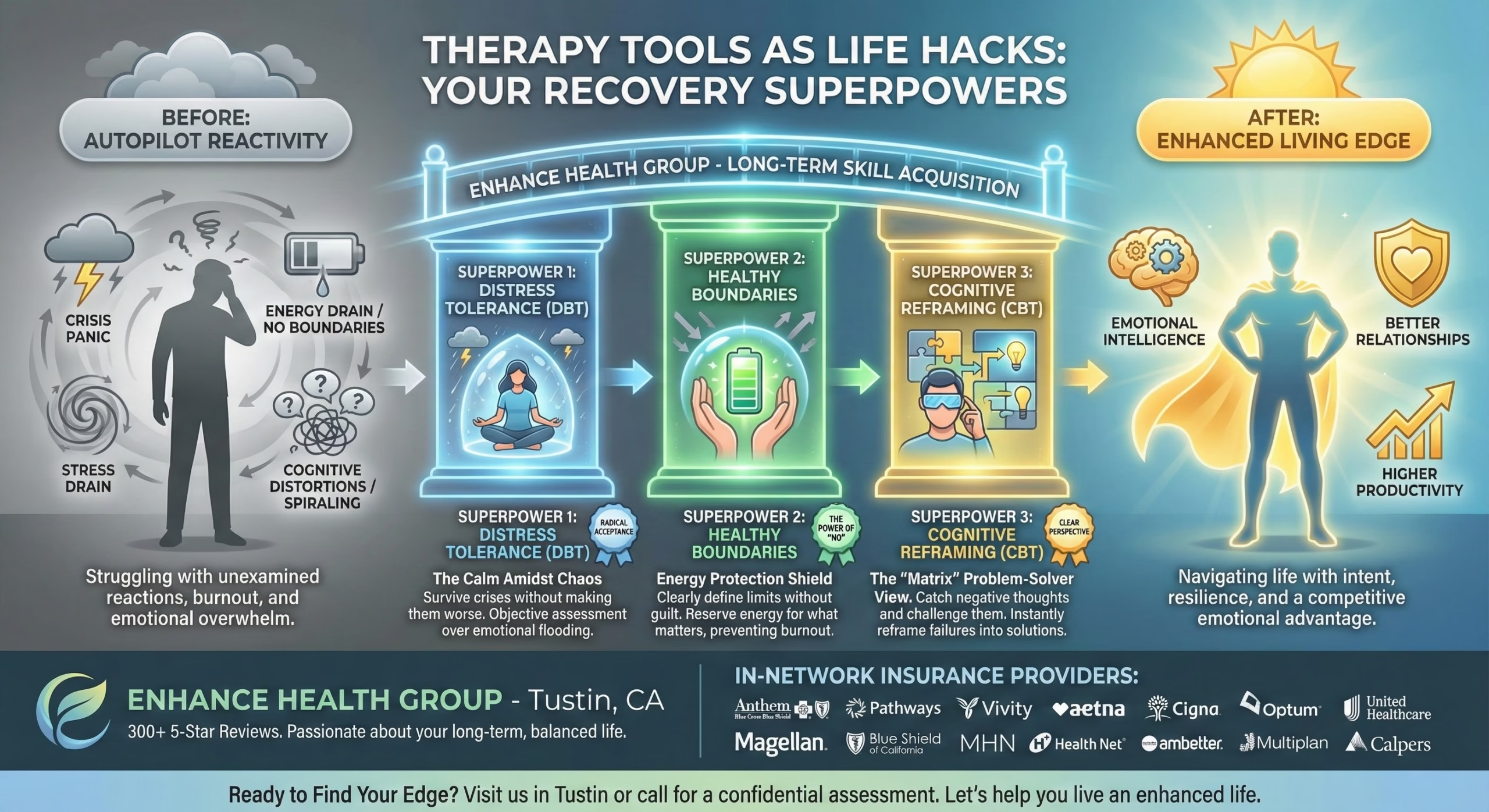
Here's how that usually looks. Your clinician teaches skills in session, often from cognitive behavioral therapy (CBT) or dialectical behavior therapy (DBT), such as noticing a thought without acting on it or riding out a strong emotion until it passes. Then you practice those skills on your own, and you bring back what worked and what didn't. A few minutes of focused breathing, a walk, a prayer, or a short written reflection can all be part of that practice, and your therapist can help you pick the ones that suit you.
If you're also dealing with depression, anxiety, or trauma alongside substance use, the practices need to be chosen with care. Some people find that sitting in silence stirs up painful memories before it calms anything. Telling your care team that happens is useful information, and they can adjust the approach rather than ask you to push through.
Enhance Health Group treats addiction and mental health together through dual diagnosis care, so these practices can be built around both at once instead of treated as an add-on for one.
What Mindfulness Practice Looks Like in Early Recovery
In the first weeks, mindfulness is mostly small and repetitive, and you're not sitting for an hour in perfect stillness. A therapist will usually start with something you can do in two or three minutes, like feeling your feet on the floor, counting ten slow breaths, or naming five things you can see in the room. In Enhance's Tustin PHP and IOP programs, you'd practice these skills in session with a clinician and then repeat them at home.
The point is to catch a craving while it's still building. Most people notice that a craving rises, peaks, and eases, and that it doesn't demand action the moment it starts. Practicing that observation when you're calm makes it easier to use when you aren't.
Expect it to feel awkward at first. Your mind will wander, and that's normal. Each time you notice it drifting and bring your attention back, you've done the exercise correctly.
Early recovery can also bring poor sleep, a jumpy body, and a foggy head, so short sessions tend to work better than long ones. Many people tie a practice to something they already do every day, such as a few breaths before the first cup of coffee or a short walk after dinner.
Tell your therapist what you tried and what happened, even if the answer is "I couldn't stop thinking about using." That tells them which skill to adjust, and it's more useful than reporting a practice went well when it didn't. If a particular exercise leaves you more agitated, say so and they'll swap it for another.
Spirituality Without a Required Belief System
Recovery doesn't ask you to believe in anything specific, and a treatment team won't test your faith before they work with you. For some people spirituality means prayer, a faith community, or a pastor they trust. For others it means a long walk at sunrise, time near the ocean, volunteering, journaling, or sitting quietly and thinking about what they want their life to stand for.
If you hold a faith, tell your therapist early. They can build it into your plan, for example by making room for a weekly service or using a prayer as your grounding practice when a craving builds. If you don't, you can leave it out entirely and lose nothing in the clinical work.
Some people carry hurt from a religious upbringing, and words like "higher power" can feel like a door slamming. Say that plainly. A good clinician will look for language that fits you, such as connection, meaning, or values, and won't push vocabulary you don't want.
Spiritual practice can also help with the loneliness that often follows quitting. Showing up to the same group, walk, or service each week gives you a place to be known, and that's often what keeps people steady when motivation dips. If you're starting at Enhance in Tustin, tell the admissions team about your faith or your lack of one on the first call, and they'll pass it along when they talk through a starting level of care.
Pick one practice you'd actually repeat, try it for a few weeks, and report back to your therapist on how it went.
When Mindfulness and Spirituality Aren't Enough on Their Own
Practice alone usually stops being enough when use continues despite your best efforts, or when withdrawal, panic, or intrusive thoughts get bigger than a breathing exercise can hold. If you've tried these tools for a few weeks and you're still using, still can't sleep, or still feel unsafe with your own thoughts, that's a sign the problem needs clinical treatment, not more willpower.
Some signs point to a higher level of care:
- You can't go a day without using, or you've tried to stop and couldn't.
- Stopping brings shaking, sweating, or other physical symptoms that frighten you.
- Depression, trauma memories, or anxiety are getting in the way of work, parenting, or daily tasks.
- Home isn't a place where you can stay sober right now.
Needing more doesn't mean you failed at mindfulness. It means the problem is bigger than a self-help tool, and that's true for many people.
Enhance offers partial hospitalization (PHP) and intensive outpatient (IOP) programs in Tustin, so you can get structured daily support while you keep sleeping at home or in supported living. If you need medical detox or a residential stay for addiction, that care happens at our sister facility, Embrace Treatment Center, and admissions will help you sort out which level fits.
Mindfulness and spiritual practice don't disappear once you're in treatment. Your care team folds them into the plan, so what you've already been doing keeps working alongside therapy and, when it's part of your plan, medication management.
Matching These Practices to a Level of Care
How much room these practices get in your week depends on how much structure you need around them. In a partial hospitalization program (PHP), clinical work fills a large part of the day, so mindfulness and spiritual practice usually show up as skills you rehearse in session and then repeat at home in the evening. In an intensive outpatient program (IOP), you have more open hours, which gives you space to keep a faith community, a morning walk, or a regular quiet practice going alongside treatment.
Virtual outpatient care, offered through virtualtreatmentcenter.com, fits when you're steady enough to live at home and want therapy without a commute. Your therapist can check in on a practice the same way they would in person, asking what you tried, what happened, and what to change.
If you need inpatient mental health care, that happens at our sister facility, Eden by Enhance. Practices there are chosen around your safety first, and the team can help you fold them in as you stabilize.
To place yourself, think about three things: how stable your sleep and mood are, whether home supports your sobriety, and how often you've tried to stop on your own. A therapist at admissions can talk through those with you and recommend a starting level. You can also ask which practices each level makes room for, and if you'd like to keep a particular faith tradition or routine, say so on the first call.
Your level isn't fixed. Many people begin at one level and step down as they get steadier, and the care team adjusts the plan as you go.
What Happens When You Call Enhance Admissions
The person who picks up at (714) 862-1907 is on the Tustin admissions team, and the first conversation is mostly questions. They'll ask what's going on, what substances or symptoms you're dealing with, and whether you've been in treatment before. Have your insurance card nearby if you can, but you can still call without it.
Say what you're hoping for, too. If prayer, meditation, or a faith community matters to you, mention it now so the team can keep it in mind when they recommend a starting level of care. You don't need to explain it perfectly. A sentence like "I want to keep my Sunday service" is enough.
Here's the usual sequence:
- 1You share your situation, and admissions listens for what level of care might fit.
- 2The team contacts your insurance company, then explains your deductible, your copay, and which levels of care your plan may cover. Benefits vary by plan, so they'll tell you what your payer says rather than guess.
- 3If you want to continue, you move forward through admissions and talk through next steps with them.
Questions are welcome at every step. You can ask how a program would fit your work or family schedule, or what happens if you're not sure yet. Calling doesn't commit you to anything.
If you'd rather start with your coverage, the form on the admissions page lets you request a benefits check. Otherwise, call (714) 862-1907 and the Tustin team will walk you through it.
Common Questions
Can I keep going to 12-step meetings while I'm in treatment?
Yes, in most cases you can keep attending meetings alongside PHP or IOP. Tell your therapist which meetings you go to and how they feel for you. Some people find a meeting steadying, and others find the language a poor fit. Your care team can help you weigh that and adjust the plan.
Is meditation safe if I have trauma or panic attacks?
It can be, but the approach needs adjusting. Sitting still with your eyes closed sometimes raises anxiety or brings up memories. Your therapist can switch you to eyes-open practices, movement like walking, or grounding exercises that keep your attention on the room. If an exercise leaves you worse, stop and tell them. That's useful information, not a failure.
Can family members use these practices too?
Yes, and many families find it helps. A parent or partner living with a loved one's addiction carries stress of their own, and breathing exercises, walks, or a faith community can steady them. Family therapy sessions can also include a partner or relative when that would help. Ask admissions how family involvement works at the level of care you're considering.
How long before mindfulness starts to help with cravings?
Some people notice a small effect within a few weeks of daily practice, but the pace varies from person to person. Short, regular sessions tend to work better than occasional long ones. If you've practiced consistently and cravings still feel unmanageable, tell your therapist so they can add or change clinical tools.
Do I have to pay extra for these parts of treatment?
Mindfulness and spiritual practices usually sit inside your therapy rather than being billed as separate extras. What your plan covers depends on the level of care and your insurance, so ask admissions to check your specific benefits. They'll explain your deductible and copay before you decide anything.