Good clinical care for mental health and substance use rests on therapy, medication when it's needed, and attention to sleep, stress, relationships, and what you're drinking or using. It doesn't swap clinical treatment for herbs, retreats, or alternative add-ons. At Enhance Health Group in Tustin, whole-person care means your care team looks at everything affecting your mental health and recovery, not just one symptom.
If you or someone you love is in crisis right now, call or text 988.
Holistic treatment approaches in a clinical setting
Treatment marketing stretches the label, so it helps to know what a clinical team actually does under it. At a licensed program, it starts with an assessment. A therapist sits down with you and asks about your symptoms, but also about how you're sleeping, what's happening at home and work, what you're drinking or using, and what medications you already take. Those answers shape the plan, and the plan can change as you do.
Wellness practices have a place, but they sit alongside treatment rather than in front of it. Talking about stress management, exercise, or routines is part of good therapy. Skipping therapy or psychiatric care in favor of supplements or a retreat isn't. If a program can't tell you which licensed clinicians are involved in your care, that's worth asking about before you commit.
Accreditation gives you a way to check. Enhance Health Group is accredited by The Joint Commission, and anyone can look us up in the public Joint Commission locator under Enhance Health Group, LLC. You can also check that a program holds the state certification required to treat substance use in California. Ours is California Department of Health Care Services certification 300410AP.
Here's what the whole-person approach looks like in practice with us:
- A clinical assessment that looks at mental health, substance use, medical history, and daily life together
- Individual therapy with a licensed therapist, often using CBT or DBT skills
- Medication management with a licensed psychiatrist, only when medication belongs in your plan
- Family involvement when a partner or relative can help your recovery
If you're comparing programs, bring those four items as questions. A clear, specific answer to each one tells you more than any description on a website. You can also read about the levels of care we offer to see how this assessment connects to a specific starting point, whether that's a day program, an intensive outpatient schedule, or something else.
How whole-person care shows up in therapy and medication
In a typical week of care at our Tustin center, 14742 Newport Ave STE 208, the pieces work together instead of running on separate tracks. Your therapist and your psychiatrist know what the other is seeing, so a change in your sleep or mood gets noticed in more than one room.
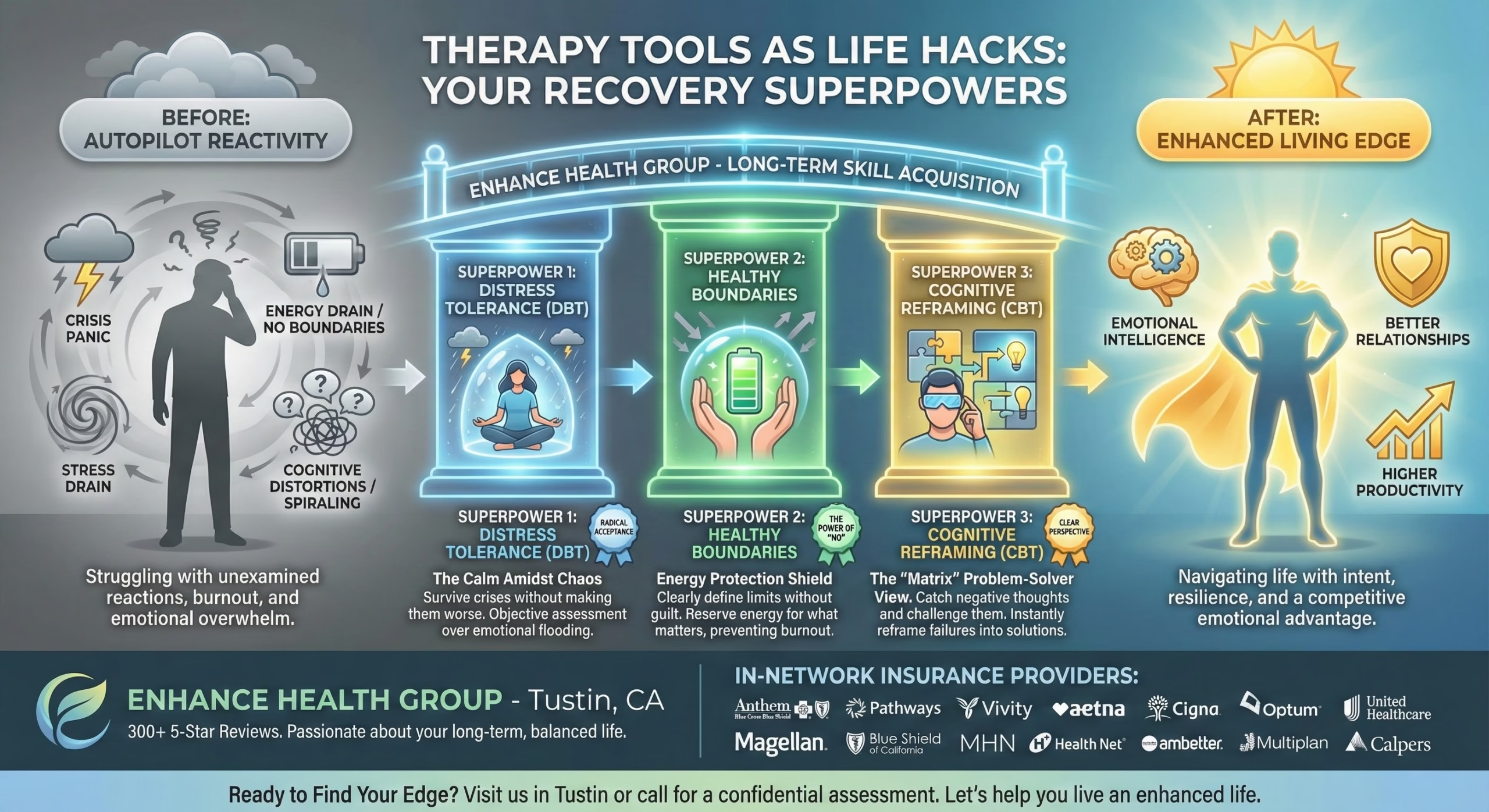
Therapy usually starts with skills you can use the same day. In CBT, you learn to catch an anxious or hopeless thought, check it against what's actually happening, and respond differently. DBT builds skills for strong emotions, such as steadying yourself when an argument or a craving hits hard. Your therapist will often ask you to try a skill between sessions and report back on what worked, so the plan gets adjusted to your real life.
Medication is a separate conversation with a licensed psychiatrist, and it's only part of the plan when it fits. Expect questions about your history, what you've taken before, how it felt, and anything else you're taking now, including alcohol or other substances. That last part matters because substance use can change how a medication works. Be honest with the psychiatrist, even if it's uncomfortable. They're deciding on a prescription, not judging you.
Medication also isn't a one-time decision. Your psychiatrist can review how you're responding, and any change is made with you, not around you. If you have concerns about side effects, say so early.
Family sessions are optional, and they're built around what helps you. A partner or parent might join to learn what you're working on, how to respond during a hard moment, or what recovery looks like day to day. You decide who comes.
One practical tip: before your first appointment, write down your current medications, any past diagnoses, and the questions you most want answered. It gives the team a fuller picture from the start.
Why mental health and addiction are treated together
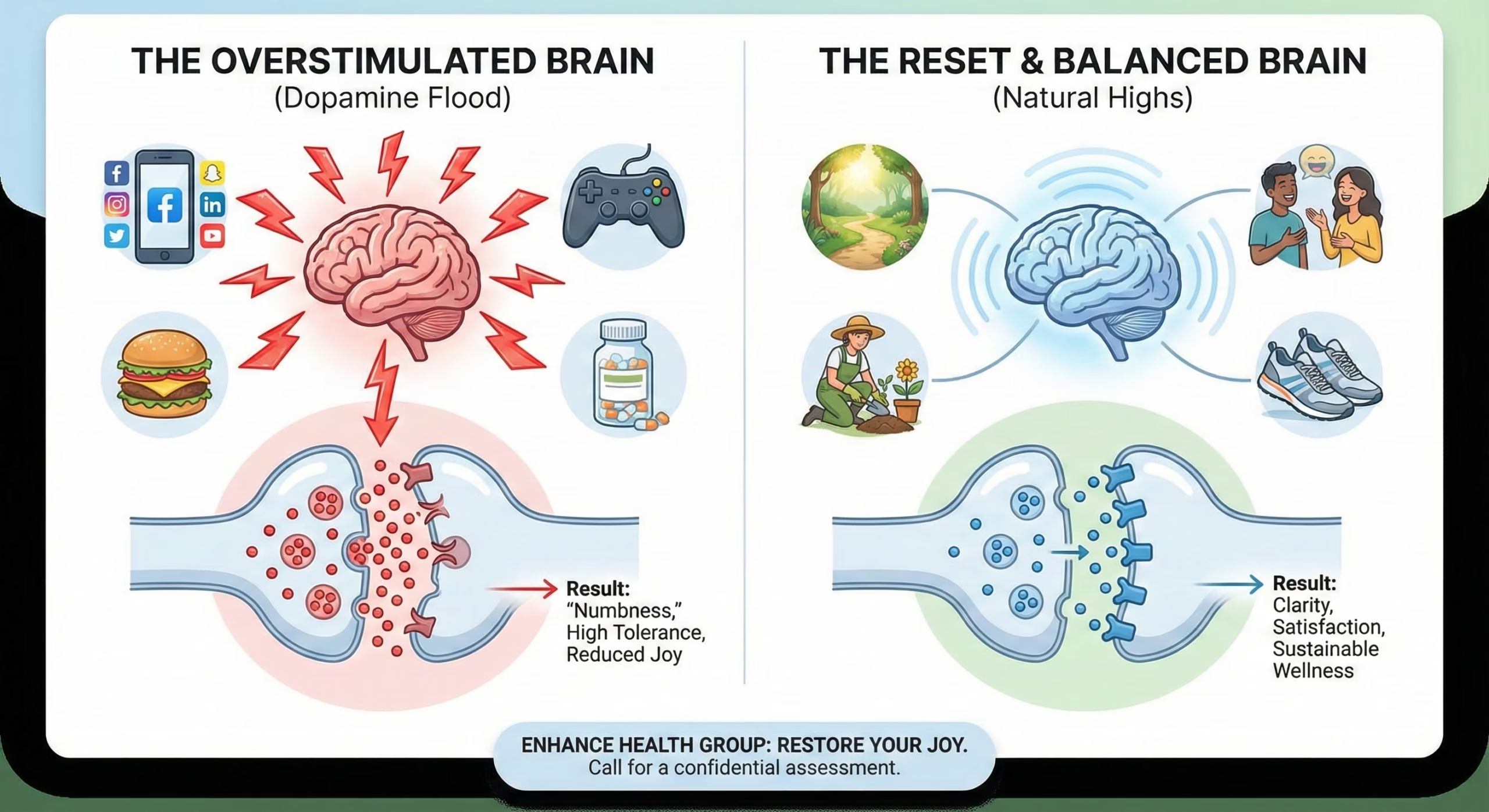
Depression, anxiety, trauma, and substance use feed each other, so a plan that treats only one usually leaves the other running. Someone who drinks to get through panic attacks, or uses stimulants to lift a flat mood, is dealing with two problems that keep restarting each other. Treating the drinking alone can bring the anxiety roaring back, and treating the anxiety alone leaves the habit that made it worse.
That's why Enhance runs dual diagnosis care, where the same team works on the mental health condition and the substance use at the same time. Your assessment covers both from the first conversation. You'll be asked what you use, how often, and what you've noticed it does to your mood, sleep, and nerves. Straight answers help the team sort out which symptoms came first and which are tied to substances.
In practice, that means one coordinated plan instead of two programs that don't talk to each other. Your therapist can work on the trauma that's driving the cravings while your psychiatrist considers how any medication interacts with what you're using. You don't have to get sober before you're allowed to address your depression, and you don't have to stabilize your mood before anyone will talk about your drinking.
If your needs include medical detox or a residential stay for addiction, that part of care happens at our sister facility, Embrace Treatment Center. Admissions at Enhance is still your first call, and the team will help you work out the right starting point and how it connects to the outpatient care that follows.
Some questions can help you tell whether a program really treats both conditions together:
- Will one team see my mental health and substance use, or will I be referred out?
- Does the assessment ask about both on day one?
- If my mood changes after I stop using, who adjusts the plan?
Matching the approach to the right level of care
The same whole-person plan can be delivered at different intensities, and the right one depends mostly on how much daily structure you need to stay safe and keep making progress. Your assessment sets that starting point, and it isn't permanent. People often move up or down as their symptoms change.
Outpatient care, which we offer by video through virtualtreatmentcenter.com, fits someone who's stable enough to handle work, school, or family while attending therapy. An intensive outpatient program (IOP) adds more treatment time each week while you sleep at home. A partial hospitalization program (PHP) gives the most daytime structure without an overnight stay, and both PHP and IOP take place at our Tustin center, about 10 minutes from John Wayne Airport. Ask admissions how the schedule would fit around your job or childcare, since session times are confirmed during that conversation.
Some signs usually point toward more structure:
Outpatient therapy hasn't been enough to bring symptoms down
Home is a place where it's hard to avoid drinking or using
Anxiety, depression, or cravings are getting in the way of work or daily routines
You're stepping down after a hospital, detox, or residential stay and need support while you adjust
Inpatient mental health care is a different category. It's for people who can't stay safe at home, and it takes place at our sister facility, Eden by Enhance. Admissions at Enhance is still where you start, and the team will help you work out whether that level fits or whether a day program could meet your needs.
Insurance often shapes the practical side of this decision. Benefits vary by plan, so the team checks your coverage and explains which level of care your plan may cover before you commit to anything. If you're unsure which level you need, you don't have to figure it out alone. The clinical assessment exists to answer that question, and you can ask the team to explain why they recommend one level over another.
What happens when you call Enhance admissions
A member of the Tustin admissions team answers and starts with a few plain questions: what's going on, who the care is for, and whether there's any substance use alongside the mental health symptoms. You don't need a diagnosis or a polished explanation. Saying "I haven't slept in weeks and I'm drinking more" is enough to begin.
Have your insurance card nearby if you can. The team contacts your payer, checks your benefits, and then explains your deductible, your copay, and which level of care your plan may cover. Benefits vary by plan, so the answer is specific to you. Enhance is in network with plans including Anthem Blue Cross Blue Shield, Aetna, Cigna, Optum, United Healthcare, Blue Shield of California, MHN, Health Net, and Ambetter, plus Covered California. If you don't see your plan listed, ask anyway, because admissions can tell you where you stand. You can also submit the insurance form online if you'd rather not talk first.
Having these ready makes the call quicker:
Your insurance card, or the member ID and plan name
A short list of current medications
Any past diagnoses or treatment you've had before
The name of anyone you'd like involved, such as a partner or parent
If you're calling for someone else, say so. Families call all the time, and the team will explain what the person will need to agree to before care can start. Nobody can be enrolled without their own consent, so it helps to think about how you'll bring it up with them.
If you decide to continue, admissions moves you into the clinical assessment. That's where the care team recommends a level of care and explains their reasoning, and you can ask questions until it makes sense. Asking about the schedule, how family can take part, or what happens if your needs change is expected.
When you're ready, call (714) 862-1907 and ask admissions to check your benefits, or use the Verify insurance button on our admissions page.