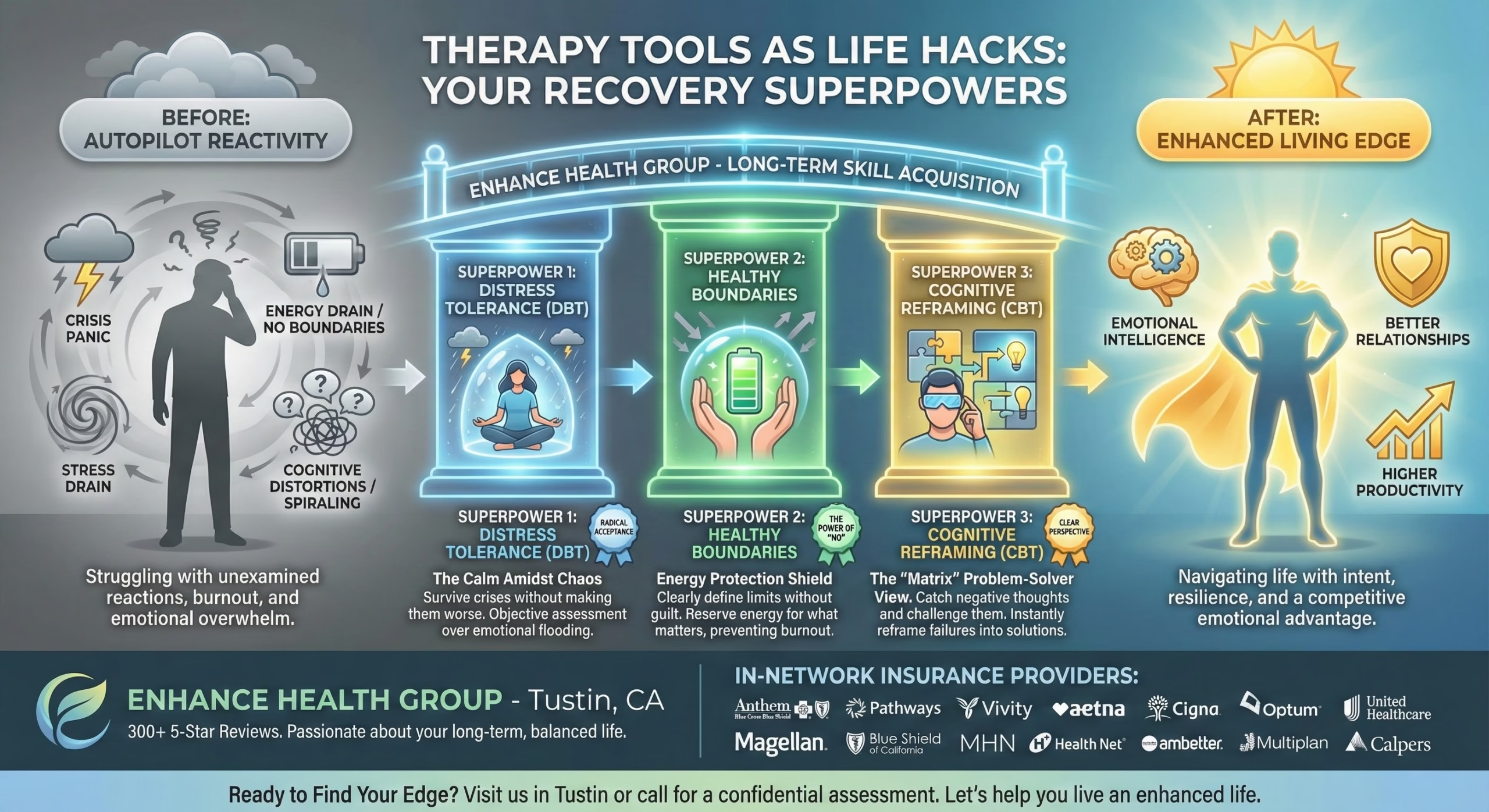
If intense emotions keep running your week, what you're probably looking for is what dialectical behavior therapy (DBT) can do about that. It's a skills-based talk therapy that teaches you to get through crises without making them worse and to keep your relationships steady. You practice the skills with a licensed therapist, and you can do that by video from your own living room. Enhance Health Group offers DBT in person at our Tustin office and by telehealth for adults across Orange County.
If you're thinking about harming yourself or you're in crisis right now, call or text 988 before you read further.
What Dialectical Behavior Therapy Is and How It Works
The word "dialectical" means holding two things that seem opposed at once, and DBT is built on one pair in particular: you're doing the best you can, and you need to learn new skills to feel better. A therapist doesn't ask you to pick one. Accepting where you are right now and working to change it are treated as partners, which is why DBT tends to feel less like being corrected and more like being coached.
Marsha Linehan developed the approach, and it began as a treatment for people with intense, hard-to-manage emotions. Clinicians now use it for a broader set of problems, including anxiety, depression, trauma, and the urge to use substances to cope. Enhance's program materials list those conditions among the ones we treat, and DBT skills are part of the work for many of them. Our care is Joint Commission accredited and certified by the California Department of Health Care Services (300410AP).
In practice, DBT usually has two working parts. In individual therapy, you meet one to one with a licensed therapist to look at what happened during the week, which emotions took over, and which skill could have helped. In skills training, you learn a specific technique, then practice it on real situations from your own life rather than hypothetical ones. Your therapist will usually ask you to try a skill between sessions and report back on what worked and what didn't.
Expect homework that's small and concrete. A typical assignment might be noticing when your emotions rise, naming what you feel, and trying one technique before you react. Your therapist adjusts it based on how the week went, so you aren't expected to get it right the first time.
Ask the therapist at your first session how they combine individual and skills work, because programs set that up differently and they can explain how yours will run.
The Four Skill Areas You Practice in DBT
Most DBT skills fall into four groups, and each one answers a different kind of moment. Your Enhance therapist will probably start with whichever group fits what's hurting most right now, then add the others over time, whether you meet at our Tustin office or by video.
Mindfulness is the base for the rest. You practice noticing what you're feeling, thinking, and doing without judging it or acting on it right away. That might mean spending a minute naming what's happening in your body when an argument starts, so you have a beat before you respond.
Distress tolerance covers the moments when you can't fix the problem yet. These skills help you get through a spike of panic, anger, or urgency without doing something you'll regret, such as lashing out, drinking, or shutting down for days. You learn ways to calm your body, shift your attention, and wait out the peak.
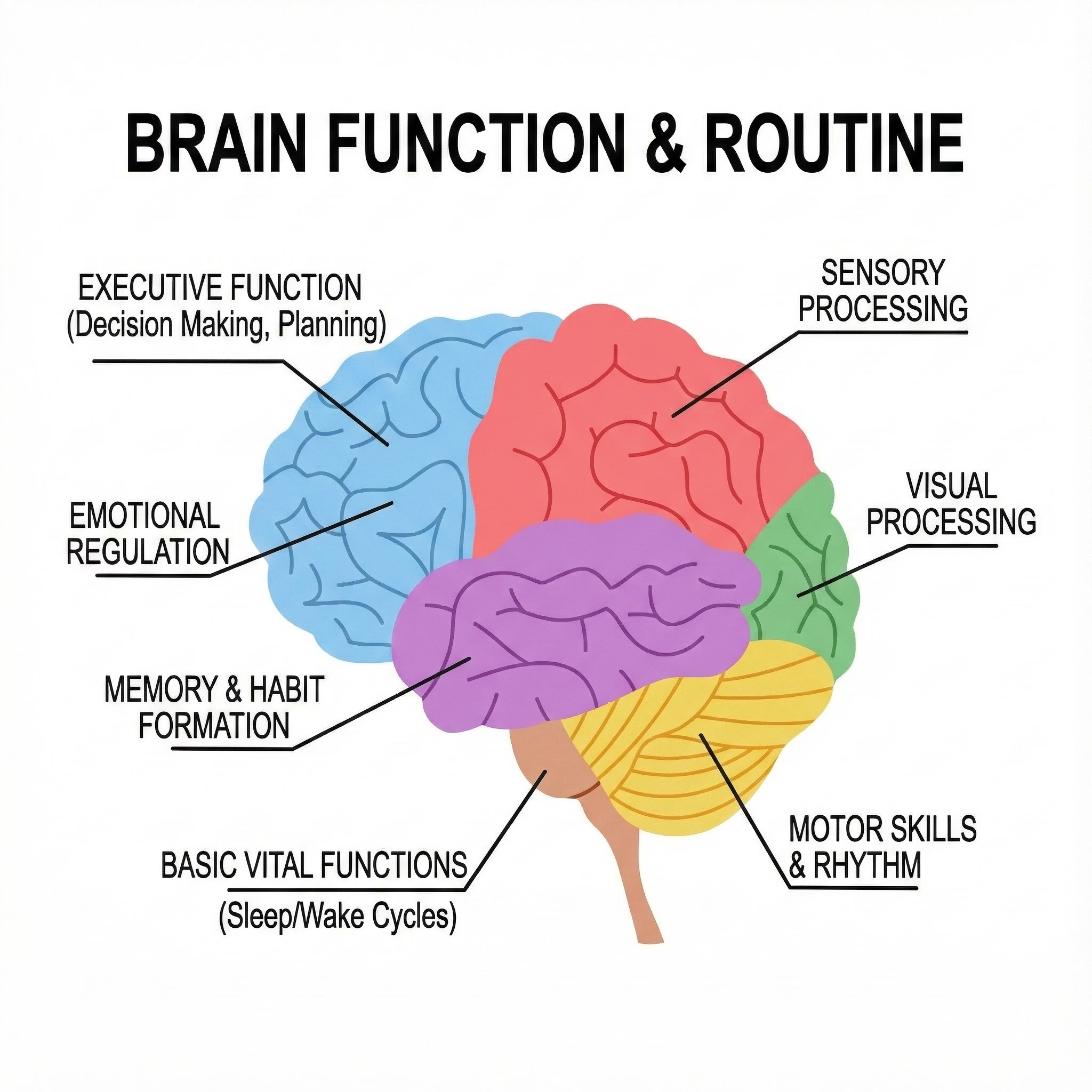
Emotion regulation works earlier in the chain. You learn to name emotions accurately, understand what set them off, and lower how often you're swamped by them. Sleep, eating, and routine often come up here, because a worn-down body makes strong emotions harder to manage.
Interpersonal effectiveness is about asking for what you need, saying no, and repairing a conflict while keeping the relationship and your self-respect intact. Therapists often rehearse a real conversation with you before you have it.
You won't be asked to master all four at once. A common pattern is to learn a skill, try it on a real situation that week, and bring back what happened so the therapist can help you adjust it. If you have a hard conversation coming up, tell your therapist, because that can shape which skill you practice next.
How DBT Works Over Telehealth
Telehealth DBT follows the same structure as in-person work, with sessions on a secure video connection instead of in an office. Our outpatient care is delivered virtually through virtualtreatmentcenter.com, so you can attend from home, from work on a break, or from anywhere in California that's private enough to talk openly.
A few practical details make video sessions go better. You'll want a device with a working camera and microphone, a stable internet connection, and headphones if other people are nearby. Pick a spot where you can close a door. If you share a home, ask the people around you for the time and quiet ahead of time, and tell your therapist if privacy is a concern so you can plan around it.
Some skills actually work better at home. When you're practicing distress tolerance, for example, your therapist can watch you use a technique in the same room where the stress usually hits. You can pull out a worksheet, a note on your phone, or a skill you've written on a sticky note while the therapist is right there on the screen.
Video does have limits, since a bad connection can interrupt a hard moment and some people find it easier to stay distracted at home. Tell your therapist if you notice either one. They can adjust how you meet, and in-person care at our Tustin office at 14742 Newport Ave is an option if video isn't working for you.
Your therapist will also ask about your safety plan early on, and what to do if a session brings up more than you expected. Confidential means your sessions aren't shared with anyone outside your care team without your say-so, and your therapist can explain exactly how that works before you begin.
Who DBT Helps and When You Need a Different Level of Care
DBT fits best when your emotions swing hard and fast, and you can still get through a day, a work week, or a conversation with a therapist's help. People often come to it after repeated crises, self-harm urges, explosive arguments, or substance use that started as a way to cope. Outpatient DBT by video or in person works well for most of these situations, because you practice skills where your life happens.
Some situations need more structure than weekly sessions can give. Watch for these signs:
- You can't keep yourself safe between sessions, even with a safety plan.
- You've stopped eating, sleeping, or going to work or school for days at a time.
- Drinking or drug use has reached the point where stopping on your own feels risky.
- Skills help in session, but nothing holds once you're home.
If any of those sound familiar, tell your therapist or admissions right away. A step up usually starts with a partial hospitalization program (PHP) or an intensive outpatient program (IOP) at our Tustin center. Both give you more hours of treatment each week while you still sleep at home, and DBT skills can be part of that work.
If you need round-the-clock care, the level changes again. Mental health inpatient and residential care takes place at Eden by Enhance (edenbyenhance.com), a sister facility owned and run by the same people as Enhance. Admissions can talk through what fits and set that up.
When substance use is part of the picture, dual diagnosis care treats the mental health condition and the addiction together, so one isn't left untreated while you work on the other. Your assessment determines which level makes sense, and it can change as you improve. Moving down to a lighter level isn't a step backward, and it usually means the skills are holding.
What Happens When You Call Enhance About DBT
The person who answers works in admissions at our Tustin office, and the first conversation is mostly questions about you. They'll ask what's been going on, how long it's been happening, whether you've had treatment before, and whether substance use is part of it. You don't need records or a diagnosis to start, though it helps to have your insurance card nearby, plus a rough list of any medications you take.
Tell them you're interested in DBT. They can explain how skills work fits into the level of care that suits you, whether that's virtual outpatient, in-person sessions, PHP, or IOP. If you're calling for a family member, say so up front. Admissions can talk with you about how to bring it up with them, but the person getting treatment will need to take part in the assessment.
Insurance comes up early because it shapes your options. The team contacts your insurance company, then explains your deductible, your copay, and which levels of care your plan may cover. Benefits vary by plan, so the answer for you may differ from what a friend or coworker heard.
Your assessment follows. A clinician looks at your symptoms, your safety, and what you've already tried, and that's how you're matched to a level of care. If the assessment points to a different level than you expected, they'll explain their reasoning, and you can ask questions before you decide anything. The care team also plans with you what happens if your needs change later.
Call admissions at (714) 862-1907, or use the Verify insurance button below to check your coverage first.
Common Questions
How is DBT different from CBT?
DBT grew out of cognitive behavioral therapy (CBT), but it adds acceptance work and skills for very intense emotions. CBT mostly focuses on changing unhelpful thoughts, while DBT teaches you to tolerate a feeling first and then change what you can. Many people do both, and a therapist can explain which fits your symptoms better.
Do I need a diagnosis before I start DBT?
You don't need a diagnosis to ask about DBT. Admissions begins with questions about what you're dealing with, and a clinician's assessment decides which level of care and which skills fit. If you already have a diagnosis, mention it. If you don't, describing your symptoms and what a hard week looks like is enough to begin.
How long does DBT take?
The length depends on what you're working on and how you respond, so your therapist sets expectations after getting to know you. Some people focus on a few skills for a short stretch, while others stay longer as they add more. Ask at your first session how progress will be reviewed, and you can adjust the plan together as it goes.
Can my family be involved in my DBT treatment?
Family can often play a part when it would help you. Therapists sometimes invite a partner or relative into a session so they can learn the skills and understand what you're practicing. You decide how much to share, and your sessions stay confidential. If you'd like a family member involved, bring it up with your therapist or admissions.
Can DBT help if I use alcohol or drugs to cope?
Yes, DBT skills are often used for substance use that started as a way to handle painful feelings. Distress tolerance in particular gives you something to do during an urge besides use. If drinking or drug use is a big part of your life, dual diagnosis care treats it alongside the mental health condition, and admissions can explain how that works.