The benefits of therapy reach well past feeling better in the moment: you get clearer thinking, steadier moods, and practical skills for handling stress, relationships, and old patterns that keep repeating. You don't need a crisis or a diagnosis to start. Plenty of people come in because things feel heavier than they should, or because a family member asked them to talk to someone. Here's what you can realistically expect from the work.
If you or someone you love is in a crisis right now, please call 988 or 911.
The Benefits of Therapy You Can Expect
The first thing most people notice is that a weekly hour with a licensed therapist gives them somewhere to say things out loud that they've been carrying alone. Saying them to someone trained to listen tends to sort them into problems you can actually work on, instead of one pile of dread.
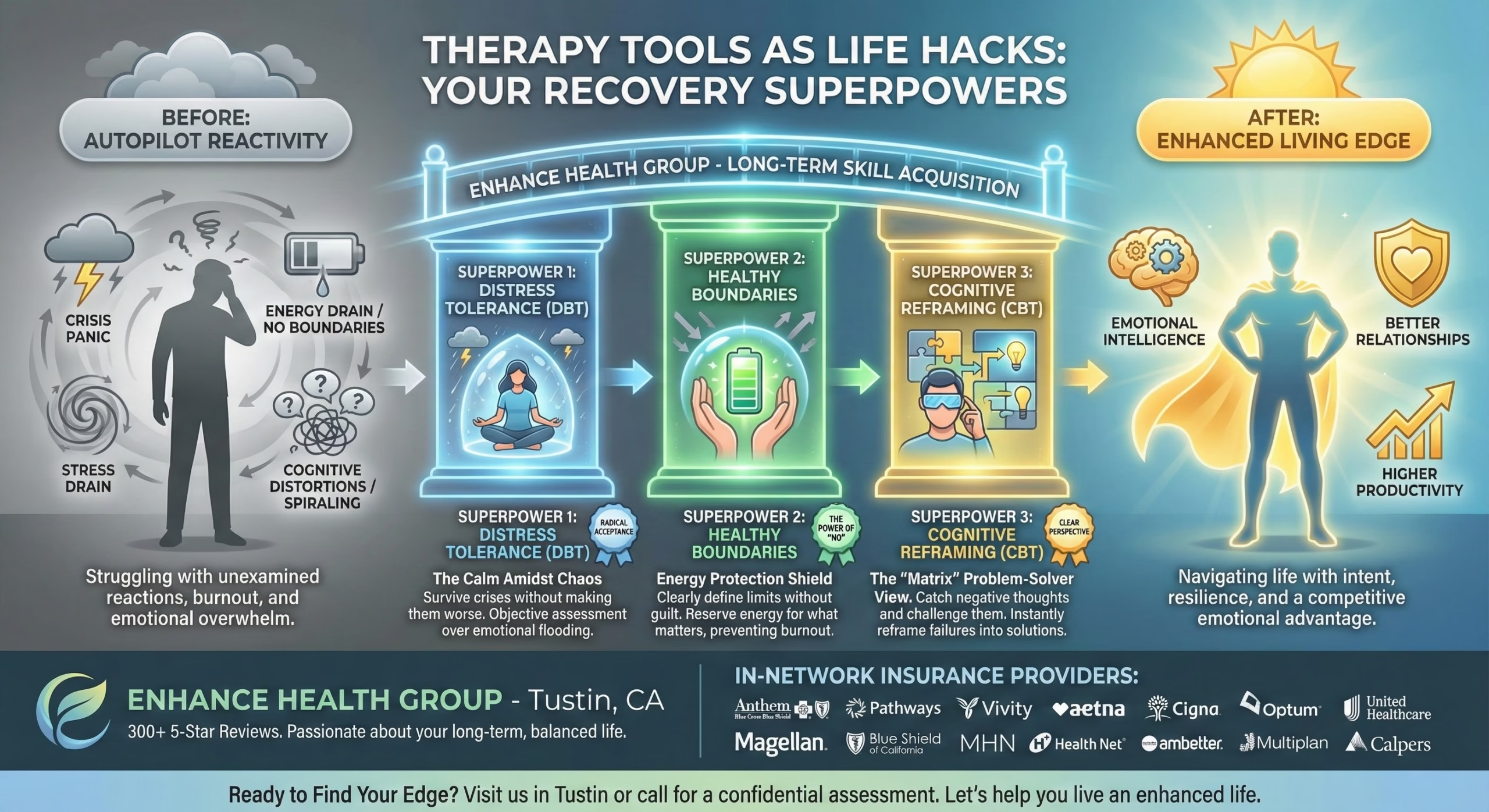
From there, the gains usually show up in a few specific places. You learn to catch an anxious thought before it turns into a spiral. You get words for feelings that used to come out as anger or silence. Skills from cognitive behavioral therapy (CBT) and dialectical behavior therapy (DBT) give you something to do in the moment, like slowing your breathing, checking whether a worry is a fact, or pausing before you answer someone who has hurt you.
Relationships often change too. When you understand your own triggers, arguments with a partner, parent, or grown child get shorter and less repetitive. Some people bring a family member into sessions so everyone hears the same plan, and that can take pressure off the one person who's been trying to fix everything.
If you're dealing with both a mental health condition and substance use, treating them together matters, because each one feeds the other. Dual diagnosis care at Enhance Health Group is built for that overlap, so you aren't asked to sort out the drinking before anyone will talk about the depression. Our Tustin program is Joint Commission accredited and certified by the California Department of Health Care Services (certification 300410AP).
Therapy can also work alongside medication. When a psychiatrist prescribes medication as part of your plan, your therapist and prescriber are working toward the same goals, and you can report back on how you're sleeping, eating, and coping.
Progress is rarely a straight line. You'll probably have sessions that feel flat and weeks that feel harder before they feel lighter. Your therapist will adjust the approach with you based on what's helping, and you're free to say when something isn't.
Signs Therapy Could Help You
A few weeks of poor sleep, a short temper that surprises you, or a growing list of things you've stopped doing are usually the first signs. They rarely show up as one dramatic event. More often a friend or partner points out that you seem different, and you realize they're right.
Some signs are easy to spot in yourself:
- You're worrying or feeling low most days, and it has lasted longer than a few weeks.
- Work, school, or parenting has gotten harder, and you're getting less done even though you're trying.
- You've pulled back from people you used to enjoy.
- You're drinking or using more to take the edge off, or to sleep, or to feel anything at all.
- A loss, a birth, a move, or a painful memory keeps coming back and won't settle.
Family members tend to notice a different set. A parent might see a grown son canceling plans and sleeping through the afternoon, and a spouse might hear the same argument for the third month in a row. If you're the one watching, pick a calm moment and describe what you've seen without labeling it. "You've seemed worn down lately, and I'm worried" opens more doors than "You need help."
Needing a higher level of support is a separate question from whether therapy would help at all. Weekly sessions fit many people, while others do better with a program that meets more often, such as a partial hospitalization program (PHP) or intensive outpatient program (IOP). The Tustin team can talk through which fits when you call, and you don't have to work that out beforehand.
If you can't tell whether what you're feeling counts, that's reason enough to book an assessment.
What Happens in Therapy Sessions
Your first appointment is mostly a conversation about you. The clinician asks what brought you in, how long it's been going on, what your sleep, appetite, and mood have been like, and whether alcohol or drugs are part of the picture. Come with a rough list of symptoms, any medications you take, and what you'd like to be different. You don't need to have it organized, and you can say "I'm not sure" to any question.
After that first visit, the clinician puts a plan together with you. It usually names the main problems you want to work on, the type of therapy that fits them, and how often you'll meet. Ask them to explain anything that's unclear, because your treatment plan belongs to you and can change as you do.
Ordinary sessions are one-to-one with a licensed therapist. You talk through what happened since the last visit, and your therapist helps you spot patterns in your thinking or reactions. Many sessions also include practice, such as a CBT worksheet, a rehearsed hard conversation, or a DBT skill for handling a surge of emotion that you then use during the week and report back on.
Sessions are confidential, which means what you say stays between you and your care team. The exceptions are the ones the law sets, such as an immediate risk of harm to you or someone else, and a good therapist will explain those at the start.
Some clients meet in person at our office at 14742 Newport Ave in Tustin, and others join by video through the virtual outpatient track. Ask admissions which option suits your schedule and your treatment plan.
Choosing a Level of Care That Fits
The right level of care is usually the lightest one that still keeps you safe and lets you make progress, and you can move up or down as things change. Outpatient therapy, delivered in person or by video through our virtual outpatient track, suits people who are functioning but struggling and want weekly support while they keep working or caring for family.
If weekly sessions haven't been enough, the next step is a program that meets more often while you still sleep at home. Our Tustin center runs both PHP and IOP, and PHP is the more intensive of the two. People often step down from PHP to IOP, then to regular outpatient sessions, as symptoms ease.
Some situations call for care away from home. Detox and addiction residential care take place at Embrace Treatment Center, and mental health inpatient and residential care take place at Eden by Enhance. Both are sister facilities owned and run by the same people as Enhance, and you'd start with our admissions team either way.
These are the questions that usually point toward a higher level:
- 1Have you had thoughts of hurting yourself, or has your home become an unsafe place to recover?
- 2Is drinking or drug use something you can't safely stop on your own?
- 3Have you tried outpatient care and found your symptoms stayed the same or got worse?
A "yes" to any of these is a good reason to ask about more support, though it doesn't mean you've failed at anything.
An assessment settles the question. A clinician listens to your history and recommends a level, and you can ask them to explain why. If you're still unsure, a recommendation for something more intensive is easier to take in when you know you can talk it through before deciding.
What Happens When You Call Admissions
A member of the Tustin admissions team picks up and starts by asking what's going on, in your own words. You don't need a diagnosis, a referral, or a polished summary. Most callers say something like "I haven't been sleeping and I can't stop worrying, " and that's enough to work with.
Expect a few plain questions. They'll ask about your symptoms and how long they've been around, whether alcohol or drugs are involved, and what treatment you've tried before. They'll also ask about any medications you take and whether you feel safe right now. If you're calling for a family member, you can share what you've noticed, though the person will eventually need to speak with the team directly.
Insurance comes up early because it shapes your options. Keep your card handy. Admissions contacts your insurance company, then explains your deductible, your copay, and which level of care your plan may cover. Benefits vary by plan, so the answer for your neighbor may not match yours. Enhance works with many major plans, including Aetna, Cigna, Anthem Blue Cross Blue Shield, and Covered California, and the team will confirm yours while you're on the line or soon after.
Calling doesn't commit you to anything. You can ask questions, hear what the options look like, and decide afterward whether to move forward. If you want to continue, admissions walks you through the next steps and sets up your assessment, where a clinician recommends a level of care.
If you'd rather not talk on the phone first, the verification form on our admissions page reaches the same team.
When you're ready, call (714) 862-1907 and tell them what's been weighing on you. The Tustin team will take it from there.
Common Questions
How long does it take to see benefits from therapy?
Many people notice small changes within the first several sessions, such as sleeping a little better or feeling less alone with a problem. Bigger shifts in mood and habits take longer. Your therapist will check in on your goals as you go and adjust the plan with you, so you'll know whether the approach is working.
Do I have to talk about my childhood or my worst memories?
No. You decide what you share and when. Some approaches, like CBT and DBT, focus mostly on what's happening now, including your thoughts, reactions, and daily stress. If past events are driving your symptoms, your therapist will bring that up gently and only go there when you're ready, at a pace you can handle.
Can I do therapy if I'm already seeing a psychiatrist or primary care doctor?
Yes. Therapy and medication often work well together, and your therapist can coordinate with your prescriber when you give permission. Tell each provider about the other so they know what you're taking and what you're working on. If you're not sure how that fits, ask admissions to explain it before your first appointment.
What if I try therapy and it doesn't feel like a good fit?
Tell your therapist what isn't working. Pace, style, and focus can often change within the same relationship. If the match still feels off, you can ask for a different clinician, and that's a normal request. Fit matters because people do better when they feel understood, so speak up early rather than quietly stopping.
Will my family or employer find out I'm in therapy?
Sessions are confidential, so your care team doesn't share what you say without your permission, apart from the legal exceptions your therapist explains at the start. Family members only join sessions if you choose that. If you're worried about insurance paperwork or work schedules, ask admissions how those pieces are handled before you begin.