One calm conversation and one phone call to a program that can check their insurance is a workable way to begin when someone you love is using. You don't need the perfect words or a full plan before you reach out, and most families we talk with in Orange County aren't sure what level of care fits. Sorting that out is part of what admissions does with you.
If your family member is in immediate danger or talking about suicide, call or text 988 right now.
First Steps in Helping a Family Member With Addiction
Before you say anything to your family member, spend an hour gathering what you already know. Write down what substances you've seen or suspect, how long it's been going on, and any recent changes in sleep, work, mood, or money. Add anything medical, like seizures, past withdrawal, or medications they take. Admissions will ask for these details, and having them on paper keeps you from trying to recall everything in the middle of a hard call.
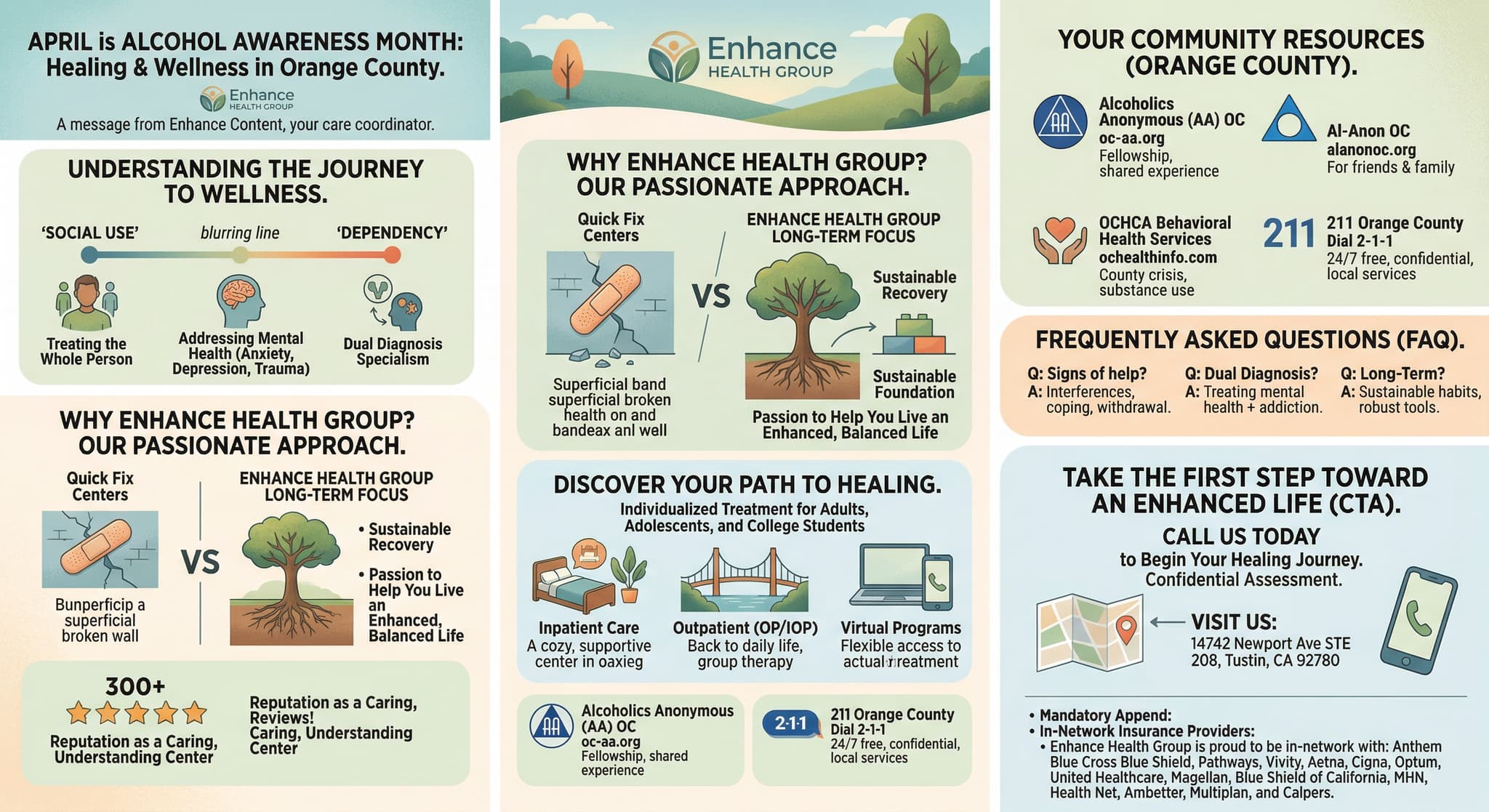
Next, find out what their insurance is, if you can do that without a fight. A card in a wallet, a recent statement, or a quick question to a spouse or parent is usually enough. Enhance is in network with Anthem Blue Cross Blue Shield, Aetna, Cigna, Optum, United Healthcare, Blue Shield of California, MHN, Health Net, Ambetter, Multiplan, and CalPERS, and Covered California has its own page. Benefits vary by plan, so the admissions team checks the specific policy and explains the deductible, copay, and which level of care may be covered.
Then pick the person who will do the talking. One steady voice works better than three relatives at the door. Choose the family member your loved one is least likely to argue with, and decide ahead of time what you will and won't say.
Finally, look after yourself while you wait for answers. You can attend a family support meeting, talk to your own doctor or therapist, or ask admissions what support exists for relatives. You'll be more useful to your family member if you're sleeping and eating, and you'll make better decisions about money and boundaries.
If you'd like help sorting through any of this, the next sections cover warning signs, how to start the conversation, and what each level of care looks like.
Signs the Substance Use Needs Treatment Now
Treatment is worth pursuing when your family member keeps using after it has cost them something real, like a job, a license, a relationship, or their health. Watch for patterns that repeat rather than a single bad night. Missed shifts, unexplained money problems, lying about where they've been, and pulling away from people they used to be close to are common ones.
Some signs point to the body needing medical attention before anything else. If they shake, sweat, or feel sick when they go without alcohol or a drug, they may be in withdrawal. Stopping suddenly can be dangerous with alcohol and some other substances, so don't push them to quit cold on their own. Ask admissions about detox first. Detox and addiction residential care take place at Embrace Treatment Center (embracetreatment.com), a sister facility of Enhance, and admissions at Enhance is still your first call.
Pay attention to mood, too. Many people use alcohol or drugs to cope with depression, anxiety, or trauma, and the two problems feed each other. If your family member seems hopeless, panicky, or numb, mention that when you call. Enhance treats dual diagnosis, which means addressing the substance use and the mental health condition together.
Other signs that it's time to act:
- They've tried to cut back and couldn't.
- They drive after using or have had a DUI.
- Their use is changing, with more of the substance, or mixing several.
- Friends or coworkers have started commenting.
You don't need to see all of these. One or two that keep happening is enough reason to call and describe what you're seeing. The admissions team can help you sort out whether outpatient, IOP, PHP, or a higher level of care fits.
How to Bring It Up With Your Family Member
Pick a time when your family member is sober, rested, and not about to leave for work. A quiet moment at home usually goes better than a restaurant, a holiday, or the morning after a fight. Plan on talking in private, with one person speaking and no audience of relatives.
Start with what you've seen and how you feel, not with a label. "I've noticed you've missed the last few Sunday dinners, and I'm worried about you" lands differently than "You're an addict." Stick to things you've witnessed yourself, because secondhand stories hand them an easy argument about who said what.
Expect pushback. Denial, anger, and "I've got it under control" are common first answers, and none of them mean the conversation failed. Don't argue the point or demand a promise on the spot. Ask a question instead, such as "What would make this easier for you?" and then listen to the answer without rushing to fix it.
Come in with one specific next step they can say yes to, like a phone call you make together or sitting beside them while they talk to a counselor. Enhance admissions can speak with you both, and the Tustin team at 14742 Newport Ave will explain the options in plain terms. Because Enhance is accredited by the Joint Commission and certified by the California Department of Health Care Services, you can tell your family member the program meets recognized standards.
Say what you will and won't do. You might keep driving them to appointments but stop covering their bills or lying to their boss. State it once, calmly, and then follow through.
If they say no, leave the door open. People often come back to the conversation days or weeks later, and they remember who stayed kind. You can call admissions yourself in the meantime, because families can ask questions before their loved one is ready.
Levels of Care and Where Each One Happens
Care for addiction runs the range of a few hours of therapy a week to a full residential stay, and the right fit depends on how much medical support and structure your family member needs right now. Admissions places them after an assessment, so you don't have to guess correctly before you call.
Outpatient care is the lightest option. Enhance offers it by video through virtualtreatmentcenter.com, which works for someone who is stable, has a safe home, and can keep up with work or school. An intensive outpatient program (IOP) adds more therapy time while they still live at home, and a partial hospitalization program (PHP) is the most structured of the day options. Both IOP and PHP meet at our Tustin center, and you can read how they differ on the PHP and IOP pages.
Some people need more than a day program can give. If your family member can't stay sober at home, or their home is part of the problem, supported living offers structured housing with staff oversight while they attend PHP or IOP. Residential care is a step above that, with round-the-clock housing as part of treatment, and it takes place at a sister facility rather than in Tustin. Embrace Treatment Center handles the detox and addiction residential levels, which we covered earlier.
If a mental health condition is driving the crisis, inpatient psychiatric care may be the better fit. That happens at Eden by Enhance (edenbyenhance.com), another sister facility owned and run by the same people as Enhance.
Whichever level sounds closest, your first call still goes to Enhance admissions. The team will ask about substances, medical history, and safety at home, then explain which level may fit and how it's covered. Levels can change, too, and many people start higher and step down as they stabilize.
What Happens When You Call Enhance Admissions
Someone on the Tustin admissions team answers and starts by asking what's going on, in your words, with no forms to fill out first. You can call before your family member agrees to anything, and you don't need them in the room.
Expect questions about the substances involved, how long and how often they've been using, and whether they've had withdrawal symptoms, seizures, or a past stay in treatment. The team will also ask about any mental health symptoms, medications, and whether home is safe. The notes you wrote down earlier will cover most of this, and if you don't know an answer, a partial picture is still useful.
Have the insurance card or member ID nearby if you can. The team contacts the insurance company, then explains the deductible, copay, and which level of care the plan may cover. Benefits vary by plan, so you'll hear what the plan says rather than a guess made before the check.
From there, a clinician assesses your family member to place them in the right level of care. If they're willing, that conversation can happen with you sitting beside them. If they aren't ready, you can still ask about options, how to keep the door open, and what support exists for you as a relative.
You'll leave the call knowing three things:
- 1Which level of care the team thinks fits, and where that care happens.
- 2What your insurance may cover, based on the check.
- 3What the next step is, and who you'll be working with.
Nothing you say on the call commits your family member to treatment, and your conversation stays private.
When you're ready, call (714) 862-1907, or use the Verify insurance button below to start the benefits check.
Common Questions
What if my family member refuses treatment?
You can't force an adult into treatment in most situations, but you can keep the door open and keep asking questions yourself. Stay calm, repeat your offer to help once in a while, and hold to the boundaries you set. Many families find that a refusal this week becomes a yes after another hard moment, so keep admissions' number handy.
Should I give them money or pay their bills?
Cash is the riskiest kind of help, because you can't control what it buys. Paying a bill directly to the landlord or utility company is safer than handing over money. Decide ahead of time what you'll cover and what you won't, tell them once, and stay consistent. Admissions can also talk through boundaries with you.
What can I do if I think they've overdosed?
Call 911 right away, and stay with them until help arrives. Don't wait for them to sleep it off, and don't leave them alone. If you have naloxone (Narcan) and you suspect opioids, give it as the label directs. Many Orange County pharmacies stock it, and the SAMHSA site explains how to use it.
Can I get support for myself while they decide?
Yes, and you should. Free peer groups such as Al-Anon and Nar-Anon meet in Orange County and online, and they're built for relatives of someone who's using. You can also see your own therapist or doctor. Ask admissions what family support exists, since you don't have to wait for your loved one to agree before you get help.