Protect your sleep, keep taking your medication, and pick one person who knows how to reach you before you leave home, because that's what a Coachella survival guide comes down to in practice. Three days of heat, late nights, and crowds can unsettle anxiety, depression, and early sobriety faster than most people expect. A little planning now makes it easier to enjoy the music and still come home steady.
If you or someone with you is in crisis at the festival, call or text 988 right away.
A Coachella survival guide for your mental health and sobriety
The desert changes how your body and mind respond, and most of what goes wrong at a festival traces back to a few ordinary things: too little sleep, too little water, skipped medication, and too much alcohol or other substances. Heat and dehydration alone can make your heart race and your thoughts spin, which feels a lot like a panic attack even when nothing else is wrong.
Start with a baseline. Before you leave, notice how you're sleeping, eating, and feeling this week, because that's the reference point you'll compare against in the middle of a loud, crowded afternoon. If your mood is already shaky going in, the festival won't fix it, and it's fair to adjust your plans.
A few habits do most of the work:
- 1Set a minimum for sleep and stick to it, even if that means skipping a late set.
- 2Take your medication at the usual time every day, and bring more than you think you'll need in its original bottle.
- 3Eat real meals and drink water on a schedule instead of waiting until you feel thirsty.
- 4Agree on a check-in time with your trusted person, and a quiet spot where you'll meet if the crowd gets to be too much.
Sleep and routine matter most if you're in recovery or managing a mood disorder, because both are easy to lose when every day looks different. If you take medication for anxiety, depression, or bipolar disorder, don't stop or change doses to "feel more present." Talk with your prescriber before you travel if you have questions.
Your plan can be simple. What counts is that you've decided in advance what you'll do if you start to slip, so you aren't making that call while exhausted and overstimulated. If it turns out you need more support afterward, Enhance Health Group's Tustin team runs partial hospitalization and intensive outpatient programs and is accredited by the Joint Commission.
Planning before you go: sleep, medication and a backup plan
Two weeks before the festival is the right time to deal with the parts that are hard to fix once you're in the desert. If you see a therapist or psychiatrist, book a short visit now and tell them your dates. Ask what to do if you miss a dose, whether heat or travel changes anything for your medication, and how they'd want to hear from you if you hit a rough patch while you're away.
Sleep needs its own plan, because camping and rental houses are rarely quiet. Pack earplugs and an eye mask, and keep your bedtime within an hour or two of what you do at home. A fixed wake-up time matters more than a fixed bedtime, since it keeps your body clock from drifting across three days.
Your backup plan should be written down, not just talked about. Put these things in a note on your phone and send it to your trusted person:
- 1Your prescriber's name and the name of each medication you take.
- 2The one person you'll text if your anxiety spikes or a craving hits.
- 3The exact time you'll leave the grounds if you're not doing okay, and how you'll get home.
If you're in recovery, add a line about who you'll call before making any decision about drinking or using. Deciding that in advance takes the pressure off the moment itself.
Plenty of people also like to know what comes after. If the weekend leaves you shaken, our Tustin team offers partial hospitalization and intensive outpatient programs, and you can talk through which level of care fits before you decide anything. Tustin is about 10 minutes from John Wayne Airport, which helps if you're flying home.
Warning signs at the festival that mean it's time to step out
Plan on leaving the crowd for a while if your body or mind starts doing something you wouldn't accept on a normal Tuesday. Compare what you notice against the baseline you set before you left, and treat a clear change as information, not weakness.
Some signs mean you should get water, shade, and a quiet spot right away. A racing heart that doesn't settle after ten or fifteen minutes of rest, dizziness, confusion, or a pounding headache can point to heat illness, and the first-aid tents on the grounds are there for exactly that. Tell a staff member what you've taken and what medications you're on, since they can't help well without it.
Other signs are about your mind, and they're easier to talk yourself out of:
You haven't slept in a full night for two days and your thoughts are speeding up or jumping around.
Panic keeps returning, or you feel detached from your body or the people around you.
You're hearing or seeing things that others aren't, or you feel suspicious of people you know.
You skipped your medication and can't tell how many doses you missed.
You're craving a drink or a drug and you've started bargaining with yourself about it.
If you recognize two or more of these, send your trusted person the text you planned, then go to your meeting spot and use the exit time you wrote down. Leaving early costs you a few sets. Staying while your sleep and judgment fall apart can cost you much more.
Once you're home, a rough weekend that doesn't ease after a few days of normal sleep, food, and routine is worth a conversation with a professional. That's a good moment to call Enhance admissions in Tustin, where the team can tell you what level of care might fit.
Staying sober or cutting back in the desert
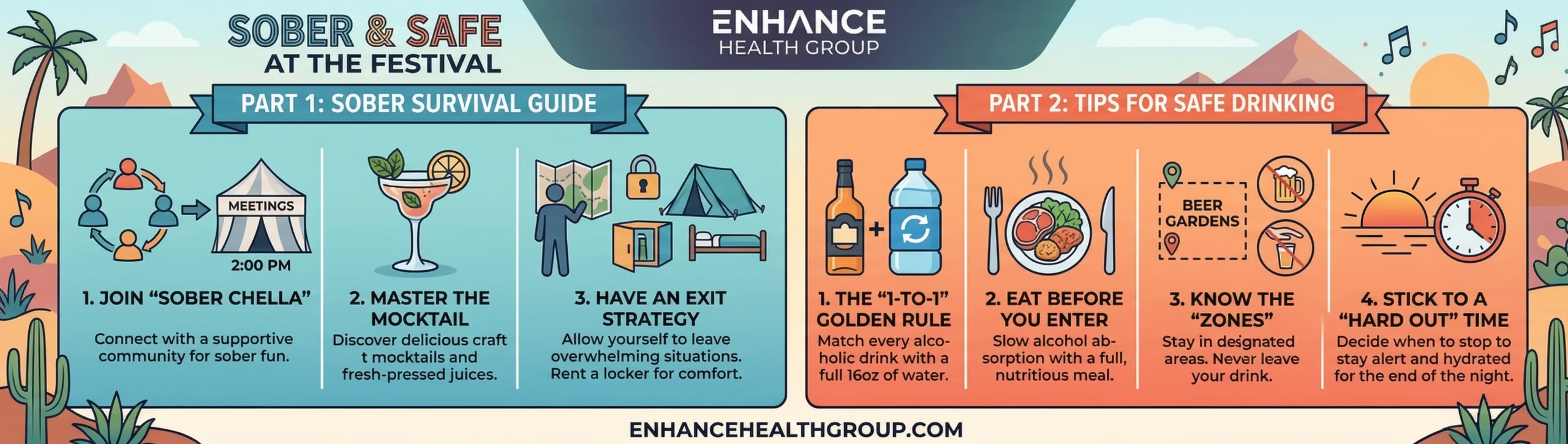
Alcohol is sold everywhere at Coachella, and it's the easiest thing to drift into when the heat is high and the lines are long. So decide your rule before you walk through the gate, and make it specific: "no drinks at all, " or "two drinks, none before sundown." A vague goal like "go easy" rarely survives the third hour of a set.
A few moves make a rule easier to keep. Carry your own water bottle and refill it often, so you always have something in your hand. Order a nonalcoholic drink first, then decide if you want anything else. Tell the friends you're with what you're doing, and ask them not to offer you a round. If you're in recovery, most people respond well to a plain "I'm not drinking this weekend."
Cutting back is different from stopping if you drink heavily at home. Quitting abruptly after regular, heavy use can cause withdrawal, which can be dangerous. If you've been drinking daily, talk with a doctor before the trip rather than going cold turkey in the desert.
A slip doesn't erase your recovery or your plan. If you drink or use when you'd decided not to, text your trusted person, drink water, eat, and sleep. Then call your sponsor, therapist, or counselor in the next day or two. Shame tends to keep people quiet, and quiet is how one night becomes a week.
If you find you can't stick to your limit even with a plan, that's useful information about where you are. Our admissions team can talk through whether outpatient care, an intensive program, or detox through our sister facility, Embrace Treatment Center, makes sense. Enhance admissions is the place to start that conversation.
What happens when you call admissions after the weekend
The person who picks up at (714) 862-1907 is on the Tustin admissions team, and the first few minutes are mostly listening. You'll be asked what happened at the festival, how long it's been since you felt steady, and what you're hoping will change. You don't need to have the right words, and you don't need to know which level of care you want before you call.
It helps to have a few things nearby, though none of them are required:
Your insurance card, so the team can check your benefits with your plan.
A list of the medications you take, including any you missed or changed over the weekend.
A rough account of what you drank or used and when, since that affects which level of care is safe.
After that conversation, admissions contacts your insurance company and explains your deductible, your copay, and which levels of care your plan may cover. Benefits vary by plan, so the answer is specific to you rather than a general list. If you want to continue, admissions walks you through the next steps and sets up an assessment with a clinician, who decides what fits based on how you're doing, not on how the weekend sounded.
Depending on that assessment, the recommendation might be virtual outpatient sessions, an intensive outpatient program, or a partial hospitalization program in Tustin. A family member can make the first call too. Many parents and partners do, and the team will tell them what they can discuss and what needs your consent.
Nothing about calling commits you to treatment. You're gathering information about what's available and what your plan may cover, and you can take that home and think it over.
Call admissions at (714) 862-1907, or use the Verify insurance button to check your coverage first.
Common Questions
Can I go to Coachella if I'm in early recovery?
Many people in early recovery do attend, but it's safest if you're at least a few weeks past a major stress or relapse and have people around who know your plan. If you're newly sober, a day trip or a single day may be easier to manage than the full weekend. Ask your counselor or sponsor what they think before you buy tickets.
Is it okay to bring someone along as my sober support?
Yes, and it often helps. Pick a friend or family member who doesn't plan to drink heavily, who knows your warning signs, and who agrees to leave when you ask. Tell them ahead of time what you'd like them to do if you start to slip, so they aren't guessing in the middle of a crowd.
Does insurance cover treatment if the festival weekend was the last straw?
It may. Coverage depends on your plan and on which level of care the assessment recommends, so the reason you're calling doesn't change much. Enhance is in network with plans such as Anthem Blue Cross Blue Shield, Aetna, Cigna, Optum, and United Healthcare, among others. Admissions checks your specific benefits and explains what they may cover.
What if a friend came home from the festival and is acting differently?
Talk to them privately and describe what you've noticed, such as sleeping very little, seeming paranoid, or drinking more than usual. Keep it specific and kind rather than accusing. Offer to sit with them while they call a counselor or admissions, or make the call yourself to ask what the next step could be.