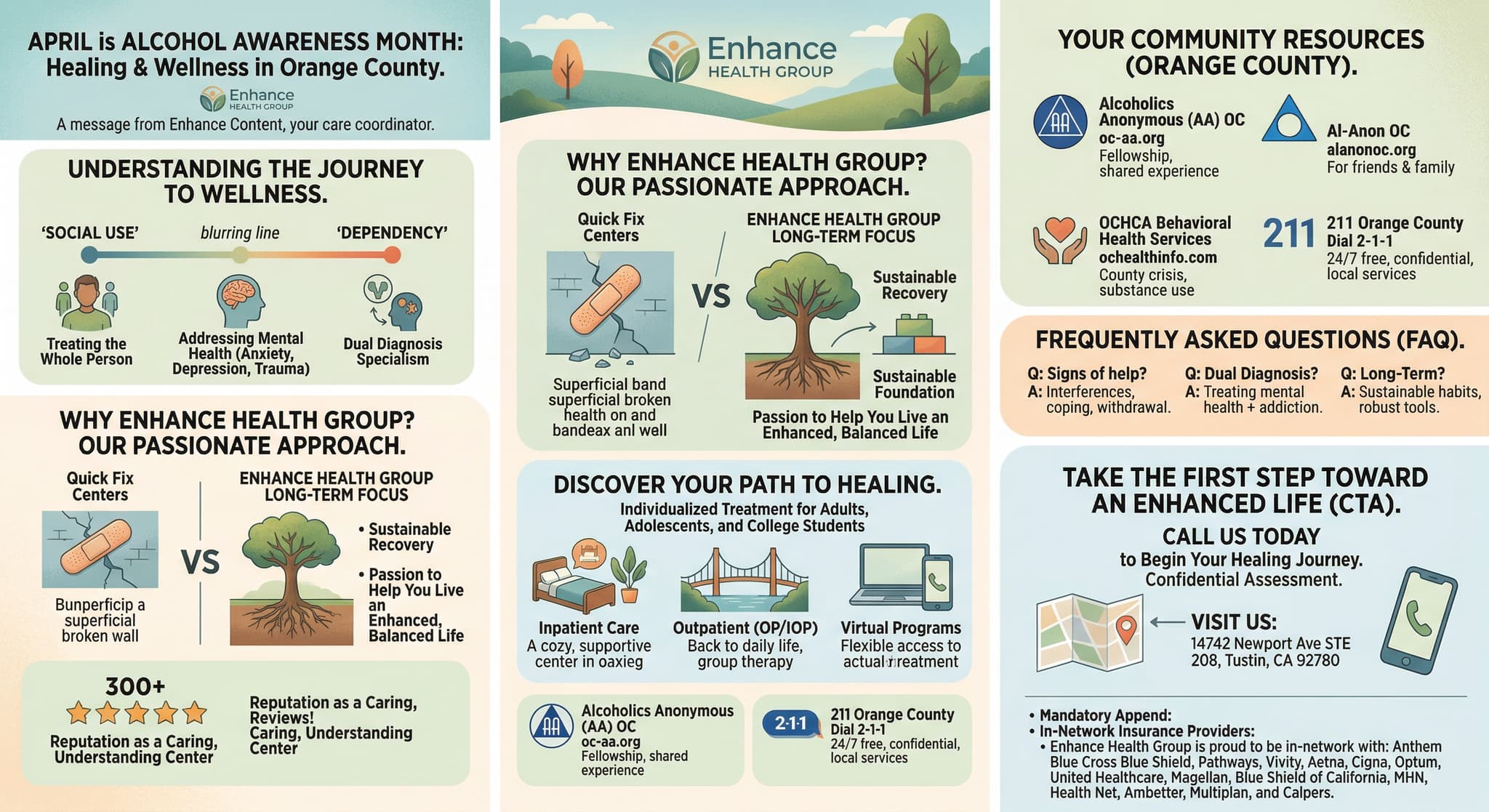
Your family member needs inpatient care if home can't keep them safe, and outpatient care if they can stay safe between appointments with someone nearby to notice changes. Inpatient means living at a facility around the clock, while outpatient means going home between sessions. Most people don't need to pick one for good, because care can step up or down as they change. Here's how each works and what the first call to admissions looks like.
If your loved one is thinking about suicide or you're worried about their immediate safety, call or text 988 right now.
Inpatient vs Outpatient Mental Health Care: The Core Difference
The real split is who's watching over the day. In inpatient care, a treatment team handles the hours between therapy sessions, including sleep, meals, and medication. In outpatient care, you or your family handle those hours at home, and the team sees your loved one for scheduled visits.
That makes inpatient the right fit when home can't hold the risk. Think of someone who isn't sleeping for days, can't take medication reliably, or is hearing voices that frighten them. Outpatient fits when your loved one can keep themselves safe between appointments and has someone at home who can notice changes.
Outpatient also comes in more than one size. At Enhance Health Group in Tustin, a partial hospitalization program (PHP) and an intensive outpatient program (IOP) both let a person sleep at home while attending treatment, with PHP being the more intensive of the two. Virtual outpatient sessions are available for people who can't easily get to an office. Our admissions team can explain how each one is scheduled when you call.
Inpatient mental health care happens at Eden by Enhance (edenbyenhance.com), a sister facility owned and run by the same people as Enhance. Your first call still goes to Enhance admissions, and they'll help you work out whether inpatient is the right level before anything moves forward.
Co-occurring substance use changes the picture a little. When depression, anxiety, or trauma shows up alongside drinking or drug use, a dual diagnosis approach treats both together instead of sending your family member to separate places for each. Tell admissions about both when you call, even if one feels harder to say out loud.
Signs a Higher Level of Care May Be Needed
Weekly therapy usually stops being enough when your family member's days start falling apart faster than an appointment can catch it. Watch for patterns over a week or two, not a single bad afternoon.
Some signs point toward inpatient care, which is the level provided through Eden by Enhance:
- They've talked about wanting to die, or they've made a plan or gathered the means.
- They're barely sleeping or eating, and it's getting worse each day.
- They've stopped taking prescribed medication, or they can't take it as directed.
- They're seeing or hearing things that aren't there and are acting on what they perceive.
- They can't handle basic tasks like bathing, dressing, or getting out of bed.
Other signs suggest a step between weekly therapy and a hospital-level stay, such as the PHP or IOP offered at Enhance in Tustin. Your loved one might be safe at home but missing work or school, pulling away from friends, drinking more to cope, or finding that therapy once a week leaves too many bad days in between. A recent hospital discharge fits here too, since many people need more structure while they settle back into home life.
You don't need to diagnose anything before you call. Admissions will ask what you've noticed, how long it's been going on, whether there's been any substance use, and what treatment your loved one has had before. It helps to jot down the medications they take and the dates of any recent crises, though you can still call without that list.
If you're unsure which group your family member falls into, say so. A clinical assessment, not a guess from the family, decides the level of care, and a recommendation can change as your loved one's symptoms do.
What Inpatient Care and Outpatient Care Look Like Day to Day
On an inpatient unit, your loved one's day is built by the treatment team, so there's little your family has to arrange. A psychiatrist reviews medication, therapists meet with them individually and in groups, and staff handle meals and sleep routines. Because your family member is away from home, visits and phone calls follow the facility's own rules. Ask admissions what those rules are before you plan a trip.
Outpatient care leaves the rest of the day in your hands. With the PHP or IOP at Enhance's Tustin office, 14742 Newport Ave, your loved one attends treatment, then comes home to their own bed, their own kitchen, and the people who know them best. That means you'll probably be the one who notices a rough night, reminds them about medication, and drives them or sets up a quiet spot for a virtual session. Families often find it helps to agree on one person who passes along what they see to the therapist.
The therapy itself overlaps more than people expect. Individual sessions, skills work such as CBT and DBT, and medication management with a psychiatrist can show up at either level. What changes is how many hours of treatment fit into a week and who's present for everything else.
Daily logistics are the part families ask about most, and they vary by program. Ask admissions how many days a week your loved one would attend, what a typical session includes, and whether a family member can join. The team will answer based on the level of care recommended after the assessment, not a one-size schedule.
The Steps Between Inpatient and Weekly Therapy
Mental health care works like a staircase, and most people use only the steps they need. At the top is a residential or inpatient stay. Below it is a partial hospitalization program (PHP), then an intensive outpatient program (IOP), then standard outpatient therapy, which can be in person or virtual.
PHP is the step many families don't know exists. Your loved one sleeps at home but attends treatment as the main part of their week, which suits someone who's too unwell for weekly appointments yet doesn't need to live at a facility. IOP asks for less time, so it often works for people returning to work or school. Outpatient therapy is the lightest step, and Enhance delivers it virtually through virtualtreatmentcenter.com for people who'd rather not travel.
Moves go in both directions. Someone leaving an inpatient stay can step down to PHP rather than going straight to weekly sessions. Someone in IOP whose symptoms get worse can step up. The treatment team makes these recommendations after reassessing how your loved one is doing, and they'll explain their reasoning to you.
Moving down is a clinical decision, not a reward for a good week. The team usually looks at whether your family member is sleeping, taking medication as prescribed, and handling days at home without a crisis.
If your loved one is in a PHP or IOP at our Tustin center, ask the team early what stepping down would look like and what signs would call for stepping up. Having that conversation at the start means nobody is surprised by a change later. Admissions can also check your insurance for each level, since benefits vary by plan and a step down may be covered differently than the step before it.
How to Bring It Up With Your Family Member
Pick a quiet moment when nobody is rushed, and start with something you've actually seen. "I've noticed you haven't slept much this week, and I'm worried" lands better than "you need treatment." Specific observations are harder to argue with than labels, and they show you've been paying attention rather than passing judgment.
Plan to listen more than you talk. Your family member may be afraid of being locked away, of losing a job, or of being told something is wrong with them. Ask what worries them about getting help, then answer those worries directly. If the fear is "I'll have to live somewhere, " you can explain that Enhance's Tustin PHP and IOP let a person sleep at home.
Offer a small first step instead of a big decision. Asking "Can we call together and just ask questions?" feels very different from "You're going into treatment." Many people agree to a phone call when they'd refuse a program. You can sit beside them while they talk to admissions at (714) 862-1907, or make the call yourself and report back what you learned.
If the conversation goes badly, don't force it. Leave it for a day, then try again, ideally with one person they trust rather than several relatives at once. A group can feel like an ambush.
Adults make their own treatment decisions, so you can't sign your loved one up against their wishes. You can still call admissions on your own to ask how the process works and what to say next time. The team can talk through your situation with you even before your family member is ready to join.
What Happens When You Call Admissions
A member of the Tustin admissions team answers, and the first few minutes are mostly questions about your family member. They'll ask what you've noticed and how long it's been going on, and whether there's any drinking or drug use. They'll also want to know what treatment, medications, and hospital stays your loved one has had before. If you don't have every answer, say so. You can fill in the rest later.
After that, admissions asks for the insurance card details so they can contact the plan. Enhance is in network with Anthem Blue Cross Blue Shield, Aetna, Cigna, Optum, United Healthcare, Blue Shield of California, MHN, Health Net, Ambetter, Multiplan, and CalPERS, and Covered California plans are covered by their own process. Benefits vary by plan, so the team explains your deductible, your copay, and which levels of care your plan may cover. Have the member ID and the name of the policyholder in front of you, since that's often someone other than the person getting care.
Next, the team works out which level of care fits. That might be PHP, IOP, virtual outpatient, or a referral toward inpatient care. A clinical assessment confirms the recommendation, and you can ask why they chose it. If your family member isn't ready to talk, you can still call alone and ask how the process works.
You don't have to decide anything on the call. Ask what happens next, who you'll hear from, and what paperwork your loved one will need to bring.
Call admissions or use the Verify insurance button below to start with your benefits.