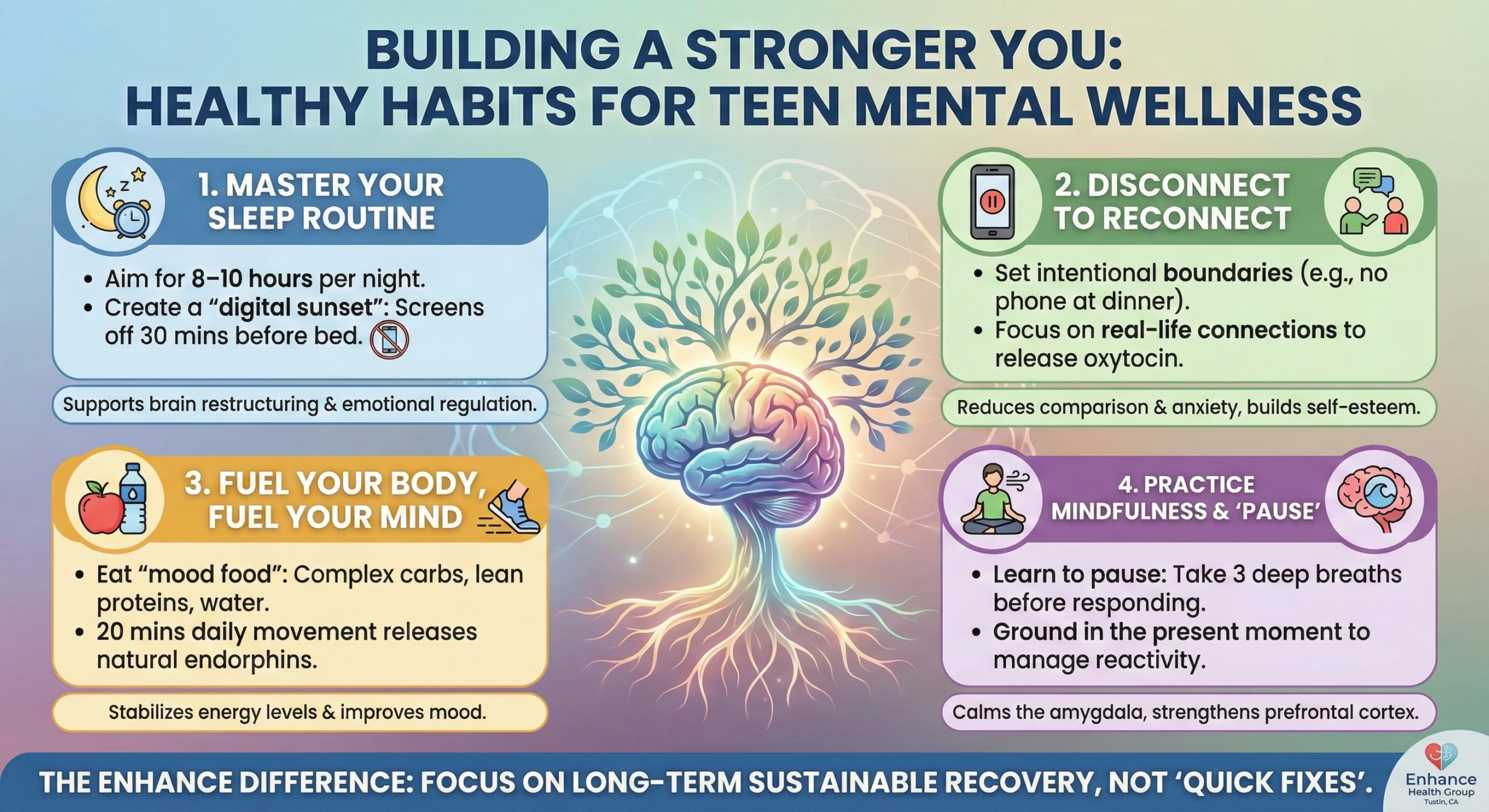
World Teen Mental Wellness Day is a good excuse to sit down with your teen and ask how they've really been, even if nothing looks wrong from the outside. You don't need a script or a crisis to start. If the answers worry you, Enhance Health Group's Tustin team can talk through teen therapy options with you, in person or by video.
If your teen is thinking about suicide or self-harm, call or text 988 right now.
Using World Teen Mental Wellness Day to check in with your teen
Teens rarely answer "How are you?" with anything but "fine, " so the day works better as a reason to do something together than as a reason to have a formal talk. Pick an ordinary setting where you're side by side instead of face to face. A drive to practice, a walk with the dog, or a late snack in the kitchen all take the pressure off eye contact.
Ask about specifics instead of feelings in general. "What's been the hardest part of this week?" gives a teen something to answer, while "Are you okay?" invites a one-word reply. You can also ask about sleep, friends, school, and what they're looking forward to. Those four areas tend to show a change in mood before a teen says anything out loud.
Once you've asked, stop talking. Many teens need ten or fifteen seconds of quiet before they say something real, and filling that gap with advice usually ends the conversation. If they say "nothing's wrong, " you can answer, "Okay, I'm here if that changes, " and mean it. One short check-in that goes badly doesn't close the door. Teens often come back to the topic a day or two later, once they've had time to decide whether you were serious.
Plan to repeat the check-in rather than treat today as a single event. A few minutes each week tells your teen the question wasn't a one-time gesture, and it gives you a baseline, so you can tell what's normal for them and what's a real change.
Notice what you hear and what you don't. A teen who talks about feeling worthless, stops seeing friends, or goes quiet about things they used to love is telling you more than their words. If you're unsure whether what you're seeing is ordinary teenage moodiness, the next section covers the signs that call for more than a conversation at home.
Signs that a teen needs more than a talk at home
Two weeks is a useful marker. A change in mood or behavior that lasts that long, or that keeps getting worse, usually calls for a professional opinion rather than another conversation at the kitchen table.
Watch for patterns that show up across more than one part of your teen's life:
- Grades drop, or they start skipping classes or refusing to go to school.
- They sleep far more or far less than usual, or their appetite changes noticeably.
- They pull away from friends they used to see every week.
- Irritability or tearfulness shows up almost daily, and little seems to help.
- They talk about being a burden, or give away things that matter to them.
- You find signs of alcohol, vaping, or drug use, or they seem to be using to cope.
- They've begun hurting themselves, or you've found evidence of it.
Any single item can be a rough week. Several at once, or one that has lasted past two weeks, is the point where a therapist's assessment helps more than waiting. You don't need a diagnosis or a certain level of severity before you call.
Think about the setting too. Teen anxiety, ADHD, and low mood often respond to outpatient therapy, where your teen keeps going to school and sleeping at home while seeing a therapist. Enhance's adolescent program offers CBT and DBT skills work, in person or by video, with after-school options. When a clinician hears the full picture, they can tell you whether that level of care fits or whether your teen needs something more intensive.
If your teen is in immediate danger, the crisis line above comes first. Otherwise, a call to admissions at (714) 862-1907 is a reasonable next step, and you can describe what you've seen in your own words.
How to start the conversation without it becoming a confrontation
The first minute sets the tone, so open with what you've noticed instead of what you're worried about. "I've seen you're up late most nights, and you've skipped dinner a few times" is an observation your teen can't argue with. "I think you're depressed" is a conclusion, and most teens will push back on it.
Choose a moment when nobody is rushed or already upset. Right after a fight, a bad report card, or a missed curfew, a teen hears the question as punishment. Wait for a calmer evening, and put your phone away so they can see they have your attention.
Say one thing you've noticed, one thing you feel, and one thing you'd like to do. For example: "You've seemed down for a couple of weeks, I'm worried, and I'd like us to talk to someone together." Keep it that short. A long speech sounds rehearsed, and teens tend to stop listening to it.
Expect some resistance. Eye-rolling, a shrug, or "I'm fine" doesn't mean the talk failed. Don't argue with the answer or try to prove your point. You can say, "Okay, I hear you. I'm still going to ask again next week, " and then follow through.
If your teen is open to it, give them a say in what comes next. Let them choose between meeting a therapist in person or by video, since Enhance offers both for teens. Teens who help make the decision are usually more willing to show up.
Avoid promising secrecy you can't keep. If your teen says something that points to danger, you'll need to act on it, and it's kinder to be honest about that early than to break a promise later.
Teen outpatient therapy at Enhance, in person or by video
Enhance's adolescent program is outpatient therapy, so your teen keeps living at home and going to school while they meet with a therapist. Sessions are offered in person or by video, and the program includes after-school options for teens whose days are already full.
The therapists use cognitive behavioral therapy (CBT) and dialectical behavior therapy (DBT). CBT helps a teen notice the thought patterns that feed anxiety or low mood and practice replacing them. DBT focuses on skills for handling strong emotions, tolerating distress, and getting through conflict without things blowing up. The program is built around anxiety and ADHD, and teens with low mood or trouble managing emotions are often a fit too. Ask admissions how a particular concern would be handled.
Before treatment starts, a clinician learns what's been happening: when the changes began, what's worked at home, and what your teen says about it. That conversation shapes the plan. If your teen needs more support than weekly therapy can give, the clinician can talk with you about stepping up to a more intensive level of care. Nobody expects you to know the right level in advance.
Video sessions are worth considering if your teen is more at ease at home, if your commute across Orange County makes a standing appointment hard, or if a teen who dreads a waiting room would otherwise say no. In-person sessions at the Tustin office suit teens who open up better face to face or who need a break from screens. Some families start one way and switch to the other, so ask about changing formats if the first choice doesn't feel right.
Parents have a role as well. Ask the team how and when you'll be included, and what stays between your teen and their therapist.
What happens when you call admissions
A real person from the Tustin admissions team picks up and asks what's going on with your teen, so you don't need a diagnosis or a polished summary. Describe what you've noticed in your own words, including how long it's been happening and what you've already tried at home.
Have a few things within reach before you dial:
- 1Your teen's age and the grade they're in.
- 2The changes you've seen and roughly when they started.
- 3Any therapy or medication your teen has had before.
- 4Your insurance card, if you'd like benefits checked during the call.
Admissions will ask whether your teen is safe right now, and your answers help them point you toward the right level of care. If outpatient therapy fits, they'll explain how in-person and video sessions work for teens. If it sounds like your teen needs more than outpatient support, they'll tell you that plainly and talk through the options with you.
The team will also check your insurance. They contact your plan, then explain your deductible, your copay, and which level of care may be covered. Enhance is in network with plans including Anthem Blue Cross Blue Shield, Aetna, Cigna, Optum, United Healthcare, Blue Shield of California, MHN, and Health Net. Benefits vary by plan, so the call is how you find out what applies to you.
You can ask anything that's on your mind, such as how parents are involved, what stays private between your teen and their therapist, and how to switch formats later. Calling doesn't commit you to anything. Many parents use the first call just to get a clearer picture.
When you're ready, call admissions at (714) 862-1907, or use the Verify insurance button below to start with your benefits.
Common Questions
Can my teen see a therapist without a diagnosis?
Yes, your teen doesn't need a diagnosis before starting therapy. A clinician learns about the changes you've noticed and decides what kind of support fits. Many families come in because of a gradual shift in mood, school, or friendships, and the diagnosis, if there is one, comes out of the assessment rather than before it.
What if my teen refuses to go?
Start by asking what they're most worried about, since fear of being judged or of being "put away" is common. Offer choices they can control, like video or in-person sessions. If they still say no, you can begin by talking with a clinician yourself about how to approach them. Pressure usually backfires, but steady, calm invitations often work.
Does my teen's school need to know?
Not necessarily. Outpatient therapy happens outside school, and the decision to tell teachers or a counselor is yours to make with your teen. Some families share it to arrange flexibility for appointments or help with workload. If you want to loop the school in, ask your teen's therapist how to do it in a way that protects your teen's privacy.
Can I get help for myself while my teen is in therapy?
Yes, and it's worth asking about. Living with a teen who's struggling is draining, and your own stress affects the whole household. Admissions can tell you whether family sessions are an option and how parents can take part. You can also bring your own questions to the first call, even if they aren't directly about your teen.
What if my teen is also using alcohol or drugs?
Tell admissions during the call, since substance use changes which level of care fits. Enhance treats mental health and substance use together through dual diagnosis care. If your teen needs detox or residential addiction care, admissions can point you to Embrace Treatment Center (embracetreatment.com), a sister facility run by the same people as Enhance.