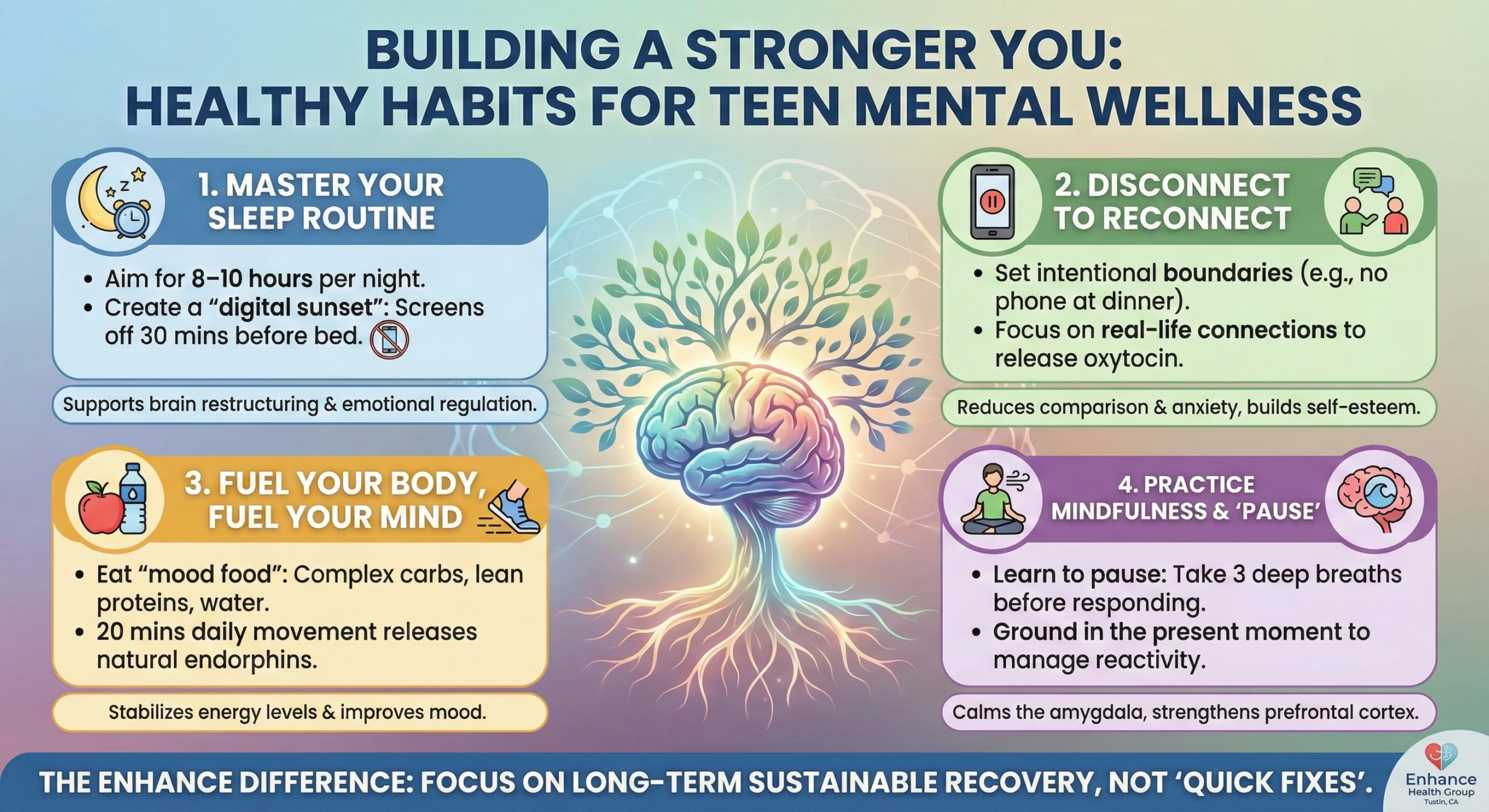
A consistent bedtime, a daily walk or bike ride, a phone that charges outside the bedroom, and one adult your teen can talk to without being lectured are the healthy habits for teen mental health that help most at home. They won't replace treatment when symptoms run deeper, but they make everyday stress easier to carry, and small changes your teen can keep up are the best place to begin.
If your teen is thinking about suicide or self-harm, call or text 988 right now.
Healthy Habits for Teen Mental Health That Make a Daily Difference
Start with the habit that's easiest to see, which is when your teen goes to bed and gets up. A sleep schedule that stays within an hour or so on school days and weekends does more for mood and focus than most families expect, and you can check it without asking a single hard question.
Pick one change at a time. Teens who are handed five new rules on a Sunday night usually drop all five by Wednesday. A better first week might be a phone charging spot outside the bedroom, plus a 20-minute walk or bike ride your teen chooses, kept small enough that a rough day doesn't end it.
Meals matter too, mostly because skipped breakfasts and late-night snacking tend to travel with poor sleep. You don't need a nutrition plan. Eating together a few times a week gives you a low-pressure window to hear how things are going.
Watch how your teen responds, not just whether they comply. A teen who gets a little more rested, talkative, or less irritable within two or three weeks is telling you the habits are working. A teen who follows every routine and still seems flat, anxious, or withdrawn is telling you something different, so write it down to describe to a clinician later.
Habits work best when they're shared. If you put your own phone in the kitchen at night, your teen is far more likely to put theirs there too.
Sleep, Screens, and Movement: Where to Start
Most teens need more sleep than they get, and the fastest fix is usually the hour before bed. Agree on a time when screens go off and let your teen help choose it, because a rule they had a say in is much easier to hold than one handed down at dinner.
For screens, the biggest gain comes from changing where the phone sleeps rather than taking it away. A charger in the hallway or kitchen removes the late-night scrolling that cuts into sleep without a daily argument. If your teen uses the phone as an alarm, a cheap alarm clock solves that in one trip to the store.
Daytime screen time is a separate conversation. Ask what your teen actually does on the phone before you set limits, since group chats with close friends and endless short videos affect mood in very different ways. Your teen will probably notice that difference if you ask them about it.
Movement doesn't need to look like sports. Walking the dog, shooting baskets, skating, a YouTube workout in the living room, or a bike ride to a friend's house all count. Morning light helps too, so a short walk before school can support both energy and sleep that night.
If a teen who's trying these habits still can't fall asleep, wakes up exhausted, or loses interest in things they used to enjoy, bring that pattern to their pediatrician or a therapist. Enhance's Tustin team, at 14742 Newport Ave, also takes calls from parents who want to talk through what they're seeing before booking anything.
Talking With Your Teen Without Starting a Fight
Pick a moment when you're both doing something else, like driving, cooking, or walking the dog. Teens open up more when they're not sitting across from you with nowhere to look. Skip the times when they've just walked in from school, are about to leave, or are in the middle of an argument.
Start with something you've noticed rather than a question that sounds like a charge. "You've seemed tired lately, and I've been thinking about you" lands better than "Why are you always in your room?" The first invites an answer, and the second invites a defense.
Then listen longer than feels natural. If your teen says something hard, resist the urge to fix it right away. A response like "That sounds rough, tell me more" keeps the door open, and you can offer advice later if they ask for it.
Expect short answers, shrugs, or "I'm fine" the first few times. That doesn't mean the conversation failed, since teens often need to test whether you'll stay calm before they say anything real. If things heat up, end it gently with "Let's pick this up tomorrow" and then actually do it.
If you've noticed changes for more than a couple of weeks, say so. Tell your teen you'd like them to talk with someone who works with teens, and ask what they'd want in a therapist. Giving them a voice in that choice makes them far more likely to show up. Enhance offers teen therapy by video as well as in person, and many teens find that choice makes the idea easier to accept.
Signs Your Teen Needs More Than Habits
Two weeks of steady routines with no change in mood is a good point to stop adjusting the habits and call someone. Some signs don't need a trial period at all, and they're worth acting on as soon as you see them. Those include a teen who has stopped going to school, seeing friends, or doing things they used to love, and one who's sleeping nearly all day or barely sleeping for several nights in a row.
Big changes in eating, weight, or how they talk about their body belong on that list, as does using alcohol, vaping, or other substances to cope. So does any self-harm, or talk about being a burden or wanting to disappear. If panic, anger, or sadness is taking over most days and your usual comfort doesn't reach them, don't wait for the two weeks to pass.
Any one of these is enough to book an assessment. You don't need to wait for a pattern, and you don't need your teen's agreement on a diagnosis before you ask for help.
Start with your teen's pediatrician or a therapist who works with adolescents. Bring your notes on sleep, mood, appetite, and what you've already tried, since that record saves the clinician time and gives them a clearer picture.
If your teen is open to talking with someone, Enhance offers teen outpatient therapy, in person or by video, with after-school options that fit around the school day. Our clinicians use CBT and DBT skills for anxiety and ADHD, and the team can tell you which level of support fits what you've described. Enhance is Joint Commission accredited, and the Tustin program also treats teens whose anxiety or depression overlaps with substance use.
What Teen Treatment Looks Like at Enhance
Teen care at Enhance is outpatient, so your teen keeps living at home and stays connected to school, friends, and family routines. Sessions can be in person at our Tustin center or by video, and the after-school options are there so treatment doesn't pull your teen out of class.
The work itself is therapy with a licensed clinician. Your teen learns CBT and DBT skills, which are practical tools for anxious thoughts, strong emotions, and getting stuck in a spiral. Teens with ADHD work on focus and follow-through the same way, through skills they can practice between sessions. Parents aren't left in the waiting room, and family involvement is part of how the team helps habits like the ones above stick at home.
Your teen won't be asked to open up on the first day. The first visits are mostly about getting to know them, hearing what's been going on, and deciding together what kind of support fits. If a teen needs more than weekly outpatient therapy, the team talks with you about stepping up to a higher level of care, and for mental health inpatient or residential needs that includes Eden by Enhance, a sister facility run by the same people.
Many teens do better when they have a say in who they work with and how often they meet. Tell the team what your teen prefers.
What Happens When You Call Admissions
A member of the Tustin admissions team picks up at (714) 862-1907 and starts by asking about your teen, not about paperwork. Expect questions about what you've noticed, how long it's been going on, whether your teen has seen a pediatrician or therapist before, and whether anything feels urgent. Your notes on sleep, mood, and appetite will answer most of these, so keep them nearby.
If you'd like to use insurance, have your teen's insurance card in front of you. Admissions contacts the plan, then explains the deductible, the copay, and which level of care may be covered. Benefits vary by plan, so you'll hear what applies to your family before you decide anything.
You don't need to have your teen on the line. Many parents call first, get their questions answered, and then talk with their teen about the next step. If your teen does want to join, that's fine too.
The call also covers practical questions, such as whether in-person or video sessions suit your family better and how after-school scheduling might work. If the team can't confirm a detail on the first call, they'll tell you plainly rather than guess.
If you'd rather start online, the insurance form on the admissions page reaches the same team.
Check your insurance or call admissions
Call (714) 862-1907. The Tustin team verifies benefits and explains what your plan may cover.
Common Questions
How much sleep does a teenager need?
Most teens do best with about eight to ten hours a night, which is the range the CDC gives for ages 13 to 18. Many get far less on school nights. If your teen sleeps that much and still seems exhausted, flat, or irritable, mention it to their pediatrician, since low mood can be the cause.
Can a teen with anxiety or depression still go to school during treatment?
Usually, yes. Outpatient care is built so your teen stays in class, and the after-school options exist for that reason. If symptoms are making attendance impossible, tell the admissions team what's happening, and they can talk with you about whether a different level of support would fit better.
What if my teen refuses to talk to a therapist?
Refusal is common, and it doesn't mean treatment can't work. Ask what worries them, whether it's being judged, being forced to talk, or what you'll be told. Offer choices, like video or in person, or a different clinician. Many teens agree to one visit when they know they can say how it went.
Will I see what my teen says in therapy?
Therapy is confidential, and teens talk more freely when they trust that. That doesn't shut parents out. Ask the clinician at the start how updates work, what gets shared, and what would need to be shared for safety reasons, so you and your teen hear the same answer.
Do I need a referral before calling?
No. You can call admissions directly, or use the insurance form online, and you don't need a pediatrician's referral first. Bring what you've noticed about your teen's sleep, mood, and appetite. If you do have a pediatrician's notes or a past evaluation, mention them on the call.