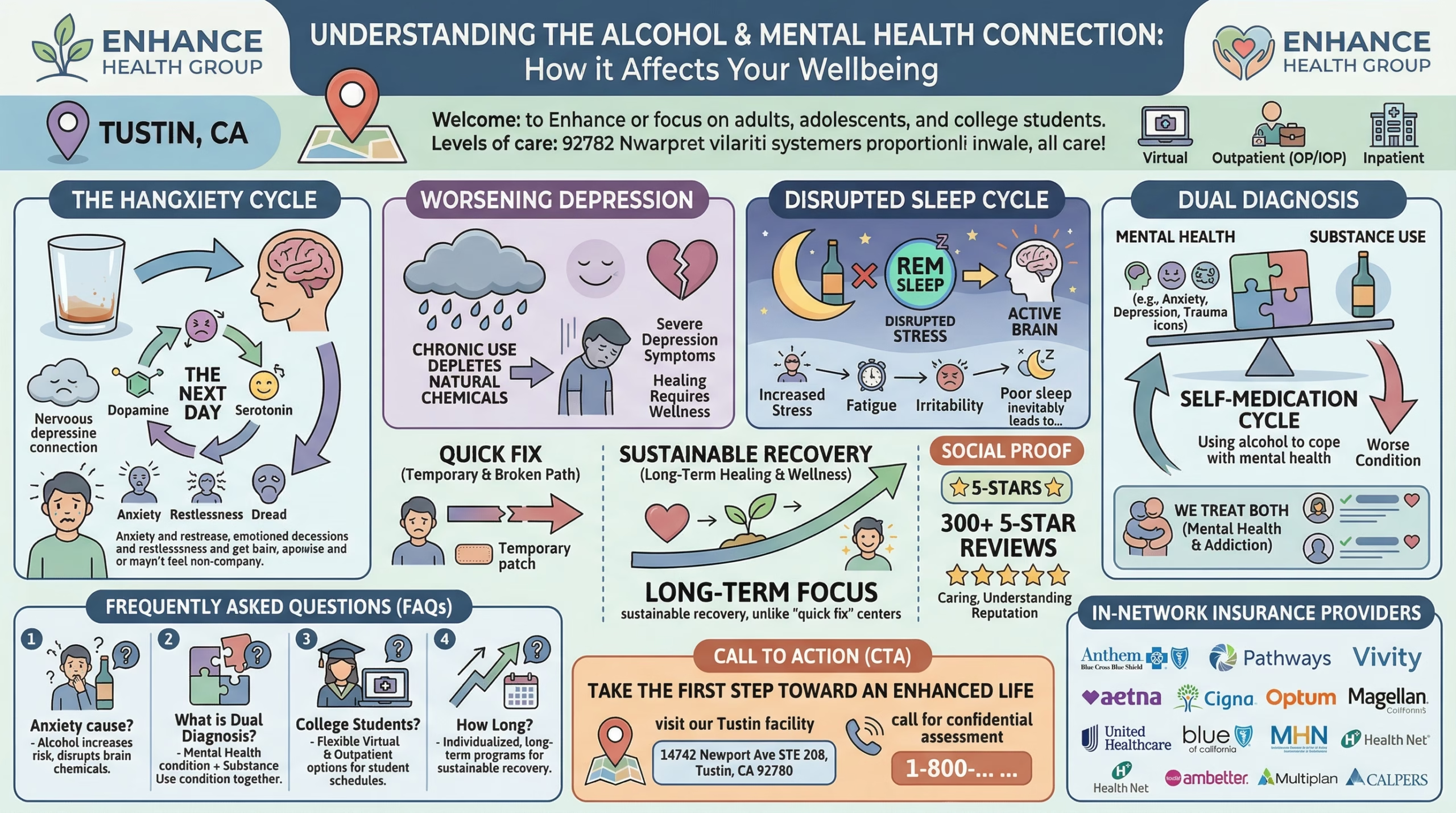

What's considered a dual diagnosis is having a mental health condition and a substance use disorder at the same time, both confirmed by a clinician. Depression with alcohol use disorder is one example, and PTSD with opioid use disorder is another. Neither has to be the "first" problem. If you're seeing both in yourself or someone you love, the question is how they interact, and that's what a proper assessment sorts out.
If you or someone you love is thinking about suicide or self-harm, call or text 988 now.
What Is Considered a Dual Diagnosis by Clinicians
Clinicians use two requirements. The person has to meet diagnostic criteria for a mental health condition, and separately meet criteria for a substance use disorder. Drinking heavily while you're depressed doesn't qualify on its own, and neither does a bad week of anxiety after using. Each condition has to be diagnosed in its own right.
The mental health side is judged against the criteria in the DSM-5, the manual clinicians use to define conditions like major depression, bipolar disorder, PTSD, and generalized anxiety. The substance side is diagnosed the same way, by counting specific criteria such as using more than you meant to, failing to cut down, cravings, and continuing despite harm to work, health, or relationships. The number of criteria met also sets whether the disorder is rated mild, moderate, or severe.
Several things don't change the label. It doesn't matter which condition started first, whether the substance is alcohol, opioids, stimulants, or something else, or whether you were ever treated before. Someone who has used substances to quiet panic attacks for years and someone whose depression deepened after heavy drinking both can meet the definition.
One detail trips families up. Symptoms that appear only during intoxication or withdrawal can look like a mental health disorder without being one. A clinician often has to separate the two by asking about timing, such as whether the low mood or anxiety was present during stretches of sobriety. That's why a diagnosis usually isn't settled in a single short conversation.
Our founder, Christina Khouie, MA, LMFT, reviews every piece of clinical content we publish, and this timing question is one she'd tell you matters most. A diagnosis made while someone is actively using can change once they've been stable for a while, and a good assessment accounts for that.
How a Clinician Confirms Both Conditions in an Assessment
Expect the assessment to start with questions about your history rather than a checklist you fill out alone. A licensed clinician usually asks what you use, how much, and how often, then moves to mood, anxiety, sleep, trauma, and anything that has run in your family. Bring a list of current medications, including anything prescribed, and a rough sense of when symptoms first showed up.
The clinician is building a timeline. They want to know whether your depression, panic, or intrusive memories were there before you started using, whether they eased during any stretch of sobriety, and whether they got worse after heavy use. Those answers help separate a mental health condition from the effects of a substance, which is the timing question that makes one conversation rarely enough.
Most assessments also include screening tools that score symptoms, followed by a review of your physical health, since withdrawal from alcohol or certain other substances can carry medical risk. If a medical concern comes up, the clinician will tell you before anything else happens.
When you call Enhance admissions at (714) 862-1907, the first conversation covers the basics, such as what's going on, what you're using, and what insurance you have. The team verifies benefits and explains what your plan may cover, and benefits vary by plan. A full clinical assessment follows, and its results decide which level of care fits, whether that's a partial hospitalization program, an intensive outpatient program, or something else.
You'll be asked about substance use directly, and honest answers lead to a more accurate diagnosis. What you share is kept private, and the point of the questions is to get the plan right, not to judge what you've done.
Common Pairings of Mental Health and Substance Use Conditions
Certain combinations show up again and again in assessments, and knowing them helps you recognize what you're seeing. Anxiety disorders and alcohol use disorder are a frequent match, often because someone drinks to take the edge off panic or social fear. Depression paired with alcohol or stimulant use is another, where the substance dulls low mood for a few hours and then deepens it.
Trauma and PTSD often appear alongside opioid or alcohol use disorder. A person may use at night to get past nightmares or flashbacks, and the nightly habit slowly becomes its own disorder. Bipolar disorder can pair with stimulant or alcohol use, since manic and depressive swings both invite self-medicating. ADHD sometimes goes with stimulant or cannabis use, particularly when the ADHD was never diagnosed and the person was treating focus problems on their own. Eating disorders can also occur alongside substance use, including misuse of stimulants or alcohol.
A pairing isn't a prediction. Two people with the same combination can have very different timelines, triggers, and severity, and a clinician looks at yours rather than assuming the pattern. Someone with PTSD and alcohol use disorder might need trauma-focused therapy and a supervised plan for stopping drinking, while someone with bipolar disorder and stimulant use might need medication management first.
That's the reason treating one condition alone often falls short. If anxiety is treated but the drinking continues, the anxiety tends to return. If the drinking is treated but the panic is ignored, the urge to drink often comes back with it. Treatment that addresses both together, which is what dual diagnosis treatment in Orange County is built around, lets the therapist and prescriber see how each condition feeds the other and adjust the plan as both change.
Signs of a Dual Diagnosis in Yourself or Someone You Love
The clearest sign is a pattern where mood or anxiety symptoms and substance use keep feeding each other. You might notice that a bad week at work leads to drinking, the hangover brings dread and irritability, and the dread becomes the reason to drink again. Watching that loop repeat over weeks or months matters more than any single episode.
Some signs show up in daily routines. Sleep falls apart, with either too little or too much. Someone pulls away from friends or stops doing things they used to like. They may use more than they planned, hide how much, or get defensive when you ask. Missed shifts, dropped classes, and unpaid bills often follow.
Other signs are about the substance's purpose. If a person says they need a drink or a pill to calm down, to get going, or to fall asleep, the substance is doing a job for an untreated symptom. Quitting then brings a sharp return of panic, flashbacks, or despair, which is often when people relapse.
Family members can pick up on things the person can't see in themselves. Mood swings that don't match the situation, long stretches of sadness that continue when the person is sober, or sudden bursts of energy and risky decisions all deserve a closer look. Write down what you see and when, including dates if you can. A short log of specific moments helps a clinician far more than a general worry.
If you're raising it with someone you love, pick a calm time when they're sober, describe what you've observed rather than labeling them, and offer to make the call or sit in on the first conversation. You don't need to be sure it's a dual diagnosis. Only an assessment can say that, and noticing a pattern is enough reason to ask for one.
How Dual Diagnosis Treatment Is Matched to a Level of Care
Severity and safety decide the starting point, not the diagnosis names. A person with moderate depression and alcohol use disorder who has a stable home may begin in a very different place than someone whose drinking carries withdrawal risk or whose symptoms make daily life unsafe.
The clinician weighs a few things. They look at whether you need medical supervision to stop using, how much your symptoms interfere with work and family, whether you have a safe place to live, and how you've done with past treatment. Each answer moves the recommendation up or down the range of care.
At the more intensive end, detox and residential care for addiction take place at Embrace Treatment Center (embracetreatment.com), and inpatient mental health care happens at Eden by Enhance (edenbyenhance.com). Both are sister facilities of Enhance, run by the same people, and admissions makes the connection for you.
Many people with a dual diagnosis don't need that level. Enhance runs a partial hospitalization program (PHP) and an intensive outpatient program (IOP) in Tustin, and outpatient therapy is available by video. PHP and IOP let you keep sleeping at home or in supported living while you work on both conditions in the same plan. The level can change as you do, so a person might start in PHP and step down to IOP or virtual outpatient care once symptoms steady.
The recommendation comes from your assessment, and the team explains the reasoning before you decide anything. Insurance affects what's practical, so verification happens alongside it. Enhance works with Anthem Blue Cross Blue Shield, Aetna, Cigna, Optum, United Healthcare, Blue Shield of California, MHN, Health Net, Ambetter, Multiplan, CalPERS, and Covered California, though what's covered varies by plan.
To find out which level fits you or your family member, call Enhance admissions at (714) 862-1907. Have your insurance card and a list of current medications ready, and the team will walk you through the next step.
Common Questions
Can you have a dual diagnosis if you only drink or use on weekends?
Yes, if the pattern meets the criteria for a substance use disorder, and frequency alone doesn't decide that. A clinician looks at things like loss of control, cravings, and continued use despite problems. Someone who binge drinks on weekends and can't stop once they start may qualify, while someone who drinks daily without those problems may not. The assessment counts criteria, not days.
Does a dual diagnosis stay on your record forever?
No, a diagnosis isn't permanent. Clinicians can note that a condition is in remission once criteria haven't been met for a sustained period, and diagnoses get revisited as you stabilize. Your treatment records are also confidential. Ask your clinician how your diagnoses are documented and who can see them, since the answer depends on your situation and who you authorize to access it.
Can someone be diagnosed with a dual diagnosis if they use prescription medication as prescribed?
Taking a medication exactly as prescribed doesn't on its own count as a substance use disorder. The disorder diagnosis rests on problematic use, such as taking more than directed, running out early, or continuing despite harm. Your prescriber and clinician can review how you take your medication. Never stop a prescribed medication abruptly without medical guidance, because withdrawal can carry real risks.
Does a dual diagnosis mean you need treatment for both conditions at the same facility?
Not necessarily, but coordinated care matters more than the building. What helps is that the therapist, prescriber, and care team share one plan and know about both conditions. When people see separate providers who don't talk to each other, medications and advice can conflict. Admissions can explain how care is coordinated across levels, and you can ask who will oversee your plan.
Do you need a formal diagnosis before reaching out for help?
No. You don't need a diagnosis, a referral, or certainty about what's wrong to call. Noticing that mood symptoms and substance use are tangled together is enough reason to ask for an assessment. The assessment is what produces a diagnosis, so waiting until you have one gets the order backward.