
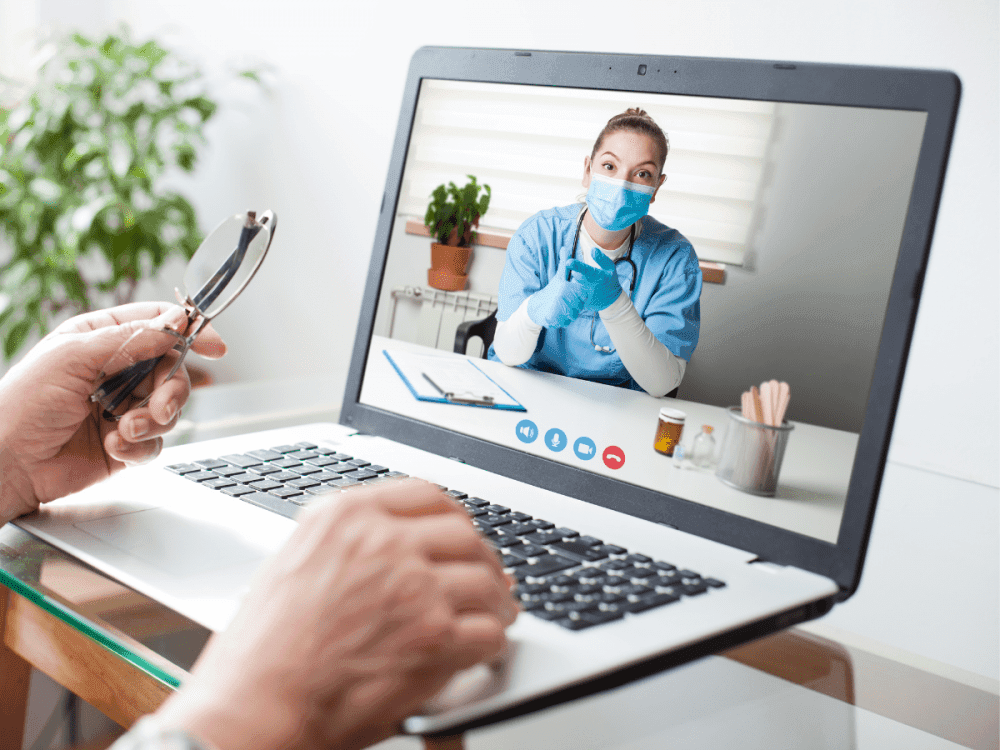
Telehealth is used in therapy to hold your regular sessions over secure video from home, with the same licensed clinician and the same kind of conversation you'd have in an office. You log in at your appointment time, talk through what's going on, and work on skills between visits. For many adults in Orange County, it means keeping care going without the drive or the time off work.
How Telehealth Is Used in Therapy Sessions
Most telehealth therapy is the same treatment you'd get in an office, delivered through a screen. At Enhance, outpatient care runs virtually through virtualtreatmentcenter.com, so the clinician's work with you doesn't change, only the room you're sitting in.
Clinicians use video sessions for several things. In individual therapy, you work one to one with a licensed therapist on anxious thoughts, low mood, or strong emotions, often using cognitive behavioral therapy (CBT) or dialectical behavior therapy (DBT) skills. Those skills are practical. A therapist might walk you through how to catch a spiraling thought, then ask you to try it during the week and report back.
Telehealth also carries parts of care that people don't expect to happen online. Medication management can take place by video, where a licensed psychiatrist reviews how you're feeling and prescribes medication when it's part of your plan. Family therapy works the same way, so a partner or parent can join from another room, or another city, when their presence would help.
Telehealth doesn't mean you're handling treatment alone. Your clinician still sets goals with you, tracks how you're doing, and adjusts the plan if something isn't working. If a screen stops being the right fit, the team can move you toward in-person care.
A few things make sessions go better from the start:
- 1Pick a private spot where you can talk openly, and use headphones if others are home.
- 2Check your connection and camera before your appointment time.
- 3Keep a charger, water, and a notebook within reach.
You don't need special equipment beyond a phone, tablet, or computer with a camera. If you're unsure whether your setup will work, ask admissions before your first session and they'll walk you through it.
What a Virtual Session Looks Like
Your first session usually starts with an assessment, where the clinician asks about your symptoms, your history, and what you want to change. You'll answer from wherever you've set up, and the clinician uses what you say to build your plan. Come with a short list of what's been hardest lately, any medications you take, and questions you want answered.
After the first visit, sessions settle into a rhythm. You log in, the clinician checks in on how the week went, and you work on one or two things together. That might be a CBT exercise on a thought that keeps looping, or a DBT skill for a moment when your emotions run hot. Ask admissions how long your sessions will run and how often you'll meet, since that gets set with your care team.
Video changes a few small things. The clinician can't see the whole room, so say so if you're feeling shaky, distracted, or want to stop and breathe. If the connection drops, rejoin the link or call back, and the clinician will pick up where you left off. Sessions are confidential, so tell the clinician if someone walks into the room and you need to pause.
Some people worry they'll feel less connected through a screen. Many find that talking from their own couch makes it easier to say hard things, and the clinician still reads your face, your tone, and your pauses.
If you're a parent in the early weeks after birth, or you're managing a heavy work schedule, a video visit can be the difference between attending and skipping. Your clinician will tell you if what you describe needs more support than video visits can offer.
Which Kinds of Care Can Happen Online
Outpatient mental health care is the level that fits online delivery best, and at Enhance it's the one that runs virtually through virtualtreatmentcenter.com. That covers regular therapy for depression, anxiety, trauma, bipolar disorder, and eating disorders, plus ongoing work on alcohol or drug use. The site also has virtual tracks for addiction, depression, anxiety, and eating disorders, so you can look for one that matches what you're dealing with.
Women's mental health care often works well by video too. The EVE program treats mood symptoms during pregnancy, after birth, and through perimenopause and menopause. It usually fits outpatient care or an intensive outpatient program (IOP), so a mother can stay home with her baby or keep working. A clinician places you in a track after an assessment, and sessions can be by video when getting out the door is hard.
Dual diagnosis care, where mental health and substance use are treated together, can also start with virtual sessions when your symptoms are stable enough to manage from home. The clinician decides that with you after the first assessment, not before.
Some care needs a physical setting. Partial hospitalization (PHP) and IOP are offered in Tustin, and detox, residential care, and inpatient mental health stays happen at our sister facilities. Embrace Treatment Center (embracetreatment.com) handles detox and addiction residential care, and Eden by Enhance (edenbyenhance.com) handles mental health inpatient and residential care. Enhance admissions is still your first call, and they'll help you work out which level fits.
When In-Person or Higher Levels of Care Fit Better
Video visits stop being enough when your symptoms make it hard to stay safe or steady between sessions. Telling your clinician about any of these early lets the team change the plan before a rough week becomes a crisis:
- 1You're drinking or using drugs daily, or you can't stop even when you try.
- 2You're having thoughts of hurting yourself or someone else.
- 3Sleep, eating, or basic routines have fallen apart for more than a few days.
- 4Your home is where the stress or the substance use is, and you can't get privacy or calm there.
If you're in danger right now, call or text 988 and tell them what's happening.
Stepping up doesn't mean you failed at virtual care. It means the plan needs more structure than one or two video visits a week can give. Clinicians look at how you're functioning, what you've tried, and what your home life allows. They then recommend a level of care. You'll hear their reasoning, and you're part of the decision.
The next step up from virtual outpatient is usually in-person IOP or PHP in Tustin. Both give you more contact with a treatment team while you sleep at home or in supported living. Supported living is structured housing with staff oversight for people in PHP and IOP, and it helps when home isn't a steady place to recover.
Some people need a stay with round-the-clock structure, and that's a different setting entirely. Admissions will explain how that referral works and what to expect at each level. You can also move the other direction later, from a higher level back to virtual sessions, once things are steadier.
What Happens When You Call Enhance Admissions
The call goes to the Tustin admissions team, and it's a conversation, not a screening you can fail. Someone will ask what's been going on, what kind of help you're looking for, and whether the care is for you or for someone you love. You don't need a diagnosis or a polished summary. Plain answers like "I can't sleep and I'm dreading work" give them enough to start.
Have a few things within reach so the call goes smoothly:
Your insurance card, so the team can look up your plan and member ID.
The names of any medications you take now.
A rough idea of what you've tried before, such as therapy, a prior program, or a medication change.
If you're calling about virtual care, say so early. Admissions can explain how virtual outpatient works, what you'd need for your setup, and whether a video track fits what you're describing. If it sounds like you'd need more structure than video visits give, they'll tell you that directly and talk through the options.
Insurance gets handled in the same call. The team contacts your insurance company, then explains your deductible, your copay, and which level of care your plan may cover. Benefits vary by plan, so you'll hear what applies to yours instead of a general answer.
Nothing on the call commits you to anything. You can ask about timing, ask what a first session involves, or bring a family member onto the line. If you'd rather start online, you can fill out the insurance form first and let the team reach out.
Call (714) 862-1907, or use the button below to verify your insurance and ask admissions which level of care fits you.
Check your insurance or call admissions
Call (714) 862-1907. The Tustin team verifies benefits and explains what your plan may cover.
Common Questions
Is therapy by video as effective as going to an office?
For many people with depression, anxiety, and similar concerns, video therapy uses the same methods an office visit does, such as CBT and DBT skills. What changes is the setting, not the treatment. If your clinician sees that video isn't working for you, they'll talk with you about changing the plan. Ask your clinician how they'll track your progress.
Can I use telehealth if I live outside Orange County?
Enhance is based in Orange County and works with people from anywhere in California, so where you live in the state doesn't rule you out. Because virtual outpatient care happens on your own device, you don't need to be near Tustin. Admissions can confirm what applies to your situation when you call.
What if I don't have a private place at home to talk?
Many people don't, so tell your clinician early. Common fixes include sitting in a parked car with headphones, taking a walk-and-talk break somewhere quiet, or scheduling when others are out. If home is the source of the stress, that's worth saying out loud, because it can change which level of care fits you best.
Can a family member join my virtual sessions?
Yes, when it would help your treatment. Family therapy can be done by video, so a partner or parent can join from another room or another city. Your clinician decides with you when it makes sense and who should be there. Some people prefer to start alone and bring family in later, and that's fine too.
Do I have to switch to in-person care if I start online?
No. Starting online doesn't lock you into one path, and your clinician will tell you if you need more support than video visits can give. If that happens, the usual next steps are in-person IOP or PHP. Plenty of people also step back down to virtual sessions once things feel steadier.


