Postpartum anxiety treatment usually starts with outpatient therapy or an intensive outpatient program, so you can keep caring for your baby from home while you get better. If you're stuck in racing thoughts, can't sleep even when the baby does, or feel dread that won't lift, an assessment can tell you what's going on and which kind of care fits.
Postpartum anxiety treatment: what it includes and who it fits
Treatment at Enhance starts with one-to-one sessions with a licensed therapist, and most of the work is learning to interrupt anxious thinking while it's happening. In EVE, our women's mental health program, that work draws on cognitive behavioral therapy (CBT) and dialectical behavior therapy (DBT) skills. CBT helps you test the thought that something terrible will happen to the baby. DBT gives you ways to ride out a surge of panic or a flash of anger without it taking over the day.
Medication is part of the plan only when it fits. A licensed psychiatrist handles medication management, and you'll talk through the options with them before anything is prescribed. If you're breastfeeding or still pregnant, tell everyone on your care team so that's part of the conversation from the start.
Your partner or family can join family therapy sessions when it would help. That's useful when anxiety has changed how the household runs, for example if you won't let anyone else hold the baby or you're checking on the baby every few minutes through the night. Those patterns are easier to change when the people around you understand what they are.
Sessions can happen by video when getting out the door is hard, which is common in the weeks after birth. You don't have to arrange a sitter and a car seat just to attend an appointment.
This kind of care fits you if anxiety is interfering with sleep, eating, or caring for your baby, but you don't need a hospital setting to stay safe. It also fits if you're pregnant and already noticing the worry building, since EVE covers pregnancy as well as the months after birth. The program is built around outpatient care and the intensive outpatient program (IOP), so you can stay home with your baby or keep working. Postpartum depression often shows up alongside anxiety, and our postpartum anxiety treatment page explains how the two are treated together.
Signs of postpartum anxiety that call for an assessment
Worry that keeps running after you've checked the baby, fed the baby, and confirmed everything is fine is the clearest sign. Ordinary new-parent worry settles once you have an answer. Postpartum anxiety doesn't, and it tends to jump to the next fear within minutes.
Here are the signs that most often lead women to ask for an assessment:
- Racing or looping thoughts about harm coming to the baby, even when nothing has happened
- Trouble falling asleep or staying asleep when the baby is sleeping
- A pounding heart, tight chest, shaky hands, or stomach trouble with no medical cause
- Panic attacks that come on suddenly, sometimes in the middle of a feed or a drive
- Avoiding things you used to do, such as leaving the house or letting anyone else hold the baby
- Irritability or snapping at people you love, which can be anxiety showing up as anger
- Constant checking, such as reading the baby's breathing or temperature again and again
Two or three of these lasting most days for a couple of weeks is a good reason to call. You don't need to wait until you feel you can't cope. Anxiety that began during pregnancy and hasn't eased also counts, because the same assessment covers pregnancy and the months after birth.
Intrusive thoughts deserve a plain word. Many mothers have sudden, unwanted images of something bad happening to the baby and feel ashamed of them. Having these thoughts doesn't mean you'd act on them, and a licensed therapist hears them often. Say them out loud in the assessment instead of editing them.
During the assessment, you'll be asked what you're noticing, how long it's been going on, and how it's affecting sleep, eating, and daily care of your baby. Mood symptoms get a look too, since low mood often travels with anxiety. Bring a rough list of what you've noticed and any medications you take. Your answers decide which EVE track and level of care make sense.
How an assessment places you in the Eve Nurture track
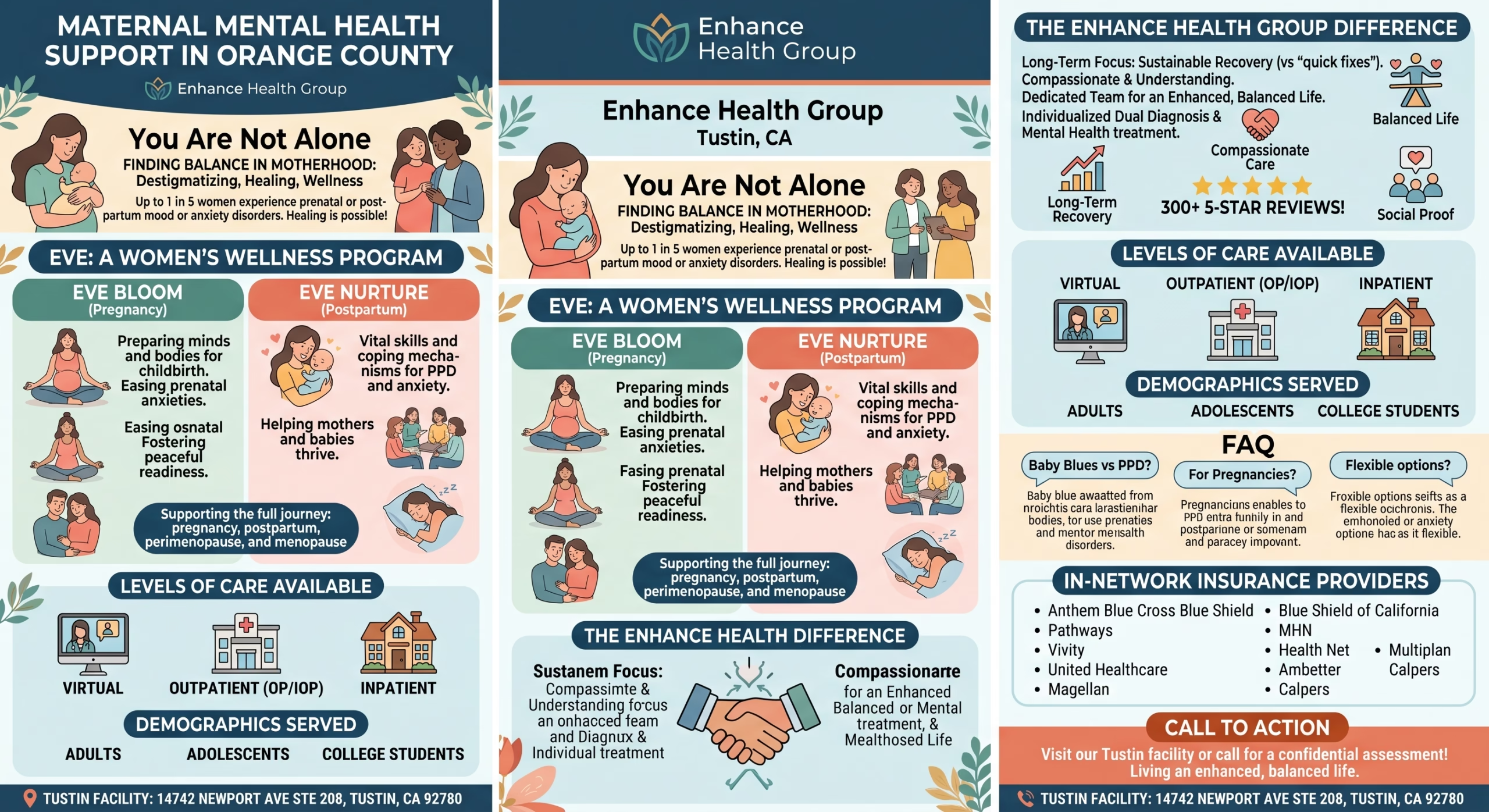
EVE has three tracks, and a clinician picks yours after the assessment instead of asking you to choose from a menu. Eve Bloom supports you during pregnancy. Eve Menopause treats mood symptoms in perimenopause and menopause. Eve Nurture is the track for the months after birth, and it covers postpartum anxiety and postpartum depression.
Placement follows what you tell the clinician, not a single score or the date your baby was born. If your anxiety started in the third trimester and has carried on after delivery, the clinician decides which track fits your symptoms now. A woman whose anxiety returned alongside perimenopausal changes might be placed in a different track than a woman with a newborn at home. Saying when the symptoms began, and whether they've shifted since, helps that decision.
Several details shape where you land:
- 1When the anxiety started, whether in pregnancy, soon after birth, or later
- 2How much it's cutting into sleep, eating, and the daily care of your baby
- 3Whether low mood, panic, or intrusive thoughts are part of the picture
- 4Whether medication is something you want to discuss with the psychiatrist
Placement also sets the starting point for your care, and it isn't locked in. The track and the level of care, whether outpatient or the intensive outpatient program, are matched to what you describe, and the team can adjust the plan as you get better or if symptoms change.
If you're nursing, say so early. If your partner wants to be involved, mention it, because family therapy sessions are part of what Eve Nurture can include. Questions about video sessions belong in this conversation too, especially if leaving the house with a newborn is the hardest part of your week.
Plan on answering questions about your daily routine in plain terms. "I haven't slept more than two hours in a row, even when the baby does" gives the clinician more to work with than "I'm anxious."
Outpatient, IOP, and higher levels of care for postpartum anxiety
Most women with postpartum anxiety start in outpatient therapy or an intensive outpatient program, and the clinician who assesses you recommends one based on how much anxiety is getting in the way at home. Outpatient means you meet with a therapist, and with a psychiatrist if medication is part of the plan. IOP adds more treatment on top of that while you still sleep in your own bed. Enhance runs its IOP at the Tustin center, and the outpatient track is offered by video through virtualtreatmentcenter.com.
A step up in care usually makes sense when outpatient sessions aren't enough to settle the anxiety, or when sleep and eating keep breaking down. Our partial hospitalization program (PHP) in Tustin is the next level above IOP. It's a day program, so you'd return home rather than stay overnight. If a partner or family member can't be home to help with the baby during treatment, tell the clinician early so the plan accounts for it.
Some situations need more than a day program. If anxiety comes with severe depression, thoughts of harming yourself, or you can't keep yourself or your baby safe at home, inpatient mental health care is the right setting. That care takes place at Eden by Enhance, a sister facility owned and run by the same people as Enhance. You can read about it at edenbyenhance.com, but you'd start the conversation with Enhance admissions, who help work out which level fits.
Cost is a practical question at every level. Benefits vary by plan, and the Tustin team contacts your insurer, then explains your deductible, your copay, and which levels of care your plan may cover. Verification isn't a guarantee of coverage or admission, but it tells you what to expect before you commit to a program.
Care also isn't a one-way staircase. People move between levels as symptoms change, and the team reassesses as you go.
What happens when you call and how to raise it with your partner or doctor
The Tustin admissions team picks up your call, asks what you've been noticing, and starts checking your insurance. Have your insurance card nearby, a short list of symptoms with rough dates, and the names of any medications you take. You don't need a diagnosis or a referral to make the call. If you're nursing or pregnant, say so at the start. If you'd rather not talk through everything on the first call, you can say that too and fill in the rest at the assessment.
Admissions will explain how the assessment works and what the next step looks like. Questions about video sessions, bringing your partner in, or what care may cost are all fair to ask at this point. The team contacts your payer, then walks you through your deductible, your copay, and which levels of care your plan may cover.
Raising it with your partner is easier when you describe specific things instead of a general feeling. "I'm up at 3 a.m. checking whether the baby is breathing, and I can't stop" gives them something to act on. Then say what you'd like from them, such as taking a night feed so you can sleep, or coming to a family therapy session later. Partners often assume anxiety is just tiredness, so naming the pattern and how long it's lasted helps them see the difference.
With your doctor, whether that's your OB, midwife, or pediatrician, lead with the symptom that costs you the most. Tell them you think it's anxiety and you'd like a mental health assessment, and ask them to note it in your chart. If you're taking medication or have been prescribed something recently, mention it so everyone treating you has the same picture. Your doctor and the Enhance team can work alongside each other.
If you've been waiting for the right moment, this is it. Call admissions at (714) 862-1907, or use the button below to check your insurance first.