
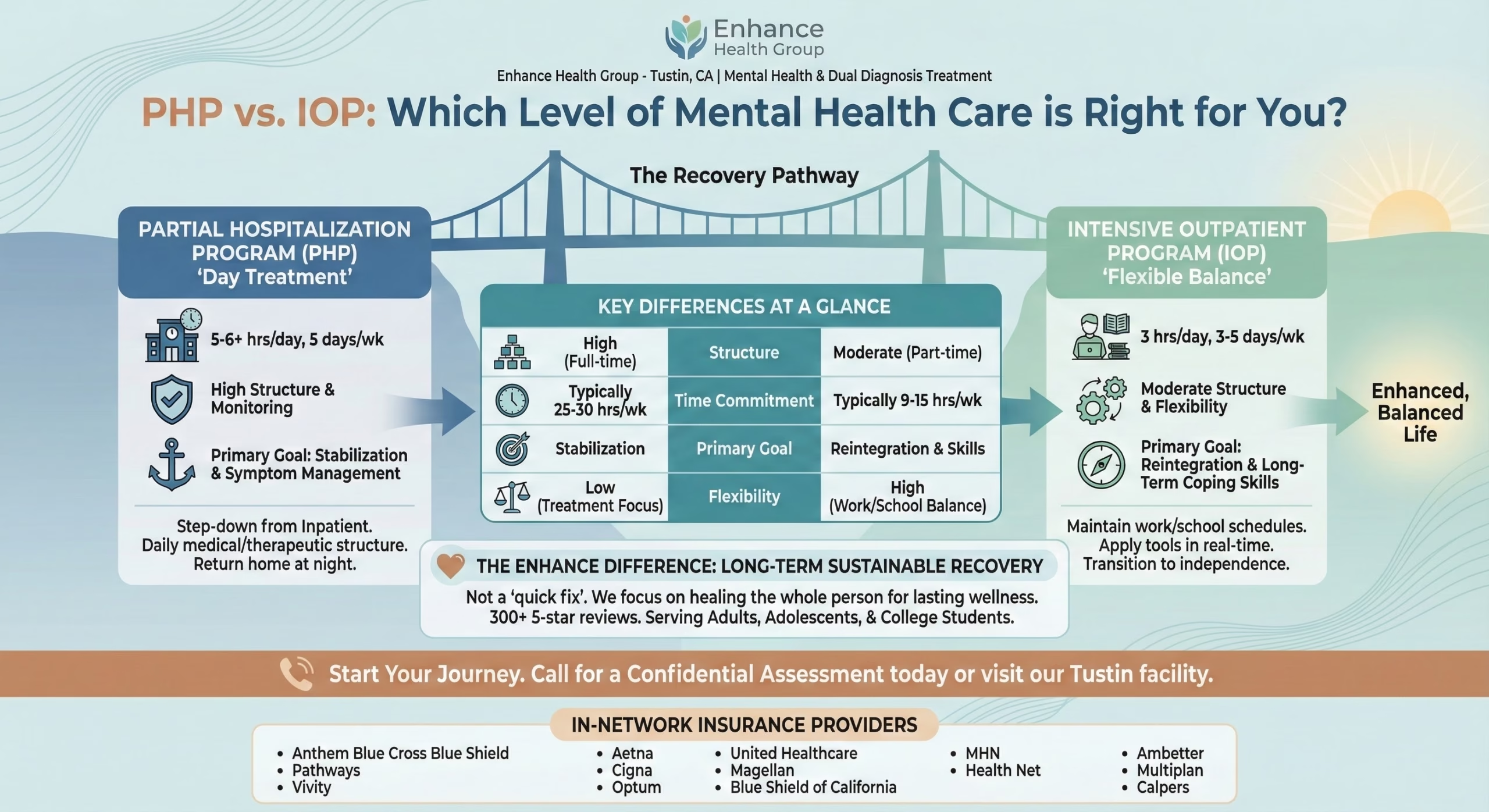
If you're weighing php vs iop, the short answer is that a partial hospitalization program (PHP) gives you more treatment time each week than an intensive outpatient program (IOP), and you sleep at home in both. PHP fits when weekly therapy isn't holding and you need daily structure. IOP fits when you're stable enough to keep up some of work, school, or family life while you get real support. Both are offered at our Tustin center.
If you're thinking about harming yourself or you're in immediate danger, call or text 988 right now.
PHP vs IOP: How the Two Levels of Care Differ
The biggest practical difference is how much of your week the program takes up. PHP is the more intensive option, built for people who need treatment most of the day on program days. IOP asks for fewer hours, so you can keep a job, classes, or caregiving going around it. Ask admissions for the current schedule, because the care team sets it based on what you need.
Both levels include therapy with licensed clinicians, and medication management can be part of the plan when a psychiatrist recommends it. What changes is the amount of contact. In PHP you see the treatment team often enough that someone notices quickly if symptoms get worse. In IOP you check in less often and practice skills in your own life between sessions, then bring what happened back to the group.
The two aren't a ladder you have to climb in order. Some people start in PHP after a crisis and step down to IOP once they're steadier. Others begin in IOP because they're functioning but weekly therapy isn't enough. A clinical assessment decides the starting point, not a guess about which sounds more serious.
Because you go home at night in both, your home life matters. If home is calm enough to rest in, either level can work. If it isn't, tell the admissions team, since that changes which level fits.
Signs Your Symptoms Need a Step Up From Weekly Therapy
Weekly therapy usually stops being enough when the gap between sessions is where things fall apart. You might leave each appointment feeling steadier, then lose that footing by Wednesday and spend the rest of the week white-knuckling it.
A few patterns tell you it's worth asking about more support:
- You've been in weekly therapy for a couple of months and your symptoms are the same or worse.
- Getting through work, school, or basic routines like eating and sleeping has become unreliable.
- Panic, intrusive thoughts, or mood swings are happening several times a week, not occasionally.
- You're using alcohol or drugs to get through the day, on top of the mental health symptoms.
- A recent crisis, hospital visit, or medication change has left you shaky.
Which program fits depends on how many of these are true and how hard they hit. If you can still get through most days but need more than one hour of help a week, IOP is often the conversation to have. If most days feel unmanageable, or you need people checking on you closely, PHP is more likely.
You don't have to sort that out yourself. During an assessment, a clinician asks about your symptoms, your history, and what your days look like, then recommends a level of care. If you're also dealing with substance use, say so, because dual diagnosis care treats both together.
What a Week Looks Like in Each Program
Both programs run on set days at our Tustin center, and the main difference you'll feel is how many of those days you're there and how much of each day they fill. Exact days and hours come from admissions after your assessment, so ask for the current schedule before you plan around work or school.
In PHP, program days are built to be your main commitment. You'll usually move between group therapy, individual sessions, and skills work, with a psychiatrist reviewing medication when it's part of your plan. Most people arrange time off work or a lighter class load, and many need a ride, since concentrating after a full day of treatment can be hard.
In IOP, treatment fits around the rest of your week. You attend groups and meet with your therapist, then go back to your job, classes, or kids. The skills you learn in cognitive behavioral therapy (CBT) or dialectical behavior therapy (DBT) get tested in real situations, and you report back at the next session. That's where much of the progress happens.
Two practical questions are worth settling before day one. Ask what to do about a work schedule that can't move, because the team can often point you toward the level that fits. Ask, too, how family can take part, since some programs invite a partner or parent into sessions when it would help.
How to Bring It Up With Someone You Love
Pick a moment when neither of you is rushed or upset, and start with something you've actually seen. "You've skipped dinner all week and you haven't slept" lands better than "I think you need a program." Specific observations are hard to argue with, and they tell the person you've been paying attention rather than judging them.
Say that you're worried, then ask what they think would help. Many people have already thought about getting more support and haven't said so. If they push back, don't argue the point. Leave the door open and bring it up again in a few days, once they've had time to think.
It helps to explain what these programs are before you suggest one. Tell them they'd sleep at home and keep their own bed, which sounds very different from "going away." Offer to sit with them while they call admissions, or to make the call yourself and hand over the phone. At Enhance, the person who answers asks about symptoms, what's been happening lately, and what insurance they carry, so having a card nearby saves time.
Your loved one doesn't have to agree to a level of care on the first conversation. Agreeing to an assessment is a smaller step, and the clinician who does it can explain PHP and IOP in person so you aren't the one making the case.
What Happens When You Call Enhance Admissions
A real person on the Tustin admissions team picks up and starts with a few plain questions: what's been going on, how long it's been happening, and who the care is for. You don't need a diagnosis or a referral to have this conversation, and you can call on behalf of someone else.
Having a few things within reach makes the call smoother. A list of current medications, the name of any therapist or prescriber you're seeing now, and your insurance card are the main ones. If you don't have all of that, call anyway and fill in the rest later.
Next, admissions contacts your insurance company directly. They check what your plan says about the level of care you're asking about, then explain your deductible and copay in everyday terms. Benefits vary by plan, so what they find for you may differ from what a friend or coworker heard, even with the same insurer.
From there, the call usually moves toward a clinical assessment, which is where PHP or IOP gets recommended. You can ask about the current schedule, how family can take part, and what to arrange at work or school before a start date is set. Nothing on the call commits you to anything, and you can say you need to think it over or talk with family first.
When you're ready, call (714) 862-1907, or use the insurance check on our admissions page if you'd rather start in writing.
When Neither Level Is the Right Fit
Some people need more than a program they go home from at night, and the assessment is where that gets caught. If a clinician finds you can't stay safe at home, or that withdrawal from alcohol or drugs needs medical supervision, PHP and IOP aren't the right starting point. Telling the truth during the assessment matters here, because the recommendation follows what you describe.
For acute mental health needs, 24-hour inpatient care is the next step up, and Enhance's sister facility Eden by Enhance provides it. For detox or addiction residential care, that's Embrace Treatment Center. Both are owned and run by the same people as Enhance, and you'd still start with our admissions team, who coordinate the move so you aren't repeating your story to a stranger.
The opposite can happen too. If you're steady, working, and mostly need regular therapy and medication check-ins, outpatient care may fit better than IOP. Enhance offers outpatient sessions by video, which helps when a commute or a work schedule is the obstacle.
Hearing "this isn't the right level" doesn't mean you did something wrong. Levels of care get adjusted as you change, and people move up or down as their symptoms do.
If you're not sure which one describes you, call admissions at (714) 862-1907 and explain what's been happening. They'll help you work out where to begin.
Common Questions
Can I switch from IOP to PHP if my symptoms get worse?
Yes, your care team can move you to a higher level if symptoms get worse, and you should tell them early instead of waiting it out. Say what's changed, such as poorer sleep, more panic, or trouble getting through the day. The clinicians review that with you and adjust the plan, which can mean more treatment time each week.
Will my employer find out I'm in a program?
Your treatment information is kept private, and your employer isn't told about it by us. If you need time away, you usually share only what's required, such as a note that you're attending a medical program. Ask admissions what paperwork people commonly need, and consider speaking with your HR department about leave options before you start.
Can my teenager or college-age child join PHP or IOP?
Enhance has separate programs for teens and for college students, so the adult tracks described here aren't your only option. The adolescent program is outpatient therapy, offered virtually and in person, with after-school options. Call admissions and describe your child's age and symptoms, and they'll point you to the track that fits.
What happens after I finish PHP or IOP?
Most people step down to a lighter level of care, such as outpatient therapy by video, rather than stopping all support at once. Your team plans that next step with you before you finish, including who you'll see and how medication will be managed. If symptoms return later, you can contact admissions again to talk about going back to a higher level.


