
Teen mental health resources in Orange County start with your teen's pediatrician, the school counselor, and a licensed outpatient program that can assess what's going on. You don't need to wait for a crisis to make that first call. Most parents notice a change in sleep, mood, or grades weeks before they reach out, and an early assessment gives you real answers instead of guesses.
If your teen is thinking about suicide or self-harm, call or text 988 right now. If they're in immediate danger, call 911.
Teen mental health resources in Orange County to start with
Orange County's resources for teens fall into three layers, and most families use more than one. The first layer is the people who already see your teen: the pediatrician, who can rule out medical causes like thyroid problems or sleep disorders, and the school counselor, who sees how your teen is doing in class and with friends. Neither one replaces a mental health assessment, but both can tell you what they've noticed and point you toward a next step.
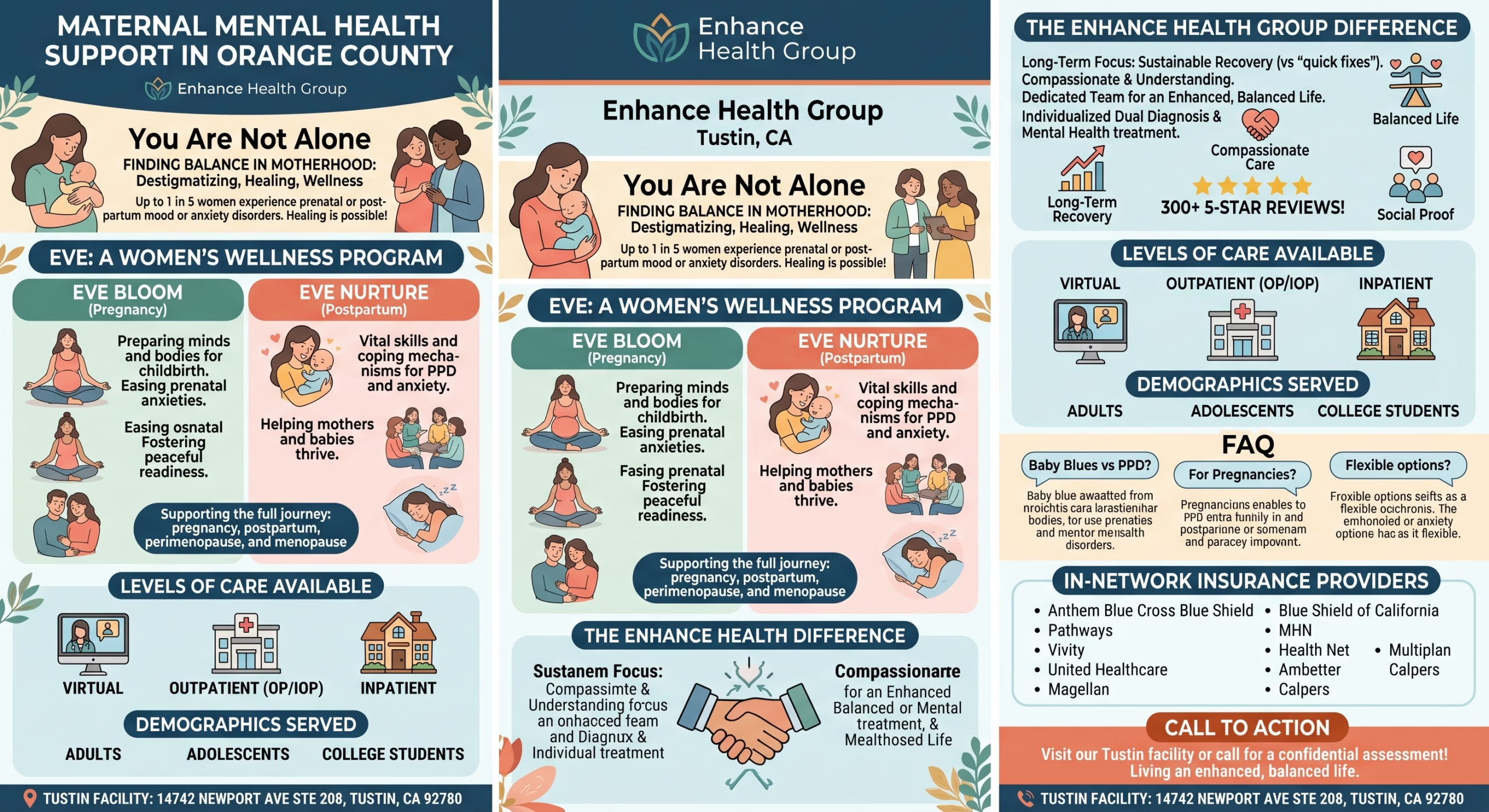
The second layer is outpatient therapy, where a licensed clinician meets with your teen and works out what's driving the change. Enhance Health Group runs an adolescent program with virtual and in-person outpatient therapy, plus after-school programs, using CBT and DBT for anxiety and ADHD. Because sessions can be after school, your teen doesn't have to give up classes or friends to attend.
The third layer is a higher level of care for teens who can't stay safe at home or whose symptoms are getting worse despite outpatient support. If a team recommends that, ask admissions to explain the options before you decide anything. For mental health inpatient and residential care, Enhance works with its sister facility Eden by Enhance, and admissions can help you understand how that step would work.
Before you call anyone, a few minutes of preparation helps:
- 1Write down what you've seen, with rough dates, such as sleep changes, skipped meals, or a drop in grades.
- 2Note any medications your teen takes and any family history of depression, anxiety, or substance use.
- 3Have your insurance card handy, since admissions can check your benefits while you're on the phone.
Your teen doesn't need to agree with your read of the situation for you to ask questions. Calling for information doesn't commit you to anything.
Warning signs that call for a professional, not more waiting
Two weeks is a useful line. When a change in your teen's mood, sleep, or behavior has lasted that long and hasn't eased, it's time for an assessment rather than another round of watching. Ordinary teenage moodiness comes and goes with the week. What should concern you is a pattern that sticks and starts to cost your teen something.
These are the signs that most often tell parents it's time:
- Your teen has pulled away from friends, sports, or activities they used to look forward to.
- Grades have dropped, or they're skipping class, refusing school, or getting sent to the counselor's office.
- Sleep has flipped, either barely sleeping or sleeping most of the day.
- They're irritable or tearful in ways that seem out of proportion, or they seem numb and flat.
- You've found signs of self-harm, or they talk about being a burden or not wanting to be here.
- Appetite or eating habits have changed, including skipping meals or hiding food.
- They're using alcohol or drugs to cope.
Any one of these can have a medical or situational cause, which is why a pediatrician visit and a clinical assessment both matter. Two or three together, lasting more than a couple of weeks, is a strong reason to call.
School staff often see a different side of your teen than you do. A counselor may notice that your teen eats alone, sleeps through first period, or has stopped turning in work. If a teacher or counselor raises a concern, take it seriously even when your teen seems fine at home. Teens frequently hold it together in front of parents and fall apart elsewhere, or the reverse.
You also don't need to sort out the diagnosis before you call. Anxiety, depression, trauma, and ADHD overlap in teens, and sorting out which is driving the symptoms is the clinician's job during the assessment.
When outpatient care fits a teen
Outpatient care fits when your teen can stay safe at home, keep going to school most days, and still has a parent or another adult who can be around in the evenings. The symptoms are real and affecting daily life, but they're not putting your teen in immediate danger. Many teens with anxiety, low mood, or trouble focusing land here.
At Enhance, outpatient for teens means therapy that meets your teen where the problem shows up. A licensed clinician works with them using CBT and DBT skills, which give a teen practical tools for anxious thoughts, strong emotions, and attention problems. Sessions can be virtual or in person, and the after-school programs are built so classes don't have to stop. Ask admissions how often your teen would attend, since the plan depends on what the assessment finds.
The assessment is the first real step. Your teen meets with a clinician, who asks about mood, sleep, school, friendships, and anything that's changed. You'll usually be part of that conversation too, because you see things your teen may leave out. From there the clinician recommends a level of care and explains why.
Outpatient may not be enough if your teen is talking about suicide, hurting themselves, or can't stay safe between sessions. It's also worth asking for a higher level of care when symptoms keep getting worse after several weeks of consistent therapy. That's not a failure of outpatient. It's the clinician matching care to what your teen needs now, and the plan can change as your teen improves or struggles.
A practical test you can use at home: if your teen would show up to a session and use what they learn, outpatient is a reasonable place to start. If getting them through the day is the main challenge, tell the clinician so the recommendation reflects that.
Working with the school counselor and district
Start with a short email to the counselor rather than a phone tag game with the front office. Say what you've noticed at home, ask what they've seen in class, and ask who else at the school should know. Counselors can often tell you about attendance patterns, missed assignments, and how your teen is doing at lunch, which fills in the picture a clinician will want.
Your teen's privacy matters here. A school can't see therapy records unless you sign a release, so decide what you want shared. Many parents give the counselor a general update, such as "our teen is starting outpatient therapy and may need flexibility on a few afternoons, " without handing over diagnoses or session details. If you do want Enhance to speak with the school, ask admissions how a release works before you sign one.
If your teen's symptoms are getting in the way of learning, you can ask the school in writing to look at supports. Common requests include a reduced or adjusted workload during a rough stretch, extra time on tests, a quiet place to reset, and one named adult your teen can check in with. Put the request in an email so there's a date on it, and ask who will respond and by when.
Since Enhance's adolescent program runs after school, it's worth telling the counselor the days your teen will attend. That lets teachers know why your teen may leave right at the bell, and it keeps sports or clubs from clashing with sessions.
If you're a school counselor or PTA leader reading this, you're also welcome to call admissions at (714) 862-1907 to ask how to point a family toward an assessment. The Tustin team can explain what they'll ask a parent on the first call, so you can set expectations before a family reaches out.
What happens when you call admissions
A person on the Tustin admissions team picks up and starts with a few plain questions about your teen: how old they are, what you've noticed, and how long it's been going on. You don't need a diagnosis or a polished summary. The notes you wrote down earlier are enough, and it's fine to say you're not sure what's wrong.
Expect questions about safety, too. If your teen has talked about hurting themselves, tell the admissions team early, because that changes which level of care they discuss with you first. They'll also ask about school, sleep, any current therapist or medications, and whether your teen knows you're calling.
If you have your insurance card, admissions will check your benefits during the call or right after. They contact your plan, then explain your deductible, your copay, and which level of care may be covered. Benefits vary by plan, so what they find for your family may differ from what a neighbor heard.
From there, the next step is an assessment with a clinician, who recommends a level of care and explains the reasoning. If that recommendation is outpatient, admissions can walk you through virtual and in-person options and how after-school sessions would fit around your teen's schedule. Ask them what your teen should expect in the first session, so you can prepare them in plain words.
Your teen doesn't have to be on the line. Many parents call alone first, then bring their teen in once they know what the first appointment looks like. If you're a counselor or PTA leader calling on a family's behalf, the same questions apply, and the team can tell you what a parent will be asked.
Call admissions at (714) 862-1907, or use the Verify insurance button to start with your benefits.
Common Questions
Can my teen get care without my insurance paying for it?
Yes, you can ask admissions about your options before you decide anything. Some families check their plan first and then weigh the rest, while others want to hear the full picture before committing. Bring your questions about cost to the first call, and the Tustin team will explain what applies to your situation.
Will my teen have to take medication?
Not necessarily. Medication is one possible part of a plan, and a licensed psychiatrist would only prescribe it if the clinical team thinks it fits your teen. Many teens start with therapy alone. If medication comes up, you can ask the clinician to explain the reasons, the options, and what changes to watch for.
How do I get my teen to agree to see someone?
Keep the conversation short and specific, and start with what you've noticed rather than what's wrong with them. Something like "You've seemed worn out for a few weeks, and I'd like someone to help us figure out why" works better than a diagnosis. Offer choices where you can, such as virtual or in-person sessions, so they have a say.
What if my teen refuses to go?
Start by going yourself. Many parents call admissions alone, ask what a first appointment looks like, and then describe it to their teen in plain words. Fear of the unknown is often the real obstacle. If your teen still resists, a pediatrician or school counselor can sometimes help them see the visit as a low-pressure first step.
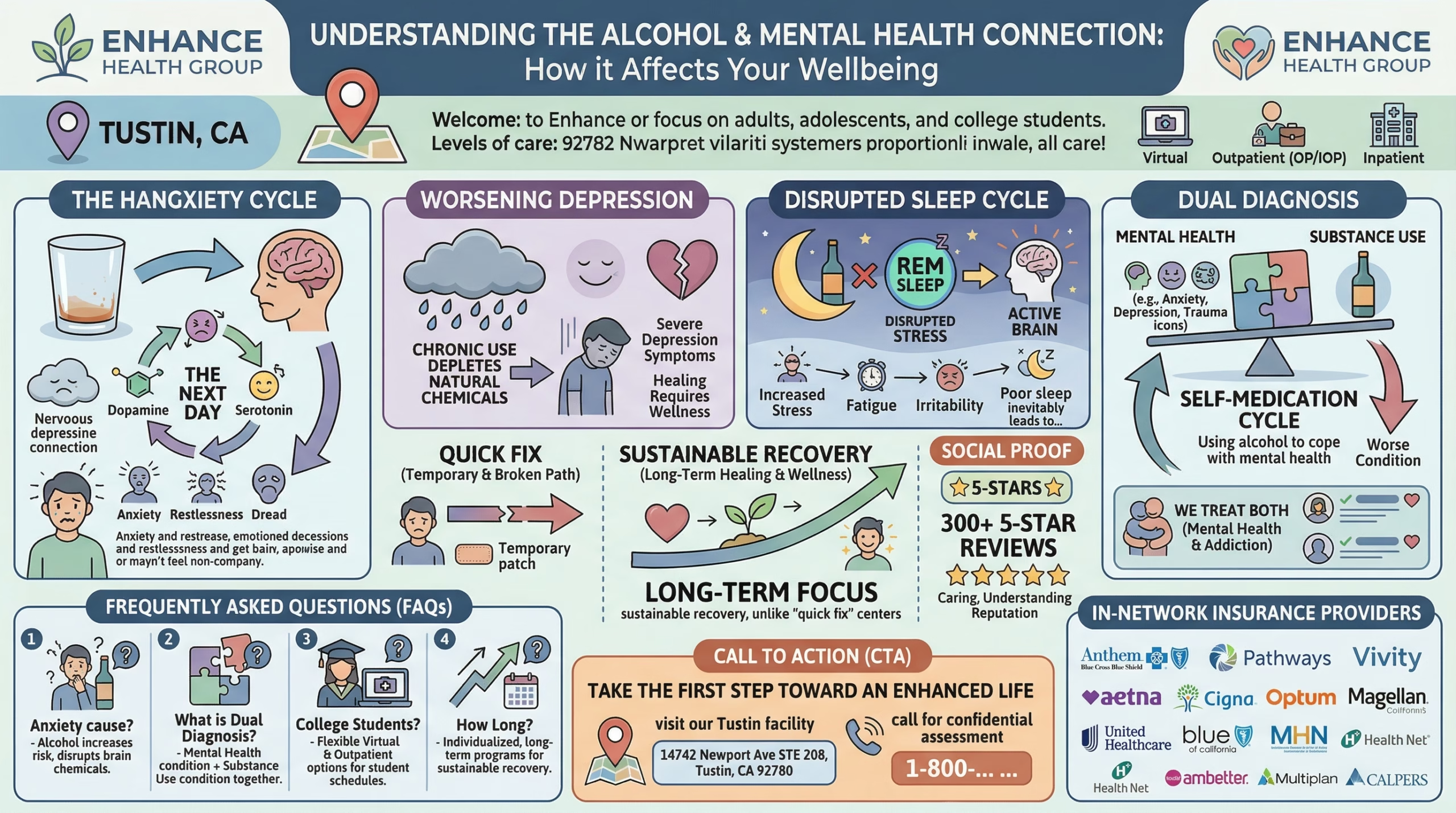
Does my teen need a different program if drinking or drug use is part of the picture?
Possibly, and the assessment is where that gets sorted out. Enhance treats dual diagnosis, meaning mental health and substance use together. If a teen needs detox or addiction residential care, Enhance works with its sister facility Embrace Treatment Center, and admissions can explain how that would work.