
If you're sorting through Orange County mental health resources for yourself or someone you love, start with the level of care that matches how much support the person needs right now, then check what your commercial plan covers. Care runs from weekly virtual sessions up to inpatient stays, and a phone call to admissions can help you place someone on that ladder in a single conversation.
If you or someone you know is in immediate danger or thinking about suicide, call or text 988 right now.
Orange County mental health resources by level of care
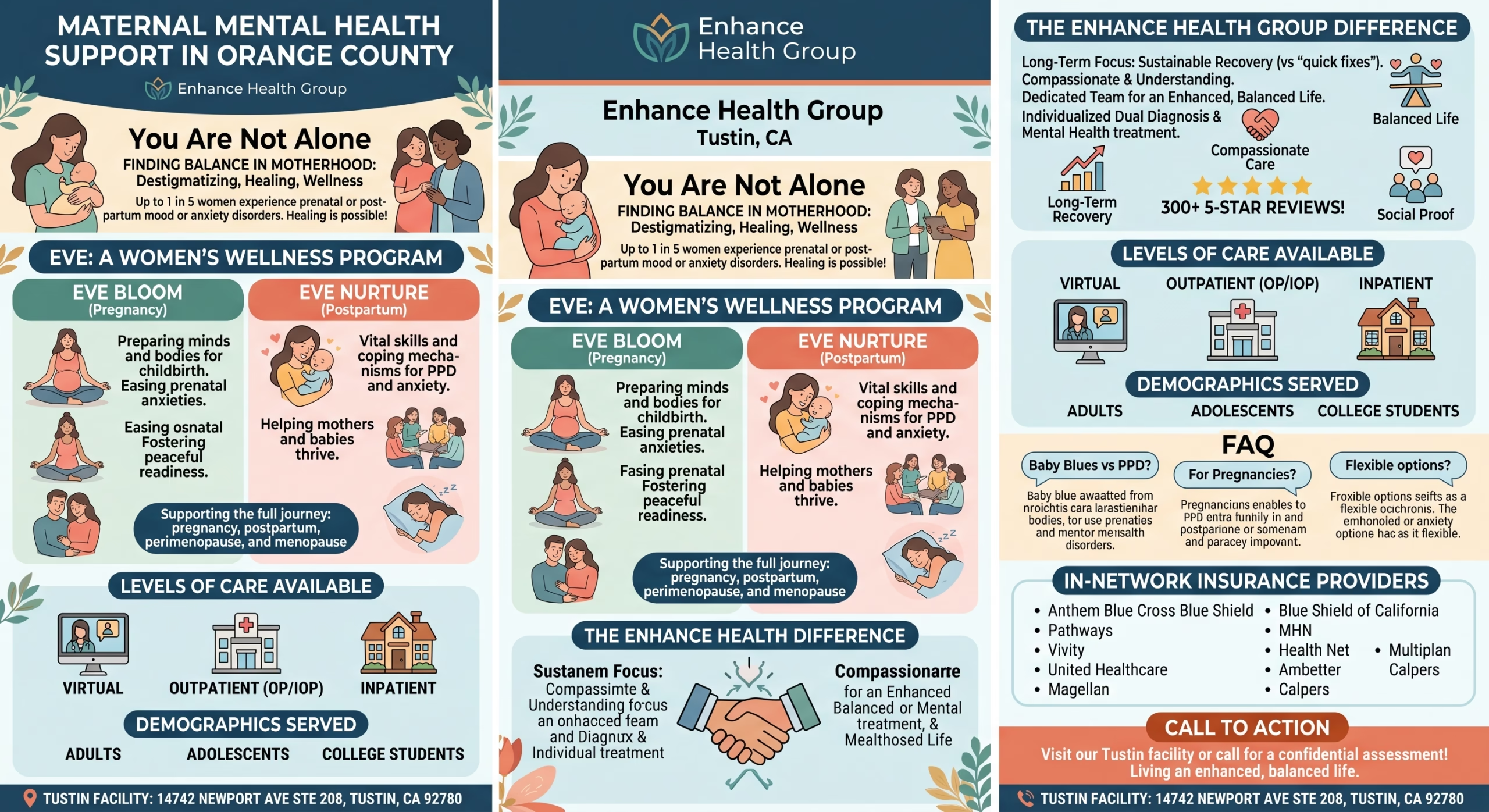
Orange County care is sorted by how many hours a week a person needs support and where they sleep at night. At the lightest end, outpatient therapy runs through Enhance's virtual outpatient program, so someone can keep working or attending school and meet a therapist by video. Intensive outpatient (IOP) adds more structure while the person still lives at home. Partial hospitalization (PHP) gives the most daily structure of the three, and both PHP and IOP take place at our Tustin center. Our levels of care page shows how they differ.
| Level | Where the person sleeps | Fits when | |---|---|---| | Outpatient (virtual) | Home | Symptoms are manageable but weekly support is needed | | IOP | Home | Outpatient hasn't been enough | | PHP | Home or supported living | Daily structure is needed without a hospital stay | | Residential or inpatient | At the facility | Home isn't safe or stable enough for treatment | | Detox | At the facility | Withdrawal needs medical management |
Overnight care happens at our sister facilities, not at the Tustin center. Detox and addiction residential care take place at Embrace Treatment Center, while mental health inpatient and residential care takes place at Eden by Enhance. Both are owned and run by the same people as Enhance, and you'd still start with our admissions team.
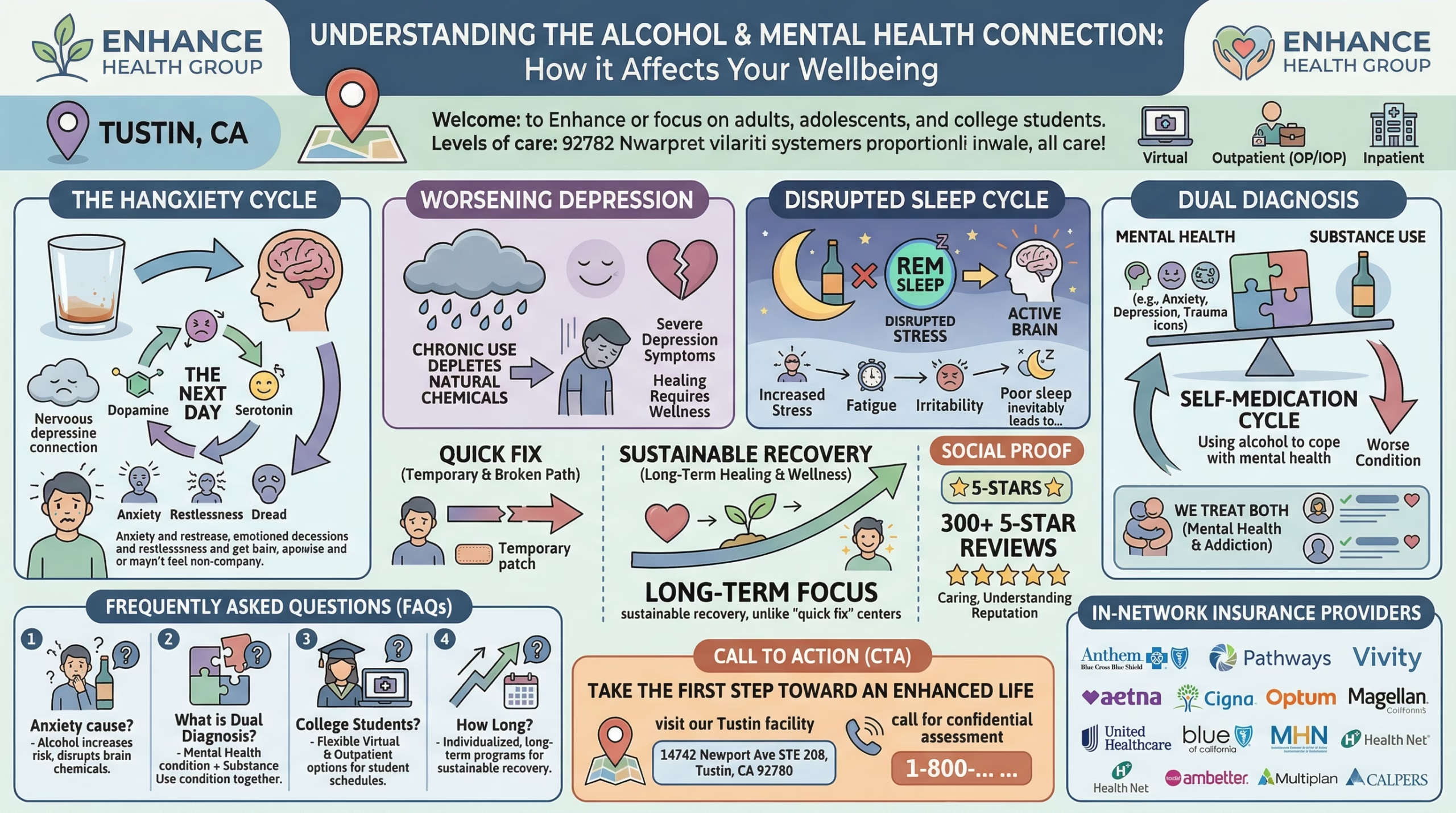
Dual diagnosis care applies when a mental health condition and substance use are happening together. Treating only one tends to leave the other driving symptoms, so the assessment looks at both before recommending a level.
Nobody has to pick a level alone. Admissions asks about symptoms, substance use, safety at home, and what's been tried, then points you to the level that fits, and a clinician confirms it at assessment.
County crisis lines and who to call first
Crisis lines handle the next hour, while treatment programs handle the next few weeks, so the right first call depends on how urgent things are. If someone has a plan to hurt themselves, has taken something, or can't be left alone, use the crisis line from the note at the top of this page or go to the nearest emergency room. Admissions isn't an emergency service, and you shouldn't wait on a callback in that situation.
OC Links is the county's information and referral line for behavioral health services. It fits the situation where someone is struggling but not in immediate danger, and you need help finding a provider, a county program, or a next step. The person who answers can point you to options across Orange County, including public programs that a commercial plan doesn't cover.
Once the immediate danger has passed, or if it never reached that point, a call to Enhance admissions is the practical next step for anyone with commercial insurance. The Tustin team asks what's going on, what substances are involved if any, whether home is stable, and what treatment has been tried before. They also check your benefits during the same conversation, so you hear which level of care may be covered before you decide anything.
School counselors often reach this point before a family does. If you're a counselor, you can share the admissions number with a parent, but the parent or the student, if they're an adult, makes the call. Admissions can't discuss a student's situation with you unless that person gives permission. It helps to give the family a short written note of what you've observed, such as missed classes, changes in mood, or statements about self-harm, so they can repeat it accurately on the phone.
How commercial insurance covers treatment
Most commercial plans pay for mental health and addiction treatment by level of care, and each level has its own rules. A plan might cover virtual outpatient with a small copay but require approval before PHP or a residential stay. Your deductible, copay or coinsurance, and any approval requirements depend on the specific plan, so benefits vary from one policy to the next.
Enhance Health Group is in network with Anthem Blue Cross Blue Shield, Aetna, Cigna, Optum, United Healthcare, Blue Shield of California, MHN, Health Net, Ambetter, Multiplan, and CalPERS. Covered California plans have their own page on our site. We're not in network with Pathways, Vivity, or Magellan, so if your card shows one of those names, tell admissions at the start of the call.
Verification works in a few steps:
- 1You call or fill out the form on our admissions page.
- 2Admissions contacts your insurance company directly.
- 3They explain your deductible, your copay, and which levels of care your plan may cover.
- 4If you want to continue, you move forward through admissions.
Have your insurance card in front of you, and note the member ID and the phone number on the back. If the person who needs care is an adult on someone else's plan, such as a spouse's or a parent's, the policyholder's name and date of birth help admissions find the right record.
A coverage answer for one level doesn't carry over to another. If a clinician recommends stepping from PHP down to IOP, or up to residential, the plan may need a fresh review, and admissions can walk you through that before the change happens.
You can start the process on our insurance verification page, or call (714) 862-1907 and the Tustin team will go through your plan with you.
Where to start as a parent or school counselor
Parents usually reach the right first step faster by writing down what they've seen than by trying to diagnose it. Jot down dates and specifics: a drop in grades, nights without sleep, a changed friend group, pulling away from family, or comments about feeling hopeless. A page of notes gives the person on the phone something concrete to work with and keeps you from forgetting details when you're anxious.
Start the conversation with the person in a quiet moment, not in the middle of an argument. Say what you've noticed and that you're worried, then ask what they think would help. Adults choose their own treatment, so your role is to make the next step easy: offer to sit with them while they call, or to make the call yourself and hand over the phone.
If the person is a teen, Enhance's adolescent program is outpatient therapy, offered virtually and in person, with after-school options. It uses CBT and DBT approaches, including for anxiety and ADHD. For a younger person, ask admissions whether that program fits before assuming a higher level of care is needed.
Counselors can support a family without taking on the clinical decision. A few things within your role help:
- 1Share what you've observed in writing, with dates, and give it to the parent rather than keeping it in a file.
- 2Suggest the family check their insurance card for a behavioral health number before they call.
- 3Follow up in a week, since families often stall after the first conversation.
When a family isn't sure whether the situation is mental health, substance use, or both, they don't need to settle that first. Say so on the call. Admissions will ask follow-up questions, and the assessment looks at both before a level of care is suggested.
What happens when you call Enhance admissions
A member of the Tustin admissions team picks up and starts with a few plain questions: who needs care, what's been going on, and how long it's been happening. You don't need a diagnosis or a polished summary. Notes on your phone or a page of dates, like the ones described above, are plenty.
Expect questions about safety, too. They'll ask whether the person is having thoughts of self-harm, whether alcohol or drugs are involved, and whether home is calm enough to recover in. Answer as directly as you can, because those answers decide whether the conversation points toward virtual outpatient, IOP, PHP, or an overnight level of care at one of our sister facilities. If anything you describe sounds urgent, the admissions counselor will tell you so and steer you toward emergency help instead of a program.
Benefits come up in the same call. Admissions contacts your payer, then explains your deductible, your copay, and which levels of care your plan may cover, so you aren't guessing about cost before you decide. Benefits vary by plan, and the team will tell you plainly which parts they can confirm and which the insurer has to answer.
A call doesn't commit you to anything. You can hang up with a recommendation and a coverage picture, talk it over with your family, and call back when you're ready. If you do want to continue, admissions walks you through the next step, and a clinician confirms the level of care at assessment.
Questions are welcome, including the awkward ones about confidentiality, what a typical week looks like, or whether a spouse can join sessions. Ask them all.
To begin, call (714) 862-1907, or use the Verify insurance form and the Tustin team will check your plan with you.
Common Questions
Can my employer see that I'm using my insurance for treatment?
Employers generally don't receive details about your care. Your insurer processes the claim, and what comes back to the policyholder is typically an explanation of benefits that lists the plan's payments, not your diagnosis or session notes. If you're on a family member's plan, ask admissions how those statements are mailed, since the policyholder may see them.
Can I keep working while I'm in treatment?
Often, yes, depending on the level of care. Virtual outpatient is built to fit around a job or school, and IOP lets you live at home. PHP asks for more of your day, so people usually need to arrange time away. Tell admissions about your work situation on the call so the recommendation accounts for it.
Does my family have to be involved?
Not always. Adults decide who takes part in their own care. If a spouse or relative could help, family therapy is available, and a partner or family member can join sessions when the clinician thinks it would be useful. You can also ask admissions how family involvement works before you commit to anything.
What if my loved one says they don't need treatment?
Adults can't be required to start treatment, so the aim is to keep the door open. Name one specific thing you've noticed, avoid labels, and offer a low-pressure step such as sitting beside them during a call. Many people say no at first and agree later. You're also welcome to call admissions yourself and ask how other families have approached this conversation.
Are therapists and psychiatrists part of the same program?
Within our programs, yes. Enhance's clinicians include master's- and doctorate-level therapists, and medication management with a licensed psychiatrist is part of the plan when medication is appropriate. Ask admissions which providers a given level of care includes, so you know who you'd see and how often before you decide.