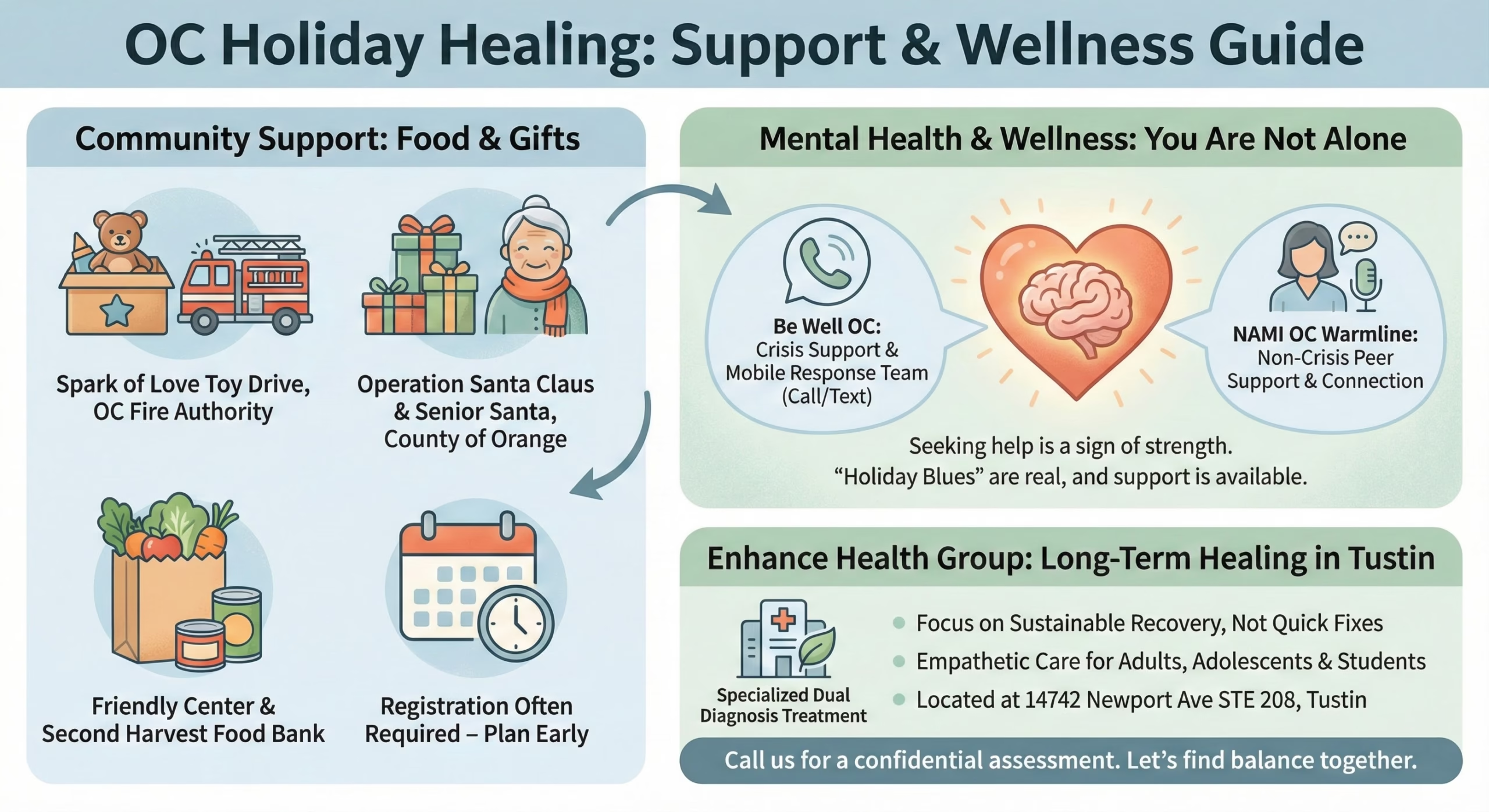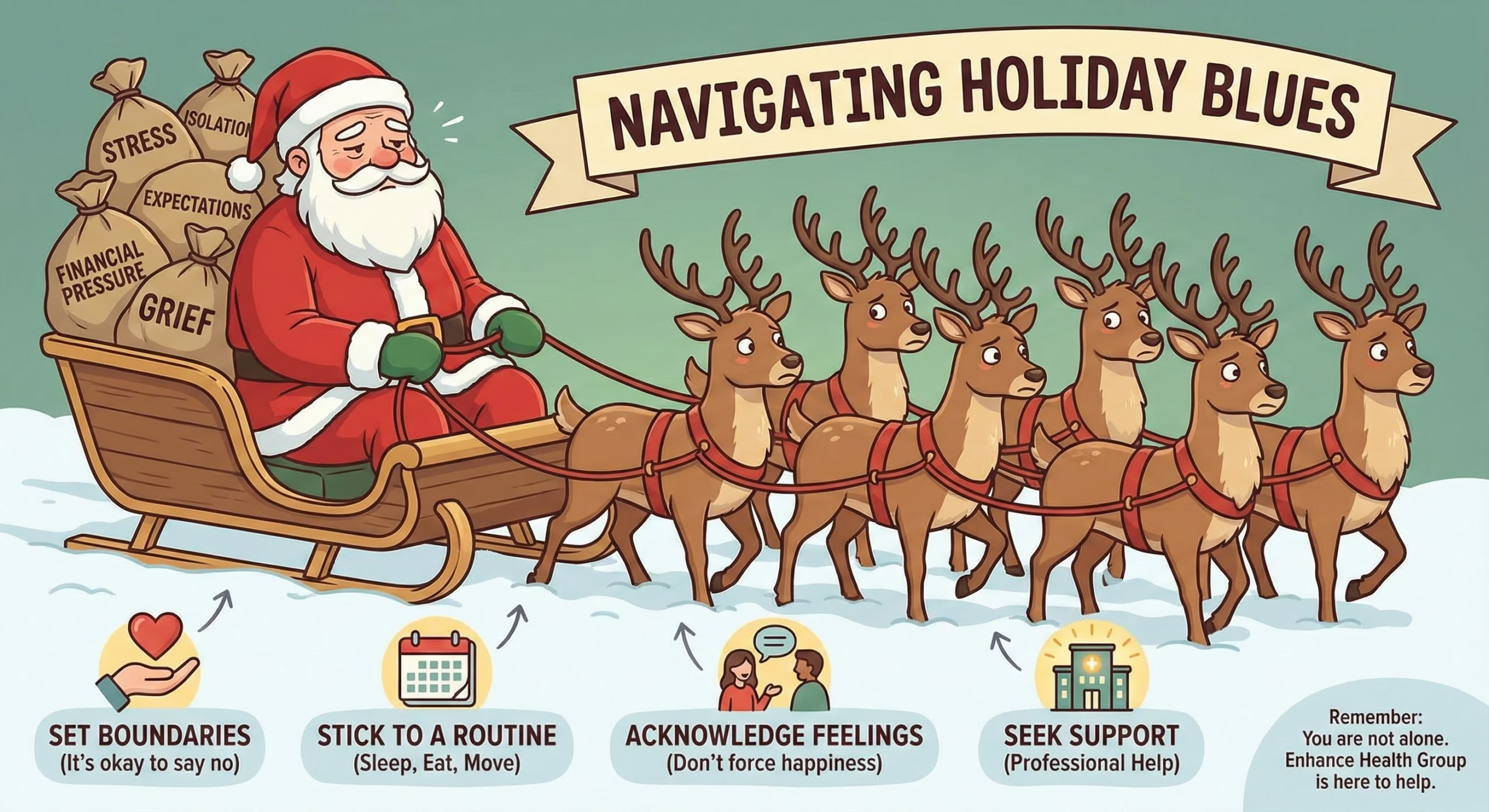
If you've felt flat, tearful, or numb since late November and it isn't lifting after a few days, that's christmas depression, and it's treatable. It often shows up as exhaustion, pulling away from people, or dreading events you used to enjoy. You don't have to wait for January to ask for help, and Enhance Health Group in Tustin can talk you through your options.
If you're thinking about hurting yourself or ending your life, call or text 988 right now.
Signs of Christmas Depression That Go Beyond a Rough Week
Holiday sadness usually has a trigger and an end. You miss someone at the dinner table, you cry in the car, and by the next morning you can function again. Depression is different because it spreads into everything and stays put for most of the day, most days, for two weeks or longer.
Watch for changes in how your body and routine are running as well as your mood. Sleep is often the first thing to go, either lying awake at 3 a.m. or sleeping ten hours and still feeling drained. Appetite shifts and concentration slips, and simple tasks like answering a text or paying a bill start to feel enormous.
A few signs point to something more than a hard season:
- You've stopped enjoying things that normally bring you at least a little pleasure, like music, a favorite meal, or time with a friend.
- You feel worthless or like a burden, and the feeling doesn't change when someone is kind to you.
- You're canceling plans, avoiding calls, or staying in your room to dodge questions about how you're doing.
- You're drinking or using more than usual to get through the evenings.
Pay attention to what the low feels like compared with your normal. If you've had depression, anxiety, or trauma symptoms before, a bad December can be the first stretch of a relapse, and it's easier to treat early.
A quick check you can do tonight is to write down how many of the last fourteen days felt like this. If most of them did, that's enough reason to talk with a clinician. At Enhance, an assessment is how the care team decides whether weekly therapy, a day program, or something more intensive fits what you're describing.
Why the Holidays Can Bring Depression Back or Make It Worse
Daylight is shortest in December, and less light can change sleep and energy enough to deepen a low mood that was already simmering. That's one piece. The others are usually about the calendar itself, which stacks several pressures into about five weeks.
Money is a common one. Gifts, travel, and hosting can leave you worrying about bills while everyone around you seems cheerful. Family is another. Sitting at a table with a relative who criticizes you, or with an empty chair where someone used to sit, can bring old grief and old conflict back at once. If you're newly divorced, far from home, or spending the holidays alone, the contrast with the holiday images everywhere can make you feel left out.
Routine also falls apart. Your regular schedule, exercise, and therapy appointments often get bumped for parties and travel. People who've been stable on a medication plan sometimes skip doses or run out while away from home, and that alone can cause a dip. Alcohol is easier to reach for in December, too, and it tends to worsen sleep and mood the next day.
None of this means you caused your depression or that you're weak for feeling it. Several known triggers simply landed at the same time.
If you've been in treatment before, tell your current therapist or prescriber about the upcoming weeks before they arrive. If you haven't, an assessment with the Tustin team at 14742 Newport Ave is a reasonable place to start. A licensed clinician asks what's changed, how long it's lasted, and what your sleep and daily life look like, then explains which kind of care fits.
When Drinking or Drug Use Is Part of the Holiday Low
Many people find that a drink takes the edge off a bad night in December, so the pattern builds before anyone notices it. A glass of wine to fall asleep becomes three, or a pill left over from an old prescription becomes the way you get through a family dinner. The clearest warning is when you're using to manage how you feel, not to enjoy an evening, and the amount keeps creeping up.
Alcohol and many drugs worsen depression within hours. They fragment sleep, flatten your mood the next day, and can make the 3 a.m. thoughts louder. That's why a person can feel worse every morning and still reach for the same thing at night.
Depression and substance use usually need to be treated together. Treating only one often leaves the other pulling you back. Enhance Health Group treats both at once through dual diagnosis care, so you don't have to pick which problem gets attention first. The care team starts with an assessment that asks what you're using, how often, and how your mood has been, then recommends a level of care.
Some people need medical support to stop safely. Stopping alcohol suddenly after heavy daily use can be dangerous, so don't quit cold on your own. Detox and addiction residential care take place at Embrace Treatment Center (embracetreatment.com), a sister facility of Enhance, and admissions at Enhance is where you start so the right placement gets made.
When you call, be ready to say honestly what you've been using and for how long, any medications you take, and whether you've had withdrawal symptoms before. Admissions doesn't judge the answers. They need them to match you with the right care, and they can check your insurance at the same time.
How to Bring It Up With Someone You're Worried About
Pick a quiet moment one-on-one, ideally before the big gathering rather than in the middle of it. A kitchen conversation on a Tuesday goes better than a comment across the table while relatives are listening.
Start with what you've seen, in plain words. "You've seemed worn out since Thanksgiving, and you haven't been answering my texts. I miss you." That's easier to hear than "You seem depressed, " which can sound like a diagnosis or an accusation. Then ask one open question, such as "What's been the hardest part?", and let the silence sit. Most people need a few seconds to answer honestly.
Listen more than you talk. Skip the quick fixes like "just get out of the house" or "think of everything you have, " because they tell the person their feelings are a mistake. Saying "That sounds really heavy, and I'm glad you told me" does more.
If they open up, offer a specific next step instead of a vague "get help." You can offer to sit with them while they call admissions at (714) 862-1907, or to drive them to an assessment in Tustin. The team can talk through what's been going on and explain which kind of care might fit.
If they brush you off, don't push for a decision that night. Say you're not going anywhere and check in again in a day or two. People often need to hear it twice before they say yes.
You can't force an adult into treatment, and you can't carry their recovery for them. You can stay steady, keep asking, and make the next step easy to take.
Levels of Care and What Happens When You Call Enhance
Christmas depression usually fits one of a few levels of care, and the Tustin team matches you to one after an assessment instead of starting you at the top. Weekly outpatient therapy, offered virtually, suits someone who's still working and sleeping most nights. A partial hospitalization program (PHP) or an intensive outpatient program (IOP) in Tustin gives more structure when symptoms are interfering with daily life, and you go home afterward. If depression and drinking or drug use are tangled together, dual diagnosis care treats both at once.
Some people need a bed. When someone can't stay safe at home, inpatient mental health care is the right level, and it takes place at Eden by Enhance (edenbyenhance.com), a sister facility owned and run by the same people as Enhance. Admissions at Enhance is still where you begin.
When you call, a member of the admissions team answers and asks what's been happening, how long it's lasted, and what you're using, if anything. Have your insurance card handy, along with a list of current medications and any past treatment. You don't need to have your story polished. Enhance works with Anthem Blue Cross Blue Shield, Aetna, Cigna, Optum, United Healthcare, Blue Shield of California, MHN, Health Net, Ambetter, Multiplan, CalPERS, and Covered California, and the team checks your benefits during the call. Benefits vary by plan, so they'll explain what yours may cover for the level of care they recommend.
You can ask anything before you commit to anything. Most people want to know what a typical week looks like, whether they can keep working, and how family can be involved, and admissions can answer those for the specific program.
Call (714) 862-1907, or use the Verify insurance button to check your coverage, and you'll have a clear next step before the holidays are over.
Common Questions
How is christmas depression different from seasonal affective disorder?
Seasonal affective disorder follows the seasons and usually returns each fall or winter, while christmas depression is tied to the holidays themselves, such as grief, family conflict, money stress, or being alone. The two can overlap, and the treatment is similar. A clinician can sort out which pattern fits you during an assessment, and you don't need to figure it out beforehand.
Will the feeling go away by itself after New Year's?
Sometimes a holiday low eases once the pressure ends, but depression that has lasted two weeks or longer often doesn't lift on its own. If you're still sleeping badly, withdrawing, or losing interest in things by mid-January, treat that as a signal to get assessed. Starting earlier usually means a lighter level of care is enough.
Can I keep working or caring for my kids while I'm in treatment?
Often, yes. Outpatient therapy, offered virtually, and intensive outpatient care are built so you can stay at home and keep up with much of your life. Ask admissions how a specific program fits your work and family schedule. They can walk through the options once they know what your days look like.
Is it normal to feel guilty for being sad when everyone else seems happy?
Yes, and that guilt is one of the more common parts of holiday depression. Many people feel pressure to look cheerful, so they hide how they're doing and end up feeling more alone. Your mood isn't a character flaw or ingratitude. Telling one trusted person the truth, or a clinician, usually takes some of that weight off.
What if my family doesn't believe depression is real?
You can still get care without their agreement. Adults make their own treatment decisions, and an assessment is private between you and the care team. If you'd like family to understand, ask whether a clinician can explain it or whether family therapy sessions would help. Some relatives change their minds once they hear it from a professional.