
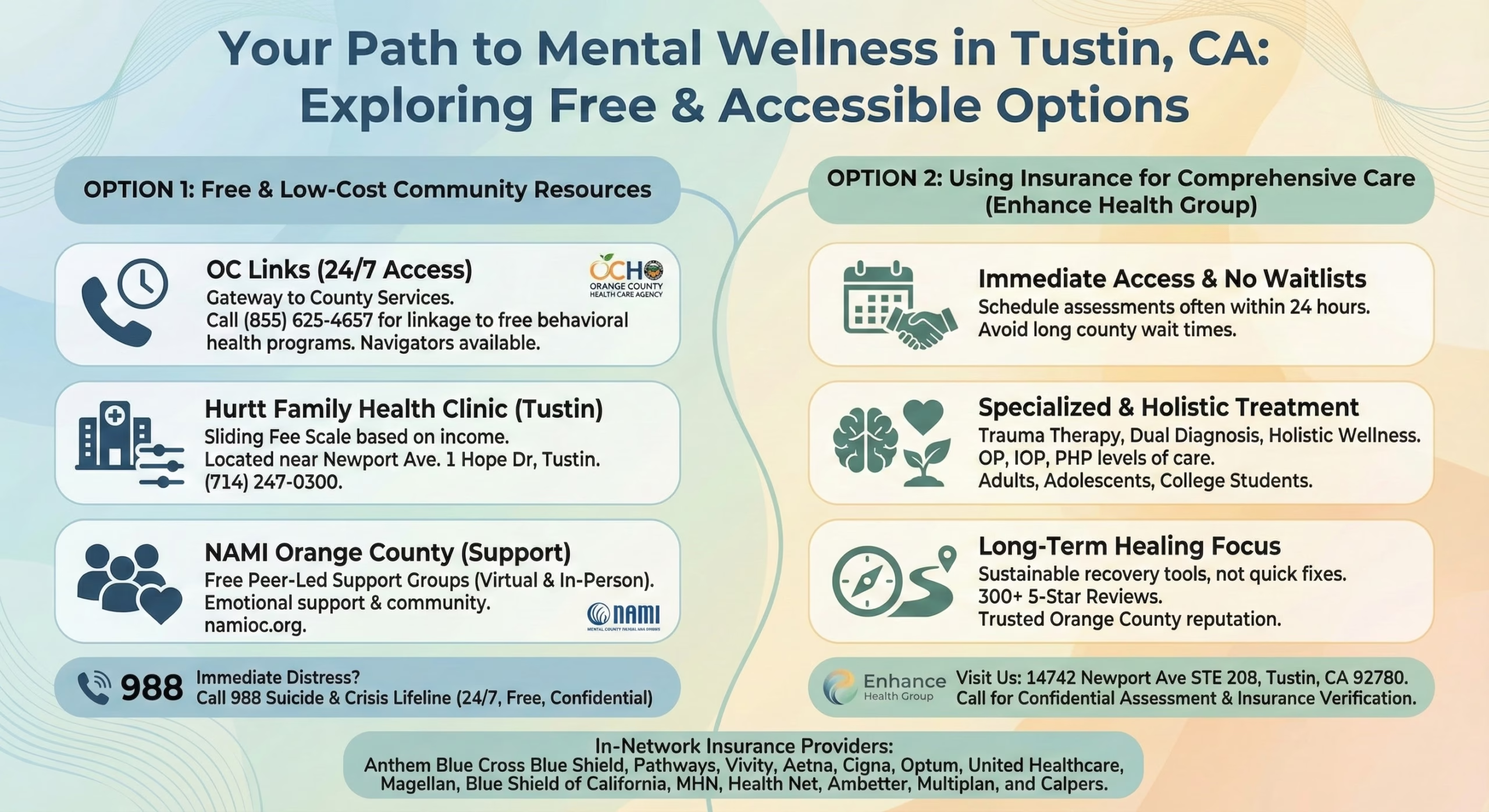
If you're looking for affordable therapy in Tustin, start with the insurance card in your wallet, because many plans cover more than people expect. Free and low-cost county and community options exist too, and they're worth knowing about if you're uninsured or between jobs.
If you or someone you love is thinking about suicide or is in immediate danger, call or text 988 right now. For an overdose or medical emergency, call 911.
Affordable therapy in Tustin starts with your insurance
Enhance Health Group is in network with Anthem Blue Cross Blue Shield, Aetna, Cigna, Optum, United Healthcare, Blue Shield of California, MHN, Health Net, Ambetter, Multiplan, and CalPERS. Covered California has its own page on our site as well. If your card carries one of those names, there's a good chance your plan helps pay for therapy at our Tustin center. We're not in network with Pathways, Vivity, or Magellan, so check the back of your card before you plan around us.
Benefits vary by plan, so the card alone won't tell you what you'll owe. Two people with the same insurer can have very different deductibles and copays, depending on which employer or marketplace plan they're on. The only way to learn your own numbers is to have someone contact the payer and ask.
That's what our admissions team does. You call or send a form, and they reach out to your insurance company on your behalf, then explain your deductible, your copay, and which level of care your plan may cover. If the numbers don't work for you, you've lost nothing but a short phone call, and you'll know where you stand.
Our insurance page lays out the same process if you'd rather read it first. If you're weighing something bigger than weekly sessions, our levels of care page shows how the options differ, and cost follows the type of care you need.
Try not to rule yourself out before anyone has checked. Plenty of people assume therapy is out of reach because of a high deductible or a past bill, then learn their plan covers outpatient visits at a modest copay.
Free and low-cost options outside a private practice
Orange County runs its own behavioral health system, and the OC Links line at 211 (or 855-625-4657) is the quickest way to find out which public programs fit your situation. The people who answer can point you toward county-funded clinics, many of which see people who are uninsured or on Medi-Cal, and some set fees on a sliding scale based on income. Have your zip code and a rough household income ready, since that usually decides which programs you qualify for.
Community clinics and nonprofits are the next place to look. Federally qualified health centers often offer counseling alongside regular medical care, and community counseling centers sometimes use pre-licensed therapists who work under a supervisor and charge lower fees. Training clinics at local universities can run on the same model. The trade-off is usually the wait. Public and sliding-scale programs tend to have waitlists, and the person you see may change as trainees finish their placements, so ask about both before you sign up.
For substance use, the federal SAMHSA National Helpline at 1-800-662-4357 gives free referrals to treatment programs and community resources, including options for people without insurance. It's confidential, and you don't need a plan or a diagnosis to call.
Peer support is free and can sit alongside therapy. Groups through NAMI Orange County and local recovery meetings cost nothing and meet in person and online. They won't replace treatment if you're dealing with severe symptoms, but they can keep you connected while you wait for a first appointment.
If you have insurance but still can't afford the copay, say so on the benefits call. Admissions can explain which level of care your plan may cover, and sometimes a different level changes the math.
How the level of care changes what you pay
Insurance plans price care by the type of service, so a weekly therapy visit and a full day of treatment can carry very different costs under the same card. Outpatient therapy usually sits at the lowest end, because you're in a session for a short time and then you go home. Virtual outpatient falls in that group, and it can cut the cost of getting to appointments if you're juggling work or childcare.
A partial hospitalization program (PHP) and an intensive outpatient program (IOP) both happen at our Tustin center, and they involve more treatment than weekly sessions. That usually puts them in a different benefit category, with its own copay or its own share of the deductible. Some plans cover these programs at a rate that surprises people, and others ask for prior approval first. Admissions checks for both when they contact your payer, so you'll hear about authorization before you commit.
Residential and inpatient care sit at the top of the cost range, since they include a stay. We don't provide them at the Tustin center. For addiction, detox and residential care take place at Embrace Treatment Center, and mental health inpatient care takes place at Eden by Enhance. Both are sister facilities run by the same people as Enhance, and you'd still begin with our admissions team, who can check what your plan says about that level of care.
Dual diagnosis, meaning a mental health condition and substance use together, can also change which level fits and what it costs. Treating both at once is often more practical than handling them one after the other.
Two questions are worth asking on your benefits call:
- 1Which level of care does my plan list as covered, and does it need prior approval?
- 2If a clinician recommends a higher level of care, how would my costs change?
The level you start with comes from an assessment, not from what's cheapest or most intensive. If the recommended level is more than you can manage, ask whether a step down is clinically reasonable and what you'd need to see change before moving to it.
What happens when you call admissions to check benefits
A person on our Tustin admissions team picks up and starts with a few simple questions about who the call is for, what's going on, and which insurance card you have. You don't need a diagnosis or a referral, and you don't need to have chosen a level of care. If it's easier, you can send the form on our site and wait for a call back.
Once they have your plan's name and member ID, they contact your insurance company directly. They ask for the specifics that decide what you'd pay, including whether your plan covers outpatient therapy, PHP, or IOP, what your deductible looks like, what the copay is, and whether any of it needs approval beforehand. You're not left to decode your own benefits booklet.
Then they walk you through what they found in plain terms. If the numbers are workable, they'll talk through what starting would look like. If they aren't, you can ask about other options, including the county and community programs above, and nobody will push you into a decision on that call.
Some things make the conversation go faster:
- 1Your insurance card, front and back, so you can read out the member ID and the phone number for behavioral health benefits.
- 2The name and date of birth of the person who'd be in treatment, if it isn't you.
- 3A short description of what's been happening, in your own words.
Verification tells you what your plan may cover, and your plan sets the final numbers. That makes the call useful even if you're only comparing prices, since you'll leave with real figures for your plan, which is more than most online cost estimates can give you.
Our team doesn't mind blunt questions. Asking "what would I owe per visit?" is a normal part of the call, and you can ask it as many times as you need to.
What to have ready and what to ask about cost
Write down the amount you can comfortably spend each week or month before you call. A number in mind turns a vague cost conversation into a specific one, and it helps admissions tell you whether a given level of care fits your budget or whether another option is worth a look.
Pull together a few other details, too. If your insurance comes through an employer, note whether the plan is a PPO or an HMO, since that affects which providers you can see. Check whether you've already paid anything toward this year's deductible, because that changes what you'd owe for your first few visits. If the person in treatment is a family member, find out whether they're the main member or a dependent on someone else's plan.
These questions tend to surface cost surprises early. Ask what you'd pay per visit or per day once your deductible is met, and whether your plan caps the number of sessions or days in a year. Ask whether services like medication management or family sessions are treated differently, and who to call if your situation changes and you need to recheck benefits.
Ask for the answers in plain numbers, not ranges, and write them down as you hear them. If something sounds unclear, say so, because our team would rather explain a term twice than have you leave the call guessing.
You don't need every item on that list to call. If you only have the card, that's enough to begin, and admissions can tell you what else would help. The figures you hear from your payer are the ones to plan around, not the ones you've seen online.
When you're ready, call (714) 862-1907 or use the Verify insurance button below, and the Tustin team will check your benefits and explain what your plan may cover.


