
Most commercial plans can insurance cover virtual IOP when the program is medically necessary, but your own plan's benefits decide it. If you work full days or live far from Tustin, it's time to ask your insurer whether it will cover virtual IOP before you pick a program. Enhance Health Group is in-network with many California plans, and our admissions team can check your benefits when you call (714) 862-1907.
Insurance coverage for virtual IOP and what decides it
Four things usually decide whether a plan pays for virtual IOP: the plan type, the level of care your clinician recommends, whether the provider is in-network, and the deductible or copay you owe before benefits apply. The first three are yes-or-no answers you can get in one phone call. The fourth is a dollar amount that changes from plan to plan.
Plan type matters because employer plans, individual marketplace plans, and public-employee plans write their behavioral health benefits differently. Some list intensive outpatient care under outpatient mental health. Others treat it as its own tier with separate rules. Your insurance card and member portal will name the plan, but the benefit summary tells you which tier IOP falls into.
Medical necessity is the part people don't expect. Insurers usually want an assessment showing that weekly therapy alone isn't enough, and many ask for that documentation before they approve intensive outpatient care. At Enhance, a clinician completes an assessment, and the recommended level of care is based on what it shows. That assessment is what a payer reviews, so a virtual program isn't treated as a lesser option on paper. How the payer handles telehealth is a separate question, and the plan's own rules answer it.
Network status changes your cost more than anything else. An in-network provider has agreed to rates with your insurer, which usually means a lower share for you. An out-of-network provider can mean a higher deductible, a higher coinsurance, or no coverage at all, depending on the plan.
Before you call, have these ready:
- 1Your insurance card, with the member ID and the phone number on the back
- 2The name of the plan holder, if it isn't you
- 3Your state of residence, since California adults are the ones Enhance's virtual program treats
- 4Any denial letters or authorization numbers from earlier treatment
Benefits vary by plan, and a benefits check explains what your plan may cover. It isn't a promise of coverage or admission.
Which plans Enhance works with for virtual care
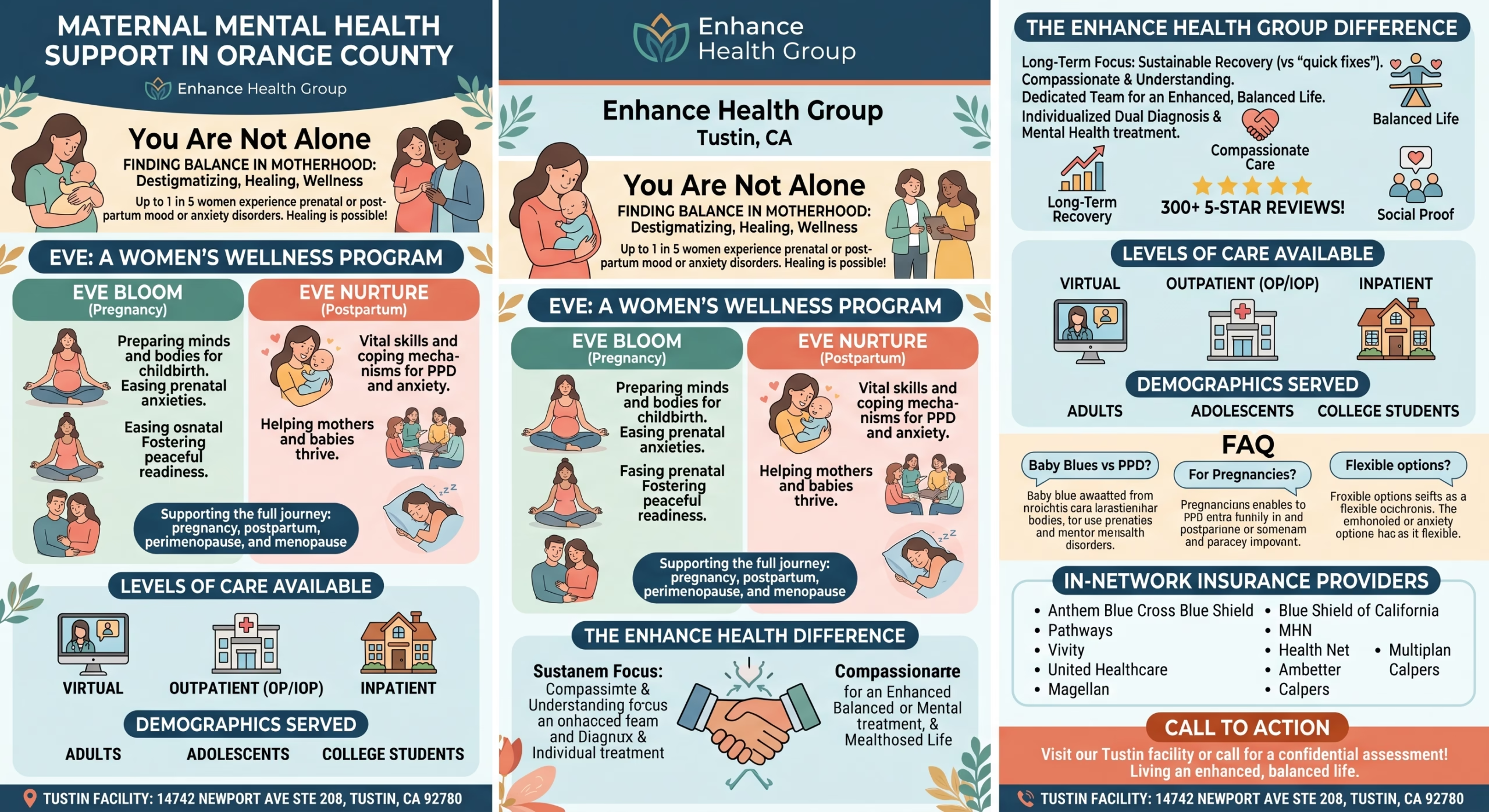
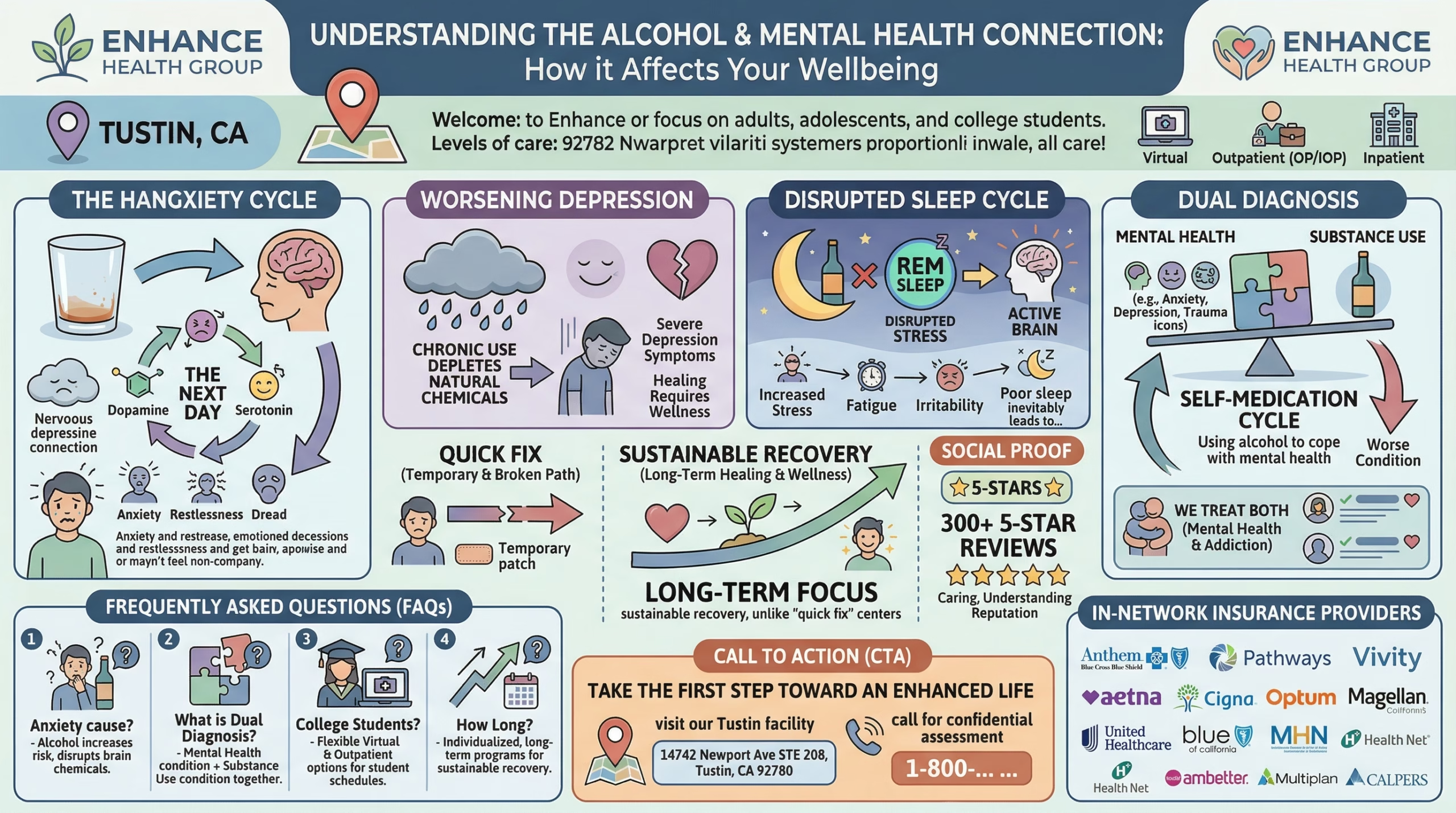
Enhance Health Group is in-network with Anthem Blue Cross Blue Shield, Aetna, Cigna, Optum, United Healthcare, Blue Shield of California, MHN, Health Net, Ambetter, Multiplan, and CalPERS. Covered California has its own page on our site, so if you bought your plan through the state marketplace, start there. Our admissions team can tell you how your specific plan treats the virtual program.
Network status belongs to the plan, not just the insurer's name. Anthem Blue Cross Blue Shield, for example, sells employer, individual, and other plan types, and each can handle behavioral health benefits differently. Two people with the same insurer can get different answers on virtual IOP, which is why the member ID on your card matters more than the logo.
A few plans aren't on the list. Enhance isn't in network with Pathways, Vivity, or Magellan. If your card carries one of those names, you'll hear that on the first call, and the last section of this article covers what to do next.
When you call, admissions contacts your payer and then explains your deductible, your copay, and which level of care may be covered. If you want to continue after that, you go through admissions to the next step. You don't need to sort out the virtual-versus-in-person question beforehand, because the same benefits check covers both.
Benefits vary by plan, so the answer for your coworker with the same insurer may not be the answer for you.
How benefits verification works before you commit
You can start verification two ways: call the Tustin team at the number above or submit the form on our admissions page. Either way, a person at Enhance contacts your insurance company directly, so you don't have to sit on hold with your payer yourself.
Once they've reached your payer, they go through what your plan says about intensive outpatient care. They'll explain your deductible, your copay, and which level of care may be covered. They'll also tell you plainly if your plan isn't one Enhance works with, so you hear that before you've committed to anything.
Ask a few questions while you have someone who can answer them:
- 1Does my plan treat virtual IOP the same way it treats in-person IOP?
- 2Does the plan require prior authorization, and who submits it?
- 3How much of my deductible have I already met this year?
The deductible question is the one that changes your out-of-pocket cost most. If you've met most of it by midyear, your share may look very different than it would in January.
Verification doesn't commit you to anything. You get the benefits explanation first, and you decide afterward whether to continue. If you do, the next step runs through admissions, where a clinician's assessment determines the level of care. That assessment is also what a payer usually looks at when it reviews the request.
Write down the name of the person you spoke with and the date, and keep any authorization number you're given. If a claim is questioned later, those details save you a second round of phone calls.
You can also check your own side at the same time. Your insurer's member portal usually lists behavioral health benefits, and the number on the back of your card reaches the same payer our team contacts. Our team can compare what they hear with what you see on paper, which helps if the two don't match.
Our Tustin team can run this check on a weekday lunch break or between meetings, and you don't have to be at a computer. You'll need your card and a few minutes to talk through the questions above.
Virtual IOP for California adults who work or live far away
Enhance is based in Orange County, but you don't have to live near Tustin to use the virtual program. A commute from Bakersfield, Redding, or the Inland Empire doesn't change how your insurance is checked, and the same admissions team handles the benefits call. Our virtual IOP is delivered through virtualtreatmentcenter.com, so sessions happen on a screen instead of in a waiting room.
Tell admissions where you'll be physically sitting when you join sessions. The program works with people located in California, and a payer may ask the same question when it reviews your request. If you travel for work, mention that on the first call so the team can plan around it with you.
Work is the other practical issue. Ask your clinician how the schedule would fit your job once your assessment is done, and ask before you decide whether to tell your employer anything. You don't need a prepared explanation for the call. Plenty of people start by saying, "I work full-time and I'm not sure I can commute, " and the team takes it from there.
A few things make virtual sessions easier to sit through:
You'll want a private room with a door that closes, since sessions are confidential only if no one else can hear them. A laptop or tablet with a working camera beats a phone propped on a shelf, because you'll be on screen for a while. A wired connection or a spot near your router saves you from dropped calls. If you're at work, a parked car is a poor choice, and a closed office or a conference room is better.
If you're weighing virtual care against driving in, ask what your plan says about each. Some plans cover telehealth under the same behavioral health tier as in-person care, and the benefits check will tell you whether yours does. Your answer decides whether distance is a cost problem or only a scheduling one.
What to do if your plan isn't on the list
A plan missing from our network list doesn't always end the conversation, so ask before you cross Enhance off. Plans change their networks, and a card can carry a brand name that sits on top of a different network. The admissions team checks the member ID against what your payer says, which is more reliable than matching logos.
If the answer is that Enhance isn't in network with your plan, there are three practical routes.
Ask your insurer about out-of-network benefits. Some plans reimburse part of the cost of an out-of-network provider, and the member services number on your card can tell you whether yours does and what the deductible is.
Ask your employer's benefits office whether another plan is available at the next enrollment period. If you're covered through work, that office can often tell you what's offered and when you can switch.
Ask admissions what other options exist for your situation. They'll go through your benefits with you and tell you plainly what your plan may cover.
A plan that isn't in network can still affect which level of care makes sense to look at first. If your plan only covers certain programs, tell the team what you've learned. The assessment still comes first, and it still decides the level of care that fits you, so don't pick a program based on price alone before you've been assessed.
Keep any letter your insurer sends. A denial letter usually names a reason and explains how to appeal, and admissions can look at it with you. Bring it to the call along with your card.
If you pay out of pocket for part of your care, ask for the details in writing before you agree to anything, and ask what each step costs. Vague answers about cost are a reason to keep asking.
Call admissions at (714) 862-1907, or use the Verify insurance button below, and the Tustin team will check your plan and explain what it may cover.