
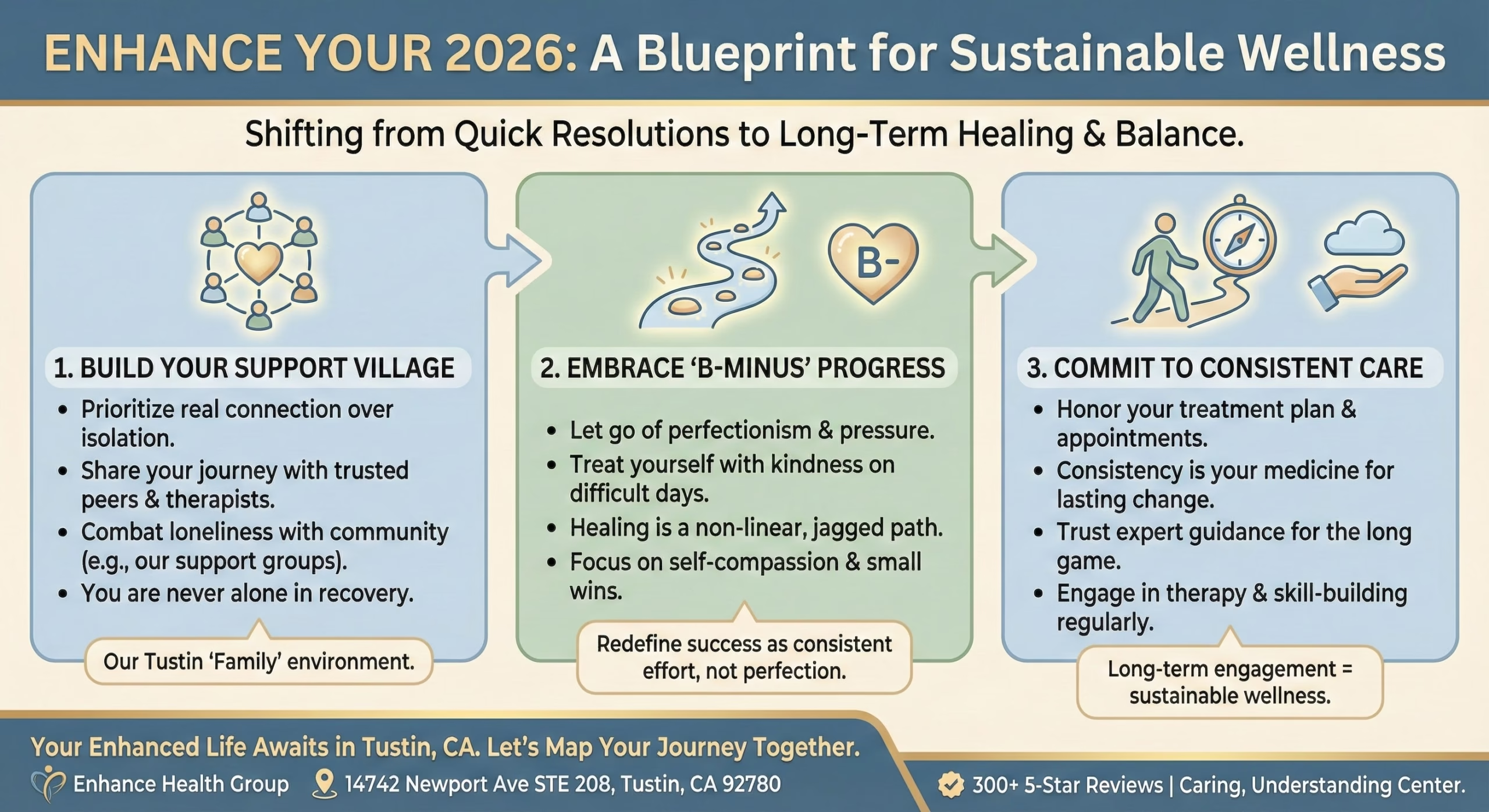
The mental health goals that last through 2026 are small, specific, and tied to something you can see in your week, like sleeping at a steady hour or calling a friend every Sunday. Big promises to "be happier" tend to fade by February because nothing tells you whether they're working. A good goal gives you a daily action, and it leaves room for a clinician to help when the goal turns out to be harder than it looked.
Mental health goals that hold up past January
Most goals break down at the same point: the plan asks for a new person instead of a new habit. If you've decided to "stop worrying" or "feel more confident, " you've set a result with no first step, so on a bad Tuesday there's nothing to do except feel like you failed.
A goal that lasts usually has three parts. It names an action, it says when the action happens, and it's small enough to do on your worst day. "Walk around the block after dinner" survives a rough week. "Get my anxiety under control" doesn't, because you can't do it on a Tuesday evening.
Try rewriting one goal this way before you commit to it:
- 1Write the feeling you want less or more of, such as dread before work or loneliness on weekends.
- 2Pick one action that touches it, such as ten minutes of planning on Sunday night or one text to a friend.
- 3Attach it to something that already happens, like your morning coffee or the drive home.
- 4Decide how you'll know it happened, even if the answer is a check mark on the calendar.
Expect the first few weeks to be uneven. Missing three days doesn't mean the goal is wrong. Missing three weeks in a row, or noticing the goal makes you feel worse, is useful information, and it's a good reason to bring it to a therapist instead of quietly dropping it.
A licensed therapist can help you sort out which goals are habits you can build on your own and which are symptoms that need treatment. At Enhance, individual therapy is one to one with a licensed clinician, and many people start there by turning a vague hope into something they can track between sessions.
Families can help by asking what the goal is and how it's going, rather than whether the person is "better yet." One specific question, like "Did the Sunday call happen?", gives the person a way to answer honestly without feeling graded.
Choosing one or two goals you can measure
Two goals is the most most people can track in a normal week, and one is often better. Each goal you add splits your attention, and the first thing to slip is the tracking, which is the only way you'll know whether anything is changing.
Measure the action first, then the effect. The action is yes or no: did you walk after dinner, did you text your friend, did you take the evening medication when you planned to. The effect is slower and needs a rough scale. Once a week, rate the thing you care about from one to ten, such as how anxious Sunday nights feel or how often you woke before five. Write the number down on the same day each week. A single bad score tells you little, but four weeks of scores show a direction, and that direction is what you'd bring to a therapist.
Pair goals that support each other rather than compete. A steady bedtime and a short daily walk work together. A new bedtime, a new diet, a gym routine, and a journaling habit started in the same week usually don't last, because every one of them needs willpower on the same tired evening.
If one goal involves alcohol or drug use, such as cutting back or stopping, treat it as the single priority and keep the second goal very small. Changing substance use can bring withdrawal, sleep problems, and mood swings, and stopping suddenly isn't safe for everyone. Our admissions team can talk through whether outpatient care or a higher level fits before you set a date.
Share your numbers with someone. A therapist can read a four-week log in a few minutes and adjust the goal with you, and a family member can look at the calendar with you without turning it into a lecture.
Signs a goal needs a clinician's help
Some goals stall because the habit is too big, and others stall because a symptom is standing in the way. The second kind needs a clinician, and a few patterns point to it.
Watch for a goal you keep missing even after you've shrunk it. If a ten-minute walk feels impossible for weeks, or getting out of bed takes everything you have, the problem usually isn't your discipline. Depression, anxiety, and trauma can each make small tasks feel enormous, and treating the condition is what makes the task doable again.
Other signs are worth bringing to a therapist soon:
- Your weekly ratings climb instead of fall, such as Sunday-night dread getting worse over a month.
- Sleep, appetite, or concentration have changed and haven't settled.
- You're using alcohol or drugs to get through the days your goal was meant to help with.
- Panic, intrusive memories, or mood swings interrupt the routine you built.
- People close to you say you seem different, and you can't explain why.
Some thoughts shouldn't wait for a scheduled appointment. If you're thinking about hurting yourself or ending your life, call or text 988 right now, and tell someone near you.
When you bring a goal to a clinician, expect questions about how long this has been going on, what a typical day looks like, and what you've already tried. Bring your calendar check marks and weekly numbers. They give the therapist something concrete, and they often shorten the first conversation.
Many people find that outpatient therapy is enough to get a stuck goal moving again. If symptoms are heavier, a partial hospitalization program (PHP) or intensive outpatient program (IOP) adds more structure while you keep living at home. Our PHP and IOP programs in Tustin are built for that step up, and the admissions team can help you work out which fits.
If a family member is the one noticing these signs, describe what you've seen rather than naming a diagnosis. "You've stopped going on your walks and you seem exhausted" opens a better conversation than "I think you're depressed."
Matching your goals to a level of care
The level of care that fits is the one that supports what your goal now demands, and that can change as the weeks go on. Someone whose goal is a steady sleep schedule may do well with weekly sessions. Someone who can't hold any routine because panic or low mood takes over most days usually needs more hours of treatment than one appointment a week provides.
Outpatient therapy fits when you can run your daily life and want help with a specific skill or pattern. Enhance offers outpatient care by video through virtualtreatmentcenter.com, which helps when your schedule or your commute is the obstacle.
A PHP or IOP in Tustin fits when you're still living at home but one session a week isn't touching the problem. People often arrive after a goal has stalled for a month or more, or after a stretch in which work, parenting, or school started to slip. If mental health symptoms and substance use are tangled together, dual diagnosis treatment addresses both at the same time, so you aren't asked to fix one before the other.
Some goals can't be pursued at home because home isn't safe or stable enough right now. Detox and addiction residential care take place at Embrace Treatment Center (embracetreatment.com), and mental health inpatient and residential care takes place at Eden by Enhance (edenbyenhance.com). Both are sister facilities of Enhance, run by the same people, and Enhance admissions is still the place to start, so you don't have to work out which door to knock on.
You don't need to pick the level yourself. A clinician places you after an assessment, and the first level they suggest isn't permanent. Many people move up for more support during a hard stretch and step down as their weekly ratings improve, and your goal gets rewritten at each step to match where you are.
When you talk with admissions, say plainly what you've tried, what you've missed, and what your numbers have looked like. That gives the team enough to recommend a starting point.
What happens when you call admissions
A call to (714) 862-1907 reaches the Tustin admissions team, and you don't need a diagnosis or a finished goal list to make it. Most calls start with a plain question: what's going on, how long it's been happening, and what you've tried so far. The numbers and calendar check marks you've been keeping are useful here, but "I've been missing my walks and I'm not sleeping" is enough to begin.
The team will usually ask a few more things so they can point you toward the right level of care:
What symptoms you're dealing with and how they affect your week.
Whether alcohol or drugs are part of the picture.
Who you're calling for, yourself or someone you love.
What insurance you have, if any.
Have your insurance card nearby if you can. Admissions contacts your insurance company, then explains your deductible, your copay, and which level of care your plan may cover. Benefits vary by plan, so you'll hear what your own plan says rather than a general answer. Enhance works with Anthem Blue Cross Blue Shield, Aetna, Cigna, Optum, United Healthcare, Blue Shield of California, MHN, Health Net, Ambetter, Multiplan, CalPERS, and Covered California, and the team can tell you where your plan stands.
If you'd rather not talk first, you can start the same process online with the Verify insurance button below. Either way, you're not signing up for anything. If you decide to continue, you go through admissions, and a clinician places you in a level of care after an assessment. If you're calling for a family member, you can explain what you've noticed, though the person will need to take part in the assessment themselves.
If you're still not sure whether your goal needs treatment or just a better plan, say so on the call. That's a normal thing to ask, and the answer will be specific to you.
Check your insurance or call admissions
Call (714) 862-1907. The Tustin team verifies benefits and explains what your plan may cover.


