
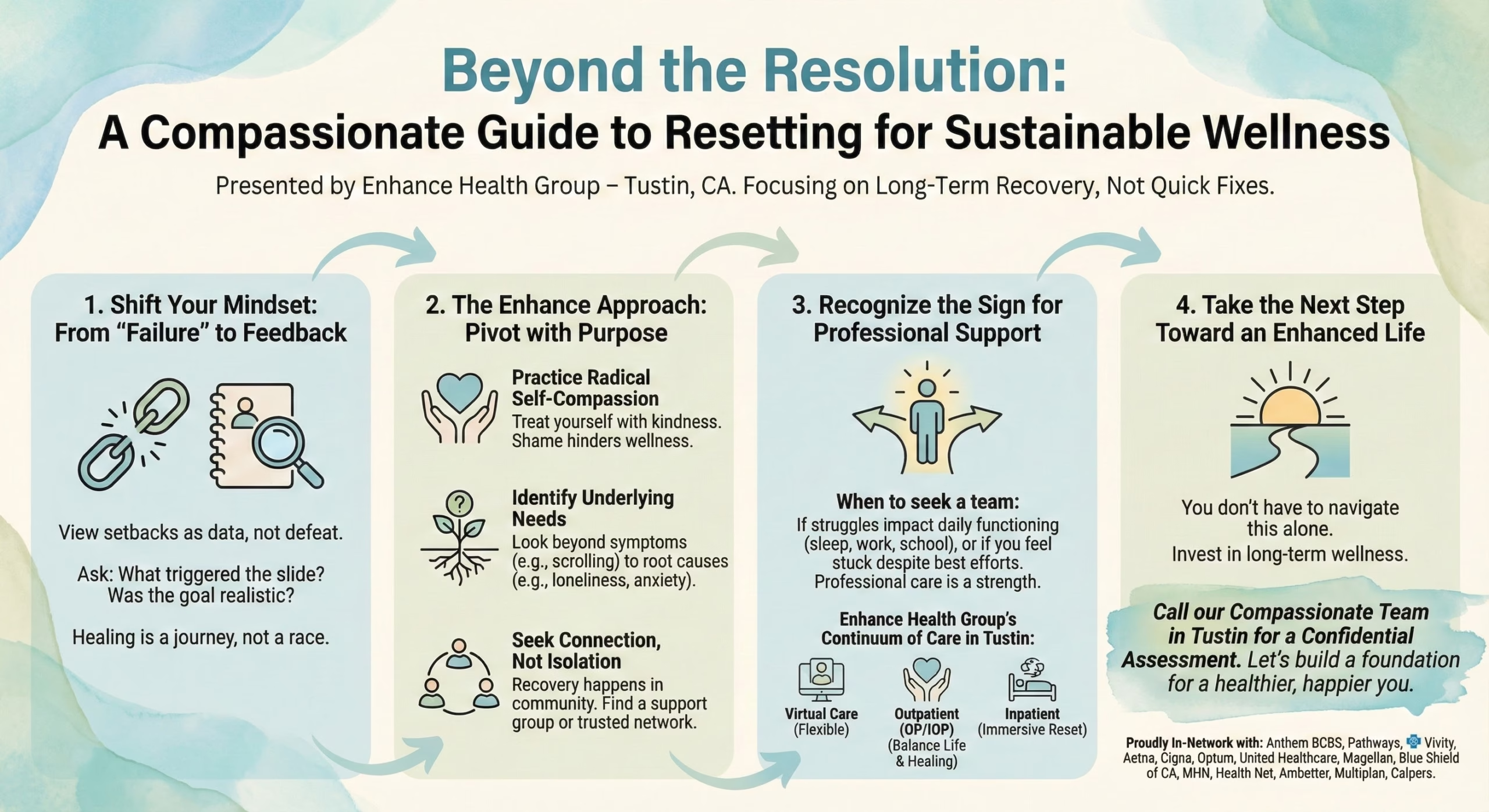
One bad few weeks doesn't erase the progress you made before them, and most people find that one steady day followed by another does more than a brand new plan. Recovering from a mental health setback mostly means restoring sleep, meals, and contact with your care team, and you'll know quickly if the setback needs more than that.
If you're thinking about hurting yourself or ending your life, call or text 988 right now.
Recovering from a mental health setback in the first weeks
The first week or two after a setback is usually when you feel the most raw, and it's the wrong time to judge how you're doing overall. Sleep tends to go first, then appetite, then the energy to answer texts. Start by putting back the two things you can control without much effort: a regular bedtime and a meal at roughly the same time each day. Neither has to be perfect. They just give your mood something steady to rest on while the rest settles.
Next, tell your therapist, psychiatrist, or doctor what happened, even if it feels small or embarrassing. If you take medication, keep taking it as prescribed and bring up any changes with the prescriber before you adjust anything yourself. A short check-in sooner often does more than waiting for your next scheduled visit, and your care team can tell you whether the plan still fits.
It also helps to write down a few specifics:
- 1What changed first, such as sleep, mood, drinking, or pulling away from people.
- 2What was going on in the days before, like a loss, a stressful stretch at work, or a missed appointment.
- 3Which coping skills still work and which ones you can't seem to reach right now.
Those notes give a clinician something concrete to work with, which is much easier than trying to explain a rough month from memory. If you end up calling the Tustin admissions team at Enhance Health Group, the same notes are what the counselor will ask you about first.
Expect the pace to be uneven. You may have one decent day followed by a flat one, and that doesn't mean you've lost your footing. What you're watching for is direction over about two weeks: if sleep, eating, and getting out of the house are slowly coming back, you're recovering. If they're slipping further, that's the signal to ask for more support, which the next section walks through.
Signs the setback needs more than self-care
Two weeks of slipping is the clearest line, but some signs mean you shouldn't wait that long. If you've stopped eating regularly, you're barely sleeping or sleeping most of the day, or you can't manage basics like showering and getting to work, routines alone won't carry you. The same goes for drinking or using more to cope, or for pulling away from everyone, including the people who normally reach you.
Pay attention to how the symptoms behave, too. Panic that wakes you at night, flashbacks, hearing or seeing things that aren't there, or mood swings that leave you unable to think clearly are all reasons to get a clinical assessment this week. Sometimes a loved one notices before you do. If your sister says you don't sound like yourself, take that seriously.
Substance use changes the picture. If a setback is tangled up with alcohol or drugs, treating only the mood leaves half of it untouched. Enhance offers dual diagnosis care, which means the mental health symptoms and the substance use are treated together by one team.
Another useful test is whether weekly therapy still holds you steady. If you're already seeing someone and you're still sliding, that usually means the level of support needs to go up, not that you're failing at therapy. Programs that meet several days a week, such as the partial hospitalization program (PHP) or intensive outpatient program (IOP) at our Tustin center, exist for exactly this gap. You can sleep at home and still get far more contact than one session a week offers.
When you reach out, you don't need a diagnosis or a neat explanation. Bring the notes you've been keeping, and an admissions counselor will help sort out which level of care fits what you're describing. Enhance is Joint Commission accredited and holds California Department of Health Care Services certification 300410AP.
Rebuilding routines that last past the resolution
Routines built on willpower alone tend to fall apart by the third week, so build yours around what you actually did on your better days. If you managed a walk before lunch twice last week, make that the anchor and add one thing to it. Rebuilding works best in small additions, one every few days, rather than a full schedule you start on Monday.
Pick three anchors and write them where you'll see them: a wake-up time, one meal you eat sitting down, and one contact with another person each day. That contact can be a text to a friend or a short call with a family member. Isolation is usually the first thing to creep back, and a daily point of contact makes it visible sooner.
Then decide, ahead of time, what you'll do when a day goes badly. A plan made while you feel steady is easier to follow than one made in the middle of a rough evening. It might be as plain as "I call my sister, I eat something, I go to bed at my regular time." Share it with someone close so they know what you're counting on from them.
Keep your appointments on the calendar even when you feel better. Many people drop therapy the week they feel okay, and that's often when a plan needs the most attention. If you're in a PHP or IOP, ask your team how to carry what you've learned into your weeks at home. Our outpatient program offers virtual sessions that can fit around work and family.
Review the routine every week or two with your therapist. Cut what you're not doing, keep what's working, and treat a skipped day as information rather than a failure.
How to bring it up with someone you love
Pick a quiet moment when neither of you is rushed, and start with one specific thing you've noticed rather than a verdict. "You've been skipping dinner and canceling plans, and I miss you" lands better than "I think you're relapsing." People tend to hear a specific observation as care and a label as criticism.
Ask a plain question, then give them room to answer. "How have the last few weeks been for you?" works, and so does "Is there anything I can do?" If they say they're fine, don't argue the point. Say what you've seen once, tell them you'll check in again in a few days, and then actually do it. Many people need two or three gentle conversations before they're ready to say how bad it's been.
If they're open to help, offer to do the part that feels hardest. That might mean sitting beside them while they make a call, writing down the questions they want to ask, or driving them to an appointment at 14742 Newport Ave in Tustin, about 10 minutes from John Wayne Airport if someone's traveling in. Keep your offers concrete, because "let me know if you need anything" usually leaves a worn-out person with one more task.
Try to avoid ultimatums, comparisons to how they were before, and long lists of everything that's gone wrong. Those tend to end the conversation fast.
You can also call admissions yourself and ask what to expect before you talk to them. The counselor can explain how the process works, what questions come up, and which level of care might fit, so you walk into the conversation with real answers instead of guesses. Your loved one stays in charge of their own decisions, and having the information ready often makes the next step feel smaller to them.
Levels of care when home support isn't enough
Care steps up in stages, and you don't have to jump to the top. The right level depends on how safe you are at home, how much daily structure you need, and whether alcohol or drugs are part of the picture.
Outpatient care is the lightest step. Sessions are with a therapist, often by video, and they fit around work and family. Intensive outpatient (IOP) adds more contact each week while you keep sleeping at home. A partial hospitalization program (PHP) is the most structured option where you still go home at night. Both PHP and IOP are offered at our Tustin center, and a clinician decides which one fits after an assessment.
Some setbacks need a stay away from home. When someone can't keep themselves safe, or home is where the crisis keeps building, a residential or inpatient setting gives round-the-clock distance from it. Mental health inpatient and residential care takes place at Eden by Enhance (edenbyenhance.com), a sister facility of ours. Detox and addiction residential care take place at Embrace Treatment Center (embracetreatment.com), also a sister facility, owned and run by the same people. You start with Enhance admissions either way, and the team coordinates the right setting for you.
Here's how the choice usually gets made:
- 1You describe what's been happening, using the notes you've kept.
- 2A clinician assesses symptoms, safety, and any substance use.
- 3The team recommends a level of care and explains why.
- 4If you move forward, they check your insurance benefits and lay out next steps.
You can also step down as you improve, for example from PHP to IOP to outpatient sessions. If a level feels like too much or too little after a week or two, say so. Adjusting the level is a normal part of care, not a sign the plan failed.
What happens when you call admissions
A real person at the Tustin team picks up and starts by asking what's going on, so you don't need a diagnosis or a script. Say what you told yourself in your notes: what changed first, what's been happening for how long, and whether alcohol or drugs are involved. If you're calling for someone else, say that up front. You can describe what you've noticed, though your loved one will need to take part in decisions about their own care.
Have a few things within reach before you dial:
Your insurance card, so the team can check your plan with the payer.
A list of current medications and the names of any therapist or prescriber you're seeing.
Your notes from the past few weeks.
Don't worry if you're missing one of these. The counselor can work with what you have.
After you talk, admissions contacts your insurance company and then explains your deductible, your copay, and which levels of care your plan may cover. Benefits vary by plan, so the answer you get is specific to yours. The team accepts Anthem Blue Cross Blue Shield, Aetna, Cigna, Optum, United Healthcare, Blue Shield of California, MHN, Health Net, Ambetter, Multiplan, CalPERS, and Covered California. If you decide to continue, an assessment with a clinician comes next, and they recommend a level of care and tell you how they reached that recommendation.
You can ask anything during that first conversation, including what a day in PHP or IOP looks like, how virtual outpatient works, or what happens if you'd rather think it over. Nothing about the call commits you to treatment.
When you're ready, call (714) 862-1907 or use the Verify insurance button below to start with your benefits.


