
We often equate “freedom” with a lack of obligations—waking up whenever, doing whatever we feel like, and living purely in the moment. But for those of us navigating mental health challenges or the journey of recovery, total boundlessness can sometimes feel less like freedom and more like chaos.
At Enhance Health Group here in Tustin, we often see clients who arrive feeling exhausted by the sheer effort of getting through an unstructured day. It turns out, the brain doesn’t just tolerate routine; it actively craves it.
The Neuroscience of Predictability
Why does a schedule feel so safe? The answer lies in how our brains process energy. Every decision you make—what to eat, when to shower, whether to go out—uses “executive function.” When you are battling anxiety, depression, or working through a dual diagnosis, your executive function is often already depleted.
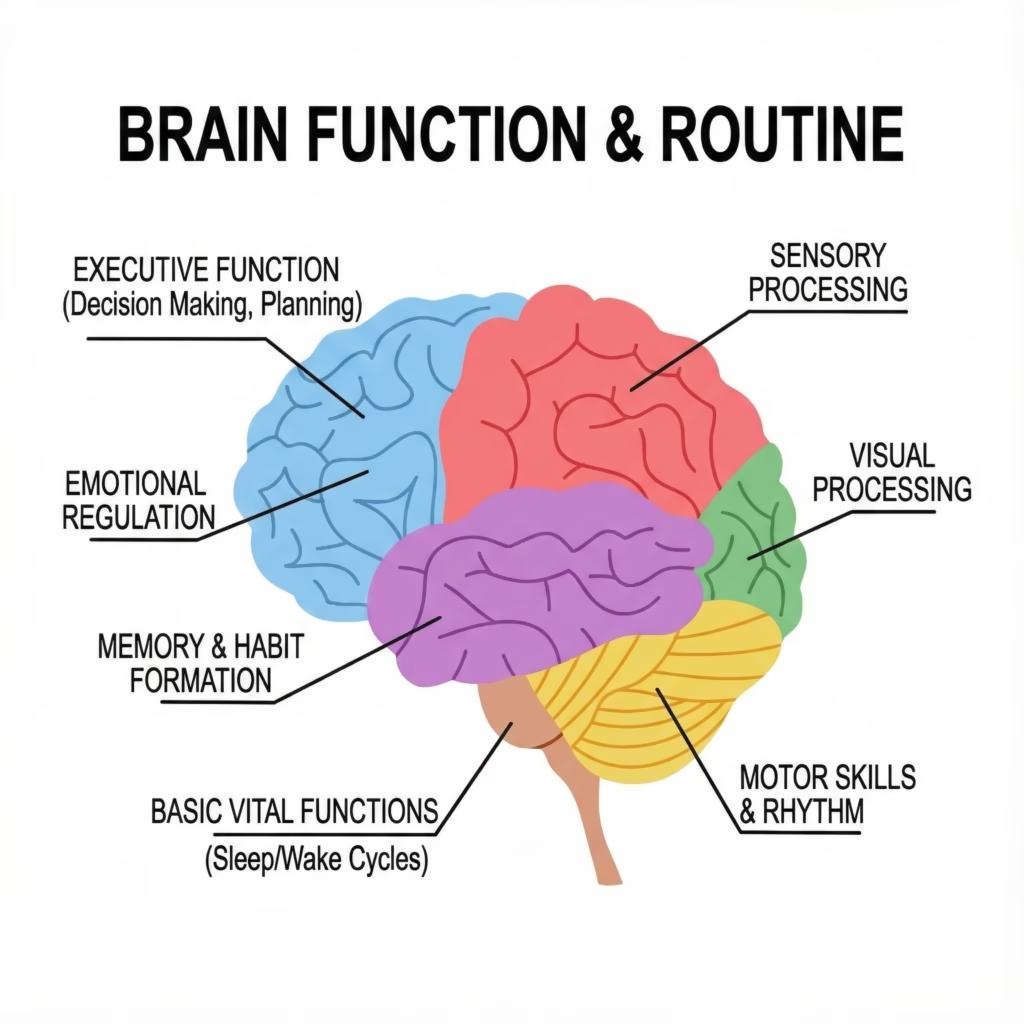
When we lack a schedule, we suffer from decision fatigue. By implementing a routine, we automate the basics of living. This frees up mental energy for the deeper work: healing, therapy, and self-discovery.
Source: American Medical Association (AMA)
How Routine Regulates Emotion
Reduced Anxiety: Knowing what comes next removes the “fear of the unknown” from your daily micro-movements.
Dopamine Regulation: accomplishing small, scheduled tasks (even making your bed) gives the brain a small reward signal, rebuilding damaged reward pathways.
Circadian Rhythm Reset: Waking and sleeping at consistent times helps regulate serotonin and melatonin, which are crucial for mood stabilization.
Source: Cleveland Clinic
URL: https://my.clevelandclinic.org/health/articles/circadian-rhythm
Source: National Institutes of Health (NIH) / PMC (Academic/Medical Standard)
URL: https://pmc.ncbi.nlm.nih.gov/articles/PMC6701929/
Why “Long-Term” Matters
In the world of mental health treatment, there are many “quick fix” centers that promise results in a week or two. However, the brain takes time to rewire. This is why Enhance Health Group emphasizes long-term programs.
True recovery isn’t just about stopping a behavior; it’s about building a life. It takes time to transform a “schedule” from a chore into a comfort. Our 300+ 5-star reviews often come from alumni who realized that the structure they initially resisted was actually the very thing that saved them.
Building Your “Safety Structure”
You don’t need to account for every minute of your day to feel the benefits. Whether you are a college student at UCI trying to manage exam stress, or an adult balancing work and wellness, start small.
The Bookends: deeply establish your morning wake-up time and your evening wind-down time. Let the middle be flexible, but keep the edges firm.
Nutrition Breaks: Anxiety often spikes when blood sugar drops. Schedule your meals.
Movement: Even a 10-minute walk around the block in Tustin counts.
Connection: Schedule time to call a friend or support partner. Isolation thrives in the unstructured hours.
A Note to Our Adolescents and Students
For our younger clients, the word “schedule” sounds like school or chores. But in our Outpatient and IOP programs, we reframe this. A routine is not a cage; it is a trellis. It supports you so you can grow upward without collapsing under the weight of stress.
Frequently Asked Questions
Q: Will a strict routine make me feel like a robot? A: Not at all. In fact, structure usually creates more freedom. When the basics (sleeping, eating, medication) are on autopilot, you actually have more mental clarity to be creative and spontaneous in your free time.
Q: I keep failing to stick to my schedule. What is wrong with me? A: Nothing is wrong with you. This is a common part of the process. At Enhance Health Group, we teach “flexible consistency.” If you miss a morning workout, you haven’t “ruined” the day. You simply pick up the routine at the next scheduled block.
Q: How does your facility help establish these routines? A: Whether in our Inpatient or Outpatient (OP/IOP) programs, we model healthy structure. We provide a framework of therapy, nutrition, and downtime that clients can eventually adapt to their lives back home.