
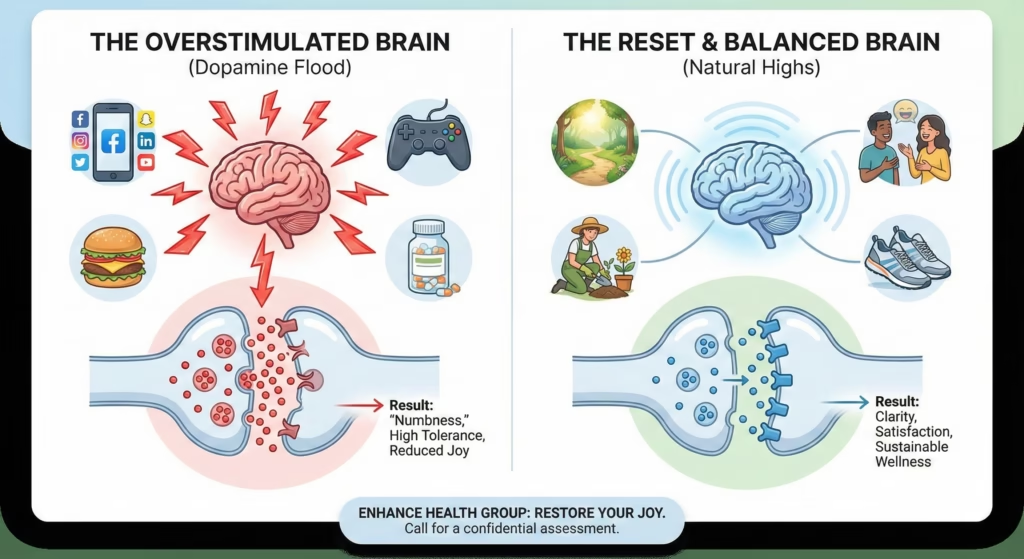
Living in Orange County offers a vibrant lifestyle, but the fast pace can often lead to a cycle of overstimulation. Whether it is the constant “ping” of work emails, social media validation, or reliance on substances to unwind, our brains are often flooded with high-intensity stimuli.
At Enhance Health Group, we often work with clients who describe feeling “numb” or finding that the things that used to make them happy simply don’t anymore. This is not a moral failing; it is often a matter of neurobiology.
By understanding how your brain’s reward system works, you can move from a cycle of dependency to a sustainable state of wellness.
Understanding the “Pleasure-Pain” Balance
Dopamine is a neurotransmitter involved in reward, motivation, and memory. Think of it as the currency of desire. When we engage in high-dopamine activities (gambling, substance use, scrolling social media), our brain releases a flood of this chemical.
However, the brain demands balance (homeostasis). According to research from the National Institute on Drug Abuse (NIDA), when the brain is bombarded with dopamine, it compensates by reducing the number of receptors or making them less sensitive—a process called downregulation.
This creates a tolerance. You eventually need more of the stimulus just to feel “normal,” while natural, lower-dopamine joys (like a sunset or a conversation) cease to register as pleasurable.
The Protocol: Resetting Your Baseline
A “Dopamine Reset” (popularized by Dr. Cameron Sepah) is essentially a form of Cognitive Behavioral Therapy (CBT) focused on stimulus control. It isn’t about eliminating pleasure; it is about reducing impulsive behaviors to allow your receptors to heal.
Here is how to approach this using the long-term, sustainable mindset we champion at our Tustin facility:
1. The “Detox” Phase (Stimulus Control)
For a set period, you remove the “super-stimuli.” This allows your neurochemistry to recalibrate.
The Science: By removing the artificial spikes, you lower the threshold required to feel satisfaction.
The Action: Identify your specific compulsion (e.g., video games, processed sugar, nicotine) and pause it.
2. The “Re-Engagement” Phase (Natural Highs)
Once the noise of the super-stimuli quiets down, you can rediscover natural rewards.
Physical Movement: Exercise releases endorphins and dopamine naturally.
Sunlight & Nature: Exposure to sunlight regulates circadian rhythms and mood (Serotonin).
Human Connection: Genuine social bonding releases oxytocin, which works in tandem with dopamine to create lasting feelings of well-being.
Why “Quick Fixes” Don’t Work
Many treatment centers offer rapid detoxes, but at Enhance Health Group, we emphasize long-term care because neural pathways take time to rewire.
According to Harvard Health, relying on short-term abstinence without addressing the underlying behavioral patterns often leads to relapse. This is why our Dual Diagnosis programs are vital—we treat the anxiety, depression, or trauma that drives the need for the dopamine spike in the first place.
Sources & Further Reading
To learn more about the science behind these concepts, we recommend the following credible sources:
On the Neurobiology of Reward: National Institute on Drug Abuse (NIDA) – “Drugs and the Brain” Read the NIDA Overview Here
On Dopamine Fasting Concepts: Harvard Health Publishing – “Dopamine Fasting: Misunderstanding Science Creates a Fad” Read the Harvard Health Article Here
On Impulse Control: Stanford Medicine – “Addiction and the Brain” Read the Stanford Medicine Report Here
Frequently Asked Questions
Q: Is “Dopamine Fasting” scientifically proven? A: The term is a catchy pop-psychology label, but the underlying mechanism—Stimulus Control—is a well-established, evidence-based technique used in Cognitive Behavioral Therapy (CBT) to treat addiction and impulse control disorders.
Q: How do I know if I need a reset or professional treatment? A: If your pursuit of dopamine is interfering with your daily life, relationships, or work, or if you experience physical withdrawal symptoms when stopping a behavior/substance, professional help is recommended. Our Tustin team specializes in distinguishing between bad habits and clinical dependency.
Q: Can I reset my dopamine while on medication? A: Yes. A dopamine reset is behavioral. However, never stop prescribed medication without consulting your doctor. Our psychiatric team can help manage your medication while you work on behavioral changes.
Q: Why does Enhance Health Group focus on long-term programs? A: Neuroplasticity (the brain’s ability to change) is a slow process. While a 30-day program is a great start, the deep rewiring required to maintain a balanced “natural high” often requires the sustained support found in our long-term outpatient tracks.