
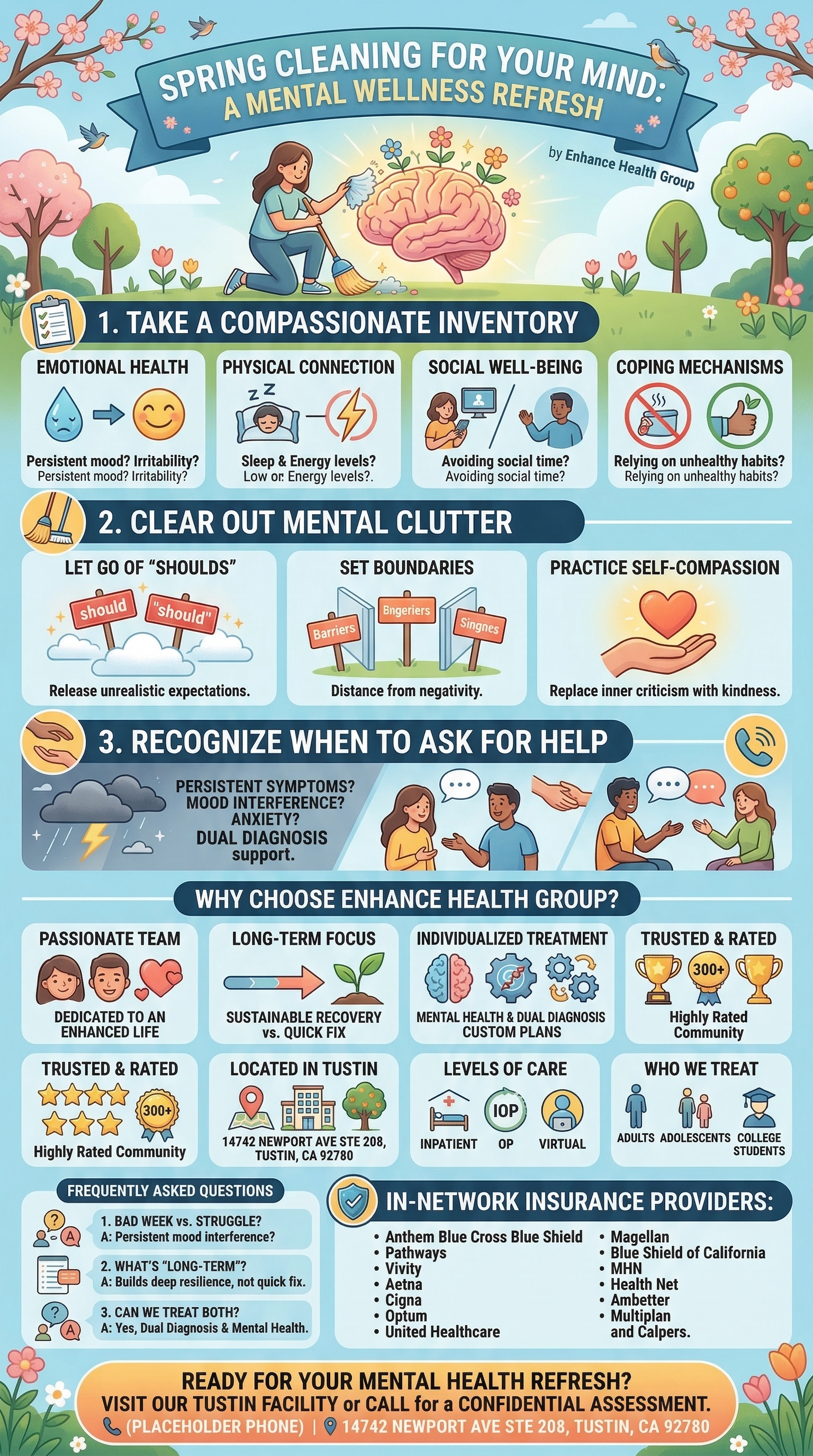
As the seasons change and the days grow longer, many of us feel the natural urge to open our windows, clear out the dust, and declutter our homes. But while we spend hours organizing our closets and deep-cleaning our living spaces, how often do we take the time to clear out our mental clutter?
At Enhance Health Group, we believe that true wellness goes beyond the physical. Healing is a continuous, beautiful journey, and taking time for a “mental spring cleaning” is a vital step toward living an enhanced, balanced life. Whether you are an adult navigating career stress, a college student facing academic pressures, or an adolescent dealing with the complexities of growing up, taking inventory of your mental health is an act of profound self-care.
Here is a gentle guide on how to assess your mental well-being and what steps to take if you find yourself struggling.
Step 1: Take a Compassionate Inventory
The first step in any cleaning process is assessing what you have. When it comes to your mental health, this means checking in with yourself honestly and without judgment. Remember, struggling does not mean you are broken; it simply means you are human and may need to tend to your inner world.
Emotional Health: Am I experiencing frequent irritability, lingering sadness, or a sense of numbness? Do my emotions feel unmanageable?
Physical Connections: How am I sleeping? Is my energy constantly depleted, even after resting?
Social Well-being: Am I pulling away from friends and family, or avoiding social situations that used to bring me joy?
Coping Mechanisms: Am I relying on unhealthy habits—like substances, overworking, or isolation—to numb out my feelings?
Step 2: Clear Out the Mental Clutter
Once you have identified the areas that feel heavy, it is time to start decluttering.
Let Go of “Shoulds”: Release the unrealistic expectations you place upon yourself. You do not have to be perfect to be worthy of peace.
Set Boundaries: Just as you would throw away expired items from your pantry, it is okay to distance yourself from toxic relationships, draining commitments, or excessive screen time.
Practice Self-Compassion: Replace harsh inner criticism with the same kindness you would offer a loved one.
Step 3: Recognize When to Ask for Help
Sometimes, a weekend reset isn’t enough to clear the fog. If you notice that your mood, anxiety, or coping habits are interfering with your daily life, relationships, or work, it may be time to seek professional support. This is especially true if you are managing a Dual Diagnosis—where a mental health condition intertwines with substance use.
Why Choose Enhance Health Group for Your Healing Journey?
At Enhance Health Group, our passionate team is dedicated to providing a safe, understanding space where true healing can begin. We know that sustainable recovery doesn’t happen overnight. Unlike “quick fix” centers, we emphasize long-term programs designed to equip you with the deep-rooted tools you need to maintain a balanced life for years to come.
We offer highly individualized treatment across multiple levels of care, ensuring we meet you exactly where you are:
Inpatient Treatment for immersive, 24/7 support.
Outpatient (OP) & Intensive Outpatient (IOP) for flexible, structured care as you integrate back into daily life.
Virtual Care for accessible support from the comfort of your home.
We are incredibly proud of our community reputation, backed by over 300 5-star reviews from individuals and families whose lives have been transformed through our care.
Frequently Asked Questions
1. How do I know the difference between a normal “bad week” and a clinical mental health struggle? A bad week usually resolves when the immediate stressor passes. However, if feelings of deep sadness, anxiety, exhaustion, or emotional numbness persist for more than two weeks and begin interfering with your daily routines, relationships, or physical health, it is a strong indicator that professional support could be highly beneficial.
2. What does a “long-term focus” mean in mental health treatment? A long-term focus means we do not just treat the immediate symptoms and send you on your way. We dig into the root causes of mental health and Dual Diagnosis challenges. By providing sustained support through various step-down levels of care (from Inpatient to IOP to standard Outpatient), we help you build sustainable resilience rather than offering a temporary “quick fix.”
3. Do you treat both mental health and substance use at the same time? Yes. This is called Dual Diagnosis treatment. Treating both the mental health condition (such as depression, trauma, or anxiety) and the substance use simultaneously is the most effective way to ensure lasting recovery and holistic wellness.
4. What age groups do you treat? We offer tailored, age-specific programming for Adolescents, College Students, and Adults, recognizing that the challenges faced at each stage of life require a unique, specialized approach.
Let Us Help You Find Balance
You don’t have to carry the weight of mental clutter alone. If you or a loved one are ready to take the next step toward a healthier, more vibrant life, our compassionate team is here to listen.
Call us today for a completely confidential assessment, or visit our facility at: Enhance Health Group 14742 Newport Ave STE 208 Tustin, CA 92780