

At Enhance Health Group in Tustin, we often hear clients say, “I feel like it’s all in my head,” or “I should be strong enough to just snap out of it.”
Here is the most important thing you need to know today: Mental health is physical health. Your feelings, anxieties, and trauma responses are not character flaws; they are rooted in complex biological processes.
Understanding the biology of the brain is the first step toward destigmatizing mental struggles. When we stop viewing symptoms as “weakness” and start viewing them as physiological responses, true healing—and an enhanced life—can begin.
The Chemical Messengers: Understanding Neurotransmitters
Your brain communicates through a massive network of neurons using chemical messengers called neurotransmitters. Think of them as the brain’s internal mail system. When this system is balanced, you feel regulated and clear. When the delivery system is interrupted, it affects your mood, sleep, and perception of reality.
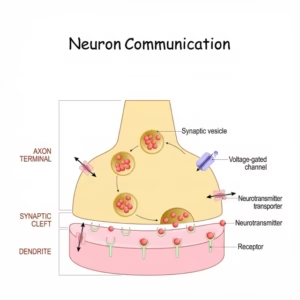
Here are the key players we focus on during dual diagnosis and mental health treatment:
- Serotonin: Often called the “stabilizer.” It regulates mood, appetite, and sleep. Low levels are frequently associated with depression.
- Dopamine: The “reward” chemical. It drives motivation and pleasure. Imbalances here are common in addiction and ADHD.
- GABA (Gamma-Aminobutyric Acid): The “brakes.” GABA helps calm the nervous system. When GABA is low, anxiety takes over because the brain can’t slow down.
- Norepinephrine: Associated with alertness and energy. It plays a massive role in the body’s stress response.
At our Tustin facility, whether you are an adolescent, a college student, or an adult, we look at how these chemicals interact to create a personalized treatment plan that restores balance.
The “Fight or Flight” Response: The Alarm System
Have you ever felt your heart race or your palms sweat when you weren’t in immediate danger? That is your autonomic nervous system kicking into gear.
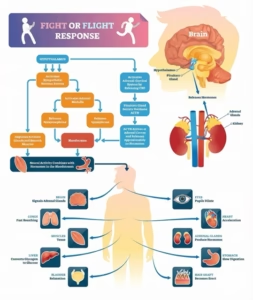
Evolutionarily, this system was designed to save us from predators. It involves two main states:
- Sympathetic Nervous System: The gas pedal. It prepares you to fight or flee.
- Parasympathetic Nervous System: The brake. It allows you to “rest and digest.”
For many of our clients dealing with anxiety or high-stress environments, the “gas pedal” gets stuck. The brain perceives a stressful email or a social interaction as a life-or-death threat, flooding the body with cortisol and adrenaline.
How the Brain Processes Trauma
Trauma is not just a bad memory; it creates a physical imprint on the brain structure. This is particularly important for our Dual Diagnosis clients, where trauma often fuels substance use.
Shutterstock
Explore
There are three major brain areas involved in trauma:
- The Amygdala (The Smoke Detector): This part detects fear. In a traumatized brain, the Amygdala becomes hypersensitive, sounding the alarm at even the slightest hint of stress.
- The Prefrontal Cortex (The Watchtower): This is the logical, rational part of your brain. Under normal circumstances, it calms the Amygdala down. However, during trauma triggers, this connection is often severed—meaning you literally cannot “think” your way out of the fear response.
- The Hippocampus (The Librarian): This area stores memories. Trauma can scramble the Hippocampus, making past events feel like they are happening right now.
The Science of Healing: Why Long-Term Care Matters
Because these conditions are biological—involving neural pathways and chemical balances—quick fixes do not work. You cannot “talk” a neurotransmitter into balance in a weekend.
This is why Enhance Health Group emphasizes long-term programs.
- Neuroplasticity: The brain has the amazing ability to rewire itself. Through consistent therapy (Outpatient or Inpatient), we can strengthen the Prefrontal Cortex and calm the Amygdala.
- Sustainable Recovery: Whether via virtual care or at our center on Newport Ave, we give the brain the time it needs to heal physically.
Our approach is backed by over 300 5-star reviews because we treat the whole person—biology, psychology, and spirit—guiding you toward a life that is not just “symptom-free,” but truly enhanced.
Frequently Asked Questions
- If mental health is biological, does that mean I have to take medication?
Not necessarily. While medication can be a helpful tool to balance neurotransmitters, “biological” treatment also includes therapy, mindfulness, exercise, and nutrition. We use a holistic approach to determine what your specific brain needs to heal.
- Can the brain really heal from long-term trauma?
Yes. This is the concept of neuroplasticity. With the right therapeutic interventions and time, the brain can form new neural pathways, essentially “rewiring” how it responds to stress and fear.
- Why do you treat college students and adults differently regarding brain biology?
The brain creates new connections at different rates depending on age. The frontal lobe (responsible for judgment) is often still developing in college students. We tailor our Dual Diagnosis and mental health treatments to match the developmental stage of the client.
- How long does it take to reset the “fight or flight” system?
It varies by individual, but it generally takes time and repetition. This is why we advocate for long-term engagement rather than short stays. Consistent practice of coping skills is required to retrain the nervous system.
Start Your Journey to Wellness
Understanding your brain is the first step; getting the right support is the second. You don’t have to navigate this biology alone.
If you or a loved one is struggling, we invite you to visit our compassionate team in Tustin. Let’s work together to create a sustainable, long-term plan for recovery.
Call us today for a confidential assessment or stop by 14742 Newport Ave STE 208, Tustin, CA 92780.